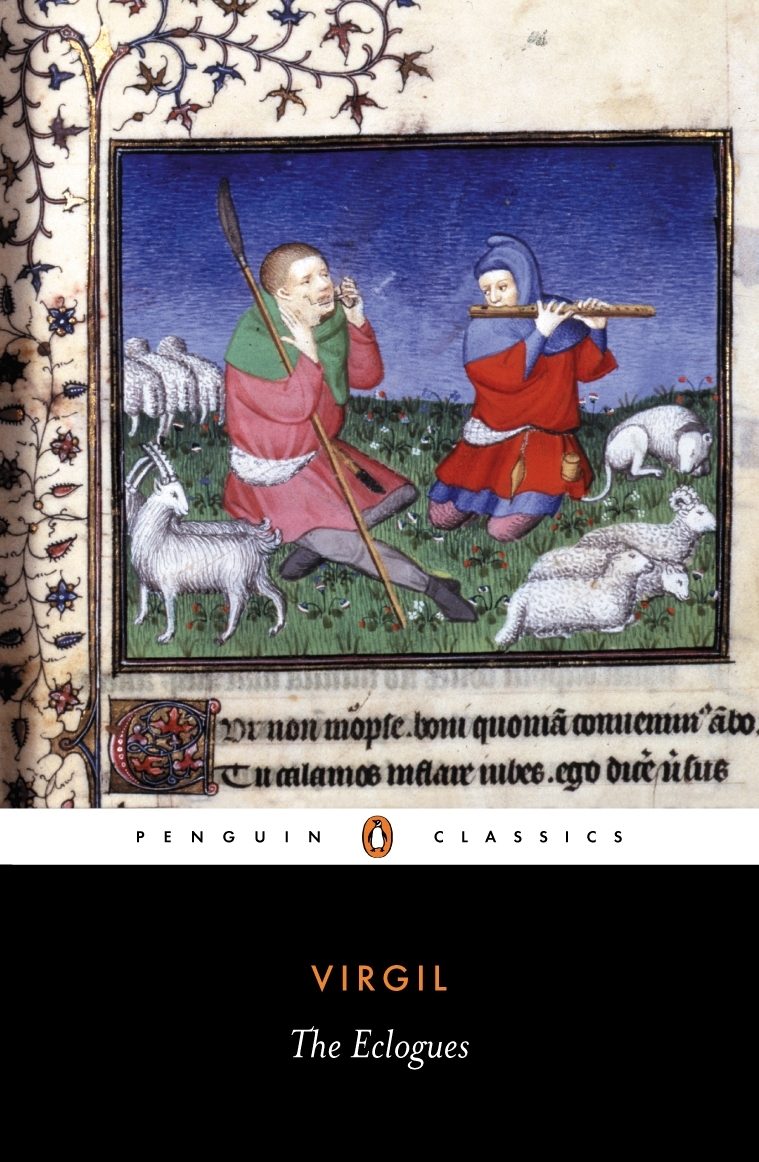
Deeply sensitive and faithful to the original work, Guy Lee's verse translation is here paralleled by the original Latin text.
Haunting and enigmatic, Virgil's Eclogues combined a Greek literary form with scenes from contemporary Roman life to create a work that inspired a whole European tradition of pastoral poetry. For despite their rustic setting and the beauty of their phrasing, the poems in Virgil's first collection are also grounded in reality. Shepherds are overwhelmed by the torments of poetic love - but they must also endure such real-life events as the tragic consequences of Julius Caesar's murder in 44 bc and a civil war. In giving unforgettable expression to the disasters of the day through poetry, the Eclogues paved the way for the Georgics and the Aeneid, the two greatest works of Latin literature, and are also a major masterpiece in their own right.
Virgil (70–19 BCE) is regarded as the greatest Roman poet, known for his epic, The Aeneid(written about 29 BCE, unfinished). Virgil was born on October 15, 70 BCE, in a small village near Mantua in Northern Italy. He attended school at Cremona and Milan, and then went to Rome, where he studied mathematics, medicine and rhetoric, and completed his studies in Naples. Between 42 and 37 BCE. Virgil composed pastoral poems known as Ecologues, and spent years on the Georgics.
At the urging of Augustus Caesar, Virgil began to write The Aeneid, a poem of the glory of Rome under Caesar's rule. Virgil devoted the remaining time of his life, from 30 to 19 BCE, to the composition of The Aeneid, the national epic of Rome and to glory of the Empire. The poet died in 19 BCE of a fever he contracted on his visit to Greece with the Emperor. It is said that the poet had instructed his executor Varius to destroy The Aeneid, but Augustus ordered Varius to ignore this request, and the poem was published.
Related titles
Our top books, exclusive content and competitions. Straight to your inbox.
Thank you! Please check your inbox and confirm your email address to finish signing up.