Brings together the major writings of the great Italian philosopher.
In his reflections on Christianity, Saint Thomas Aquinas forged a unique synthesis of ancient philosophy and medieval theology. Preoccupied with the relationship between faith and reason, he was influenced both by Aristotle's rational world view and by the powerful belief that wisdom and truth can ultimately only be reached through divine revelation. Thomas's writings, which contain highly influential statements of fundamental Christian doctrine, as well as observations on topics as diverse as political science, anti-Semitism and heresy, demonstrate the great range of his intellect and place him firmly among the greatest medieval philosophers.
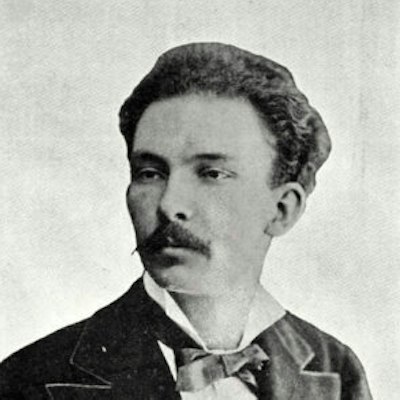
JOSÉ MARTÍ (born January 28, 1853, Havana, Cuba - died May 19, 1895, Dos Ríos) was a Cuban poet and essayist, patriot, and martyr, who became the symbol of Cuba’s struggle for independence from Spain. His dedication to the goal of Cuban freedom made his name a synonym for liberty throughout Latin America. As a patriot, Martí organized and unified the movement for Cuban independence and died on the battlefield fighting for it. As a writer, he was distinguished for his personal prose and deceptively simple, sincere verse on themes of a free and united America. Educated first in Havana, Martí had published several poems by the age of 15, and at age 16 he founded a newspaper, La Patria Libre (“The Free Fatherland”). During a revolutionary uprising that broke out in Cuba in 1868, he sympathized with the patriots, for which he was sentenced to six months of hard labour and, in 1871, deported to Spain. There he continued his education and his writing, receiving both an M.A. and a degree in law from the University of Zaragoza in 1874 and publishing political essays. He spent the next few years in France, in Mexico, and in Guatemala, writing and teaching, and returned to Cuba in 1878.
Related titles
Our top books, exclusive content and competitions. Straight to your inbox.
Thank you! Please check your inbox and confirm your email address to finish signing up.