> Skip to content
[]
Play sample
  • Published: 29 December 2000
  • ISBN: 9780140440584
  • Imprint: Penguin Classics
  • Format: Paperback
  • Pages: 368
  • RRP: $29.99

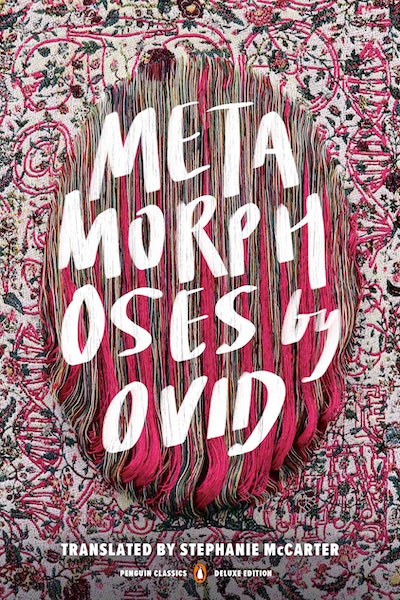
Metamorphoses


Mary Innes's classic translation of one of the supreme masterpieces of Latin literature, Ovid's Metamorphosis.

Ovid drew on Greek mythology, Latin folklore and legend from ever further afield to create a series of narrative poems, ingeniously linked by the common theme of transformation. Here a chaotic universe is subdued into harmonious order: animals turn to stone; men and women become trees and stars. Ovid himself transformed the art of storytelling, infusing these stories with new life through his subtley, humour and understanding of human nature, and elegantly tailoring tone and pace to fit a variety of subjects. The result is a lasting treasure-house of myth and legend.

  • Published: 29 December 2000
  • ISBN: 9780140440584
  • Imprint: Penguin Classics
  • Format: Paperback
  • Pages: 368
  • RRP: $29.99

About the author

Ovid

Ovid, or Publius Ovidius Naso, was born in a well-off provincial family in 43 B.C.E. and came to Rome to make a career in government and law, soon abandoned so he could devote himself to poetry. He made his name with love poetry and learned love-letters from famous heroines, then displeased the emperor Augustus by publishing an irreverent lover’s handbook. In 8 C.E., the emperor exiled him to Tomis on the Black Sea, where he composed verse-letters filled with longing for the city he loved, and a long poem on the Roman calendar. He died in exile in 17 C.E. The Metamorphoses, his epic masterpiece on change, weaves together tales from Greek mythology and Roman legend with riffs on Homer, Vergil, Greek tragedy, and more. A one-of-a-kind exploration of the human condition that has been read continuously since its composition, it has given rise to countless responses and interpretations in every artistic medium.

Praise for Metamorphoses

The most beautiful book in the language (my opinion and I suspect it was Shakespeare's)

Ezra Pound