Some of our favourite authors offer up their go-to book gifts.
While reading is a solitary act, we booklovers enjoy nothing more than sharing our favourite reads with the people we know will get it. We do so to let loved ones in on the characters, themes and events that move, beguile and haunt us. And when the receiver loves the book you gifted, a lasting connection is formed. To mark International Book Giving Day (February 14) we asked a handful of authors to share the books they love to gift. Here is what they said.
Barbara Toner: The book I most like to give when I can find a copy is a much neglected gem, 7 1/2 Cents by Richard Bissell, set in a pyjama factory in Iowa and first published in 1953. It’s a brilliantly funny novel that’s exceptional quality is sacrificed to a lot of good songs in the musical adaptation The Pajama Game. I’ve rarely enjoyed a book more. What makes it a classic for me is its wryness of tone, its sharpness of observation, its mastery of the subject matter, its clever narrative and its truly excellent dialogue. Practically perfect!
Glenna Thomson: Love and lust, and the dumb choices we sometimes make, are themes of Man Booker Prize-winner Anne Enright’s The Forgotten Waltz. Her writing is elegant and brave, and offers an astonishing insight into the unreliable narrator that lives inside all of us. Anne Enright is my go-to writer for any book gift.
Debra Oswald: A gift I’ve often given is Crossing to Safety by Wallace Stegner. It’s a novel about long-time friendship that manages to be both sweeping and intimate, with such emotional power, I would gasp and have to take a moment to recover after reading some bits.
Janita Cunnington: Though I am in the habit of foisting books I love on other people, I do make an attempt to take their tastes and interests into account. But if I’m forced to narrow my choice down to one, I would have to choose The Getting of Wisdom by Henry Handel Richardson, which is suitable for readers young and old. It is such a richly honest, unconventional, unsentimental and heart-breaking story, told with such an eye for the perennial oddities of human nature, that it goes on speaking to generation after generation.
Candice Fox: I have an undying affection for Mary Shelley’s Frankenstein. It has all the things that monster-readers love; a ghoulish fascination with bodies and death, but it lacks the long-lead up and over-the-top mystery that I found disappointing in Bram Stoker’s Dracula. Frankenstein is very accessible – it’s a story that takes place in a recognisable setting and one that’s designed to tug at the heart strings and push at the panic button. We’ve all experienced that terrible feeling when you kick off events that get out of your control, and Victor Frankenstein’s decision to abandon his creation and try to ignore the problem is frighteningly relatable. So too, I think, is the monster’s sense of his own freakishness and his desire to simply belong somewhere. I’ll always love this book, and I think it’s just as much a joy to give it as a gift as it is to receive it.
Bernadette Fisers: Persuasion by Jane Austen is a classic I love. I guess I’m a sucker for a brooding sexy male lead character, plus it transports me to a time when we didn’t swipe right if we were interested in someone; when courting was exactly that, a romantic dance for two.
Nicole Alexander: When it comes to book giving, a special occasion deserves a unique work. In the past I’ve hesitated between two: Ernest Hemingway’s The Old Man and the Sea and Margaret Mitchell’s Gone with the Wind. Mitchell invariably wins out. Gone with the Wind has something for everyone: slavery, war, survival, land and loss combined with a love story. I like a unique character and Gone with the Wind has Scarlett, a callously optimistic woman, cast against the backdrop of the American Civil War, with only one thing on her mind, survival. As disaster strikes at every turn Scarlett drags everyone along in her wake, her unyielding determination to survive and succeed in a changing world her one goal. The novel is so much broader in scope than the movie. Apart from the extraordinary period it covers and the remarkable picture it gives us of time and place, it is Scarlett’s unstoppable drive that reaches out across time and dares us to keep trying, no matter what. After all, ‘Tomorrow is another day’. There’s a message there for everyone.
Kate Forsyth: One book I always buy for my nieces and god-daughters, or as gifts for girls’ birthdays, is The Secret Garden by Frances Hodgson Burnett. It was one of my favourite books when I was a girl and there is something so magical about the idea of a hidden garden that heals as it is reawakened to life. Another book I often buy is A Room of One’s Own by Virginia Woolf. My aunt gave it to me when I went to university, and it was a seminal work for me.
Monica McInerney: The classic book I always gift is The Harp in the South by Ruth Park. A truly Australian story, first published in 1948, and set in the inner-city Sydney slums of Surry Hills, it follows the fortunes and misfortunes of the Irish-Australian Darcy family in the shadow of the Second World War. Their lives – and those of their neighbours in their close-knit community – are full of hardship, heartbreak and poverty, but it is still a joyful, boisterous book. Ruth Park beautifully depicts their chaotic family life with humour, great heart and hope. The youngest daughter Dolour is also one of my favourite fictional characters, so full of spiky charm and spirit. (And after my giftees have read and loved this one, I always encourage them to read the sequel, Poor Man’s Orange and the prequel, Missus.)
Kathy Lette: What do women really want in bed? Breakfast. Oh, and a good book. I like nothing more than slipping between the covers of something scintillating. The book I always give pals is Vanity Fair by William Makepeace Thackeray.
With tongue-in-cheek and lashings of chutzpah, Becky Sharpe was the Lady Gaga of her day, flaunting tradition and challenging hypocritical sexual mores. Okay, she had some minor faults: snobbery and sexual kleptomania (Becky climbed the social ladder, lad by lad); and husband-hunting (she wasn’t interested in Mr Right, but Lord, Sir or Marquis Right at the very least!).
But we’re talking 1810. With no vote, no union, no welfare, no contraception etc, what options were available to women? Apart from governessing or domestic service it was prostitution or marriage. (Often a tautology in those days.) Thackeray’s savage social satire on the class and sex wars is sharp enough to shave your legs. I give the book to friends because it’s still so tantalisingly topical today and because it’s the novel that made me run away from school to become an investigative satirist.
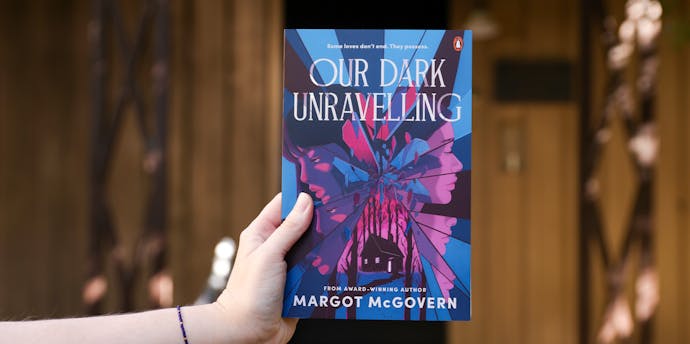
Margot McGovern’s Our Dark Unravelling is the must-read YA horror thriller for 2026.
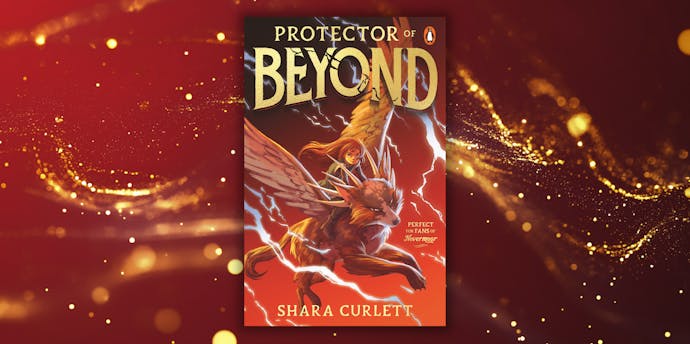
Magical creatures, perilous trials and one unbelievable adventure await in Protector of Beyond, the first book in a gripping new fantasy book series from exciting new voice Shara Curlett.
Fall in love with Penguin’s selection of the best romance fiction. Explore our diverse list of new favourite reads, from YA favourites to Australian classics.
Looking for a good book to accompany your holiday? Whether you’re sitting poolside, on a snowy escape or relaxing at home, find our 10 best choices here.

At the end of a busy day, many of us like to sit down with a good book or in front of the television to relax. Both offer the chance to enjoy a great story, but they engage us in their own ways.
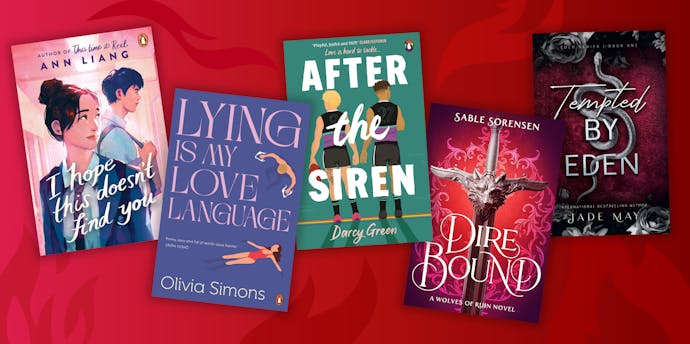
From a smouldering slow-burn to fiery heat at first bite, we’ve paired some of our best spicy books with our most delicious dishes.
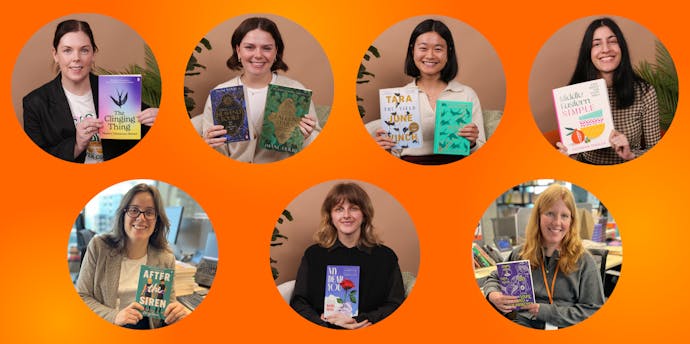
Discover the diverse books our team recommends to broaden your reading and introduce you to unforgettable new authors.
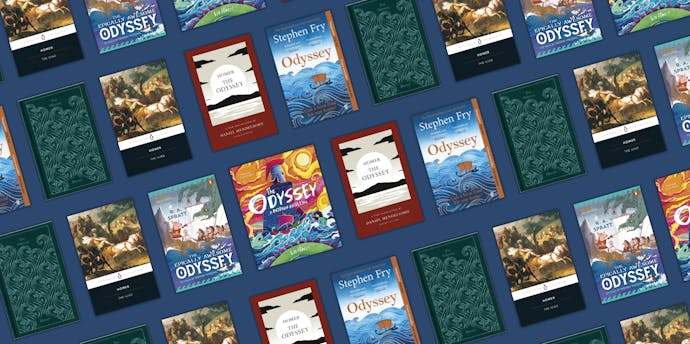
Forget the Roman Empire. We're entering our Greek mythology era.
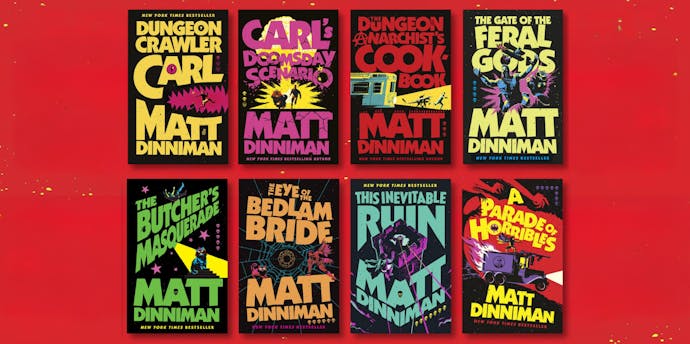
If you’ve been hearing these words a lot lately and not sure what they mean, here’s your guide to the DCC universe.
See Penguin Australia’s selection of the best book adaptations, from movies to TV shows. Get to reading or watching your next favourite here.
Discover Penguin Australia’s best memoirs & biographies. Find a curated list of powerful stories from the most interesting & inspiring people.
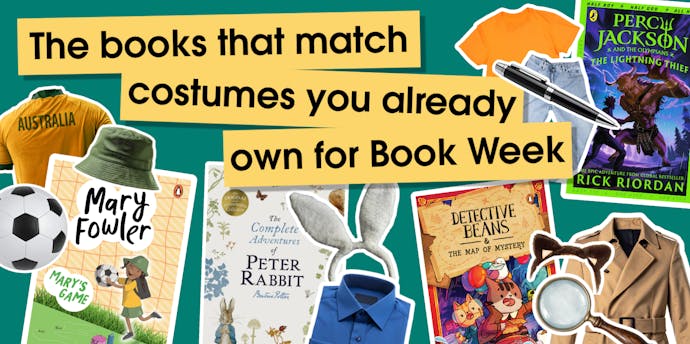
Do you already have a costume for Children's Book Week, but no book to match?