An author Q&A with Justine Larbalestier & Scott Westerfeld.
About the book
In two sentences
The prodigy of an ancient crime family begins to doubt everything about her upbringing. For a Morton, nothing could be more dangerous.
In a paragraph
The Mortons raise their children without empathy, as perfect killers, loyal and cold. Jessica is the best and brightest of her generation, until the murder of a family member makes her question the foundation of everything she's been taught. What if other people matter? What if love is real? Alas, when homicide is heritage, escaping your family's expectations can be deadly.
Why did we write this book?
The Mortons is about how our families shape us, the mythologies that seem true until we escape their confines and discover other ways of being. Thus it examines the conflict between loyalty and empathy. What's more important: Loyalty to family? Or empathy for the world at large?
It's no accident that we wrote this book at a point in history with no shortage of loyalty. There's plenty of tribalism, polarisation, and us-versus-them. Empathy, however, is in short supply.
To explore this conflict, we created a character who was raised to be certain. Jessica Morton knows that her family's way—from their clothes to their cocktails to their killings—is best. No one else matters.
Until someone does.
What has this book got that the competition lacks?
When we tell people about The Mortons, they're always fascinated by the idea of us as a team, a married couple, writing together with one voice. They love hearing about the process, conflicts, and resolutions. But also about the pleasures of making each other better. How we minimised our vices and maximised our virtues. How neither of us could have written this book alone.
The answer is: We argued a lot. If it were left to Justine, there would be way more colons and semi-colons. Scott would have deployed similes on every page. But we also agreed a lot, and we each had our areas of dominion. Justine invented the Morton family, so she was the overall showrunner. Scott brought in Helshire College and three other crime families, so they became his domain.
When we couldn't agree, we had third parties adjudicate: our agent and editors. But mostly we made each other laugh. We freaked each other out. We challenged each other to swing harder. We delighted each other.
Justine's original draft of The Mortons was a family crime drama and a psychological thriller. Scott, who went to an ivy league school, added a thread of Dark Academia. The result is something we call Dark Americana, like the creepiness of Grant Wood's painting American Gothic, an idyllic farmstead, but you can sense the bodies buried below. The novel is something neither of us could have created on our own.
How this book come to be: The long version
Justine wrote the first draft of The Mortons in 2017. Despite moments of genius, it wasn't quite working. The draft spent several years in a drawer until, on a dare, Scott started rewriting it. Justine fixed his rewriting. Scott fixed her rewriting of his rewriting and repeat—for several more years. We killed each other's darlings; we killed each other's characters.
Luckily, we had already worked together. During COVID, Justine was Instagramming cosplays of her fave midcentury fashion photography. Scott decided her selfies were rubbish (some were lovely!) and took over. Justine did the styling, and Scott was in charge of lighting, sets, and art direction.
- Us as Joanna Woodward & Paul Newman: https://www.instagram.com/p/Cm9D0EDgbz2/?igsh=aW9jNG9vMXJoYmRt
- Me as a 1940s model photographed by Lee Miller: https://www.instagram.com/p/CciCdojuKa3/?igsh=MXN6Z3ZlNHFuOG52Mg==
- Us as Diane and Alan Arbus: https://www.instagram.com/p/CVxiZzCAPzl/?igsh=d2x3N2F1anN6dmwz
We've been critiquing each other's work for a quarter century, but this was our first time making art TOGETHER. We loved it. (It's no accident that The Mortons has a recurring motif of vintage clothing.)
Next, we wrote a romcom script, which was even more fun. Alas, romcoms are un-hot this decade, so we pivoted to cowriting a picture book. It comes out from Macmillan in the USA in 2027. (Nothing in publishing takes longer than a picture book.)
But the culmination of all this collaboration was The Mortons. Writing it together was more fun than should be legal. We pushed each other, entertained each other, gave each other space to experiment.
The result is a very dark book, because we took bigger, scarier narrative risks, knowing that the other was there to catch us if we stumbled. But The Mortons is also a funny book, because we had so much fun doing it. Darkness can be giddy.
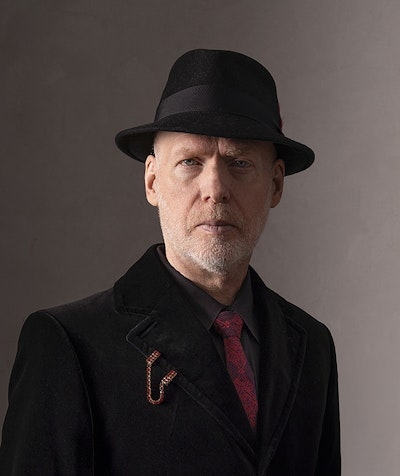
In our giddiness, we decided to be the first to cosplay as Mortons, enlisting a professional photographer friend, Justine Cooper. Like many families, Mortons wear black to funerals, but those who've been blooded (who've killed for the family) also wear a splash of red.
Realising the characters, dressing like them, helped us better understand the Morton aesthetic.
It helped create the book's marketing as well. A photo from that shoot went out with the novel's submission to publishers. This was unusual—agents don't submit author photos unless the author in question is famous or certifiably hot. We are neither. But our agent agreed that the photo conveyed the Morton aesthetic, which is a huge part of the book—the Mortons may be evil, but they know their own history. Their clothes, their food, their way of living are all steeped in family.
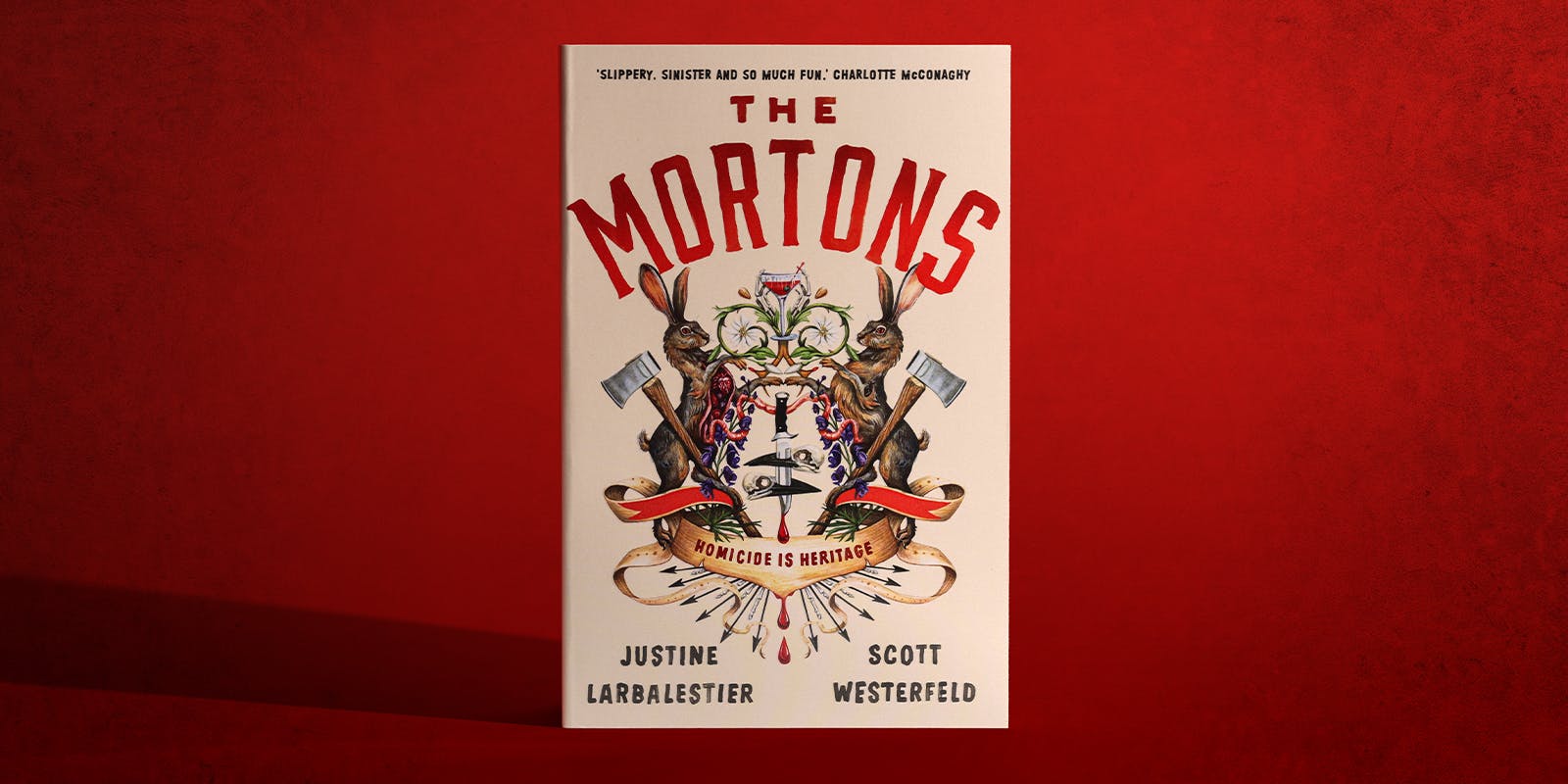
Our publishers enjoyed our cosplay photo. (It's now on the inside flap!) More important, the novel's beautiful cover captures the Morton aesthetic we were going for. The rabbits rampant coat-of-arms has a rich sense of heritage, of menace, and of the book's humor and chaos.
Researching the book
We interviewed a recently released-from-jail art criminal, who taught us about the money laundering that Jessica encounters in her New York adventures. We read histories of the ancient relationship between artists and oligarchs, how patronage is way of demonstrating power.
We also tried every kind of boiled lolly we could find, to experience the candies that Hiromi Kennedy loves in the book. We always went with the weirdest flavors, because our characters have strange tastes.
Scott handcrafted all of Jessica's cocktails, coming up with new recipes, and testing them at great personal cost. (Justine doesn't drink and hates the taste of bitter, so it was up to him alone.)
As a vintage fashion maven, Justine owns and wears several of the "dark ivy" outfits described in the novel. She now possesses several decades-old red silk ties and a black linen shirt.
Art is life, even when it's about a family of killers.
PUBLICITY
Local color
Justine was conceived in Leichhardt, born in Paddington, and grew up in the inner west of Sydney and briefly in Crows Nest. She's also lived in the Northern Territory, Canberra, and Newcastle. She finished high school at a school in North Ryde that no longer exists. She received both her BA Hons and PhD from Sydney Uni.
Scott was born in Dallas and grew up in Texas, California, and Connecticut. He went to Vassar College, which was a big influence on his creation of Helshire, the Morton family alma mater.
How we met
Justine has a PhD in science fiction. From 1999-2000, she was in NYC doing research on golden age science fiction writers, from the late 1930s into the 60s. A mutual friend introduced them at the annual Nebula annual award ceremony by saying: "Justine, you're researching NYC science fiction writers. Scott's a NYC science fiction writer."
Justine looked at the clearly far too young Scott, and said, "Not my period," and immediately returned to her conversation with science fiction writers in their seventies.
Scott muttered to himself, "Oh yes, she will be mine."
Quirky stuff about us
We both love cricket and women's basketball. Scott has had season tickets for the New York Liberty since 1999.
Justine's passionate engagement with old clothes and fashion history is captured in her instagram feed: @drjustinefancypants
Scott is a musician, and studied in the Boston Symphony Orchestra's young composers' program as a teenager. He has learned advanced techniques in throat singing, and can harmonise with himself while doing a Donald Duck impersonation.
Justine has a sports curse: every time she tries a new sport she hurts herself. The silliest example: when she was in a swimming squad she tripped over a hose and broke a toe.
We've've been together for more than 25 years. We live in Sydney (Surry Hills) and New York City (the Lower East Side).
Penguin Random House Content
Would you be open to an interview with Penguin Random House to publish on our website?
Yes.
Would you be open to answering a Q&A for the Penguin Random House website?
(We've already given you a Q&A we wrote for Penguin US.)
We have our very own content writer, who crafts different articles to promote the book on our website and pitch to other media brands.
We prefer to write our own content.
Do you have any ideas for how we can best support your book through editorial content?
We can write on a million topics. Here are those most pertinent to the book:
Vintage fashion. Justine has one such piece here:
https://www.margotmagazine.com/article/old-soul
Craft cocktails. Scott makes his own tonics, tinctures, bitters, and clarifications.
Group psychopathy. We have opinions on families as sites of control, the rise of fascism in the USA, book banning, and the depredations of late stage capitalism.
Dark Academia and Dark Americana. As a literary genre, and also how USA colleges operate, and how different they are from universities in Australia.
Writing and Publishing. We have been in the publishing industry since the late 1900s. We've collectively written more than forty books, including adult, YA, middle grade, picture books, graphic novels, and non-fiction.
A sampling of our short-form writing can be found on our blogs:
Justine's
- On taste: https://www.instagram.com/p/CwcvzBVA3wZ/?igsh=MW55N3YwdnBuOWxvcw==
- On nepotism: https://www.instagram.com/p/CnCNG5-gyTR/?igsh=eTU2dHpxM3NteDJ1
- Blackout in NYC: https://justinelarbalestier.com/blog/2003/08/17/blackout-in-new-york-city/
Scott's
- Why teenagers love dystopias: https://scottwesterfeld.com/blog/2012/09/teens-and-dystopias/
- Stories as a technology: https://scottwesterfeld.com/blog/2014/09/what-are-stories-htwya-2/
- My bout with COVID: https://scottwesterfeld.com/blog/2020/04/my-corona/
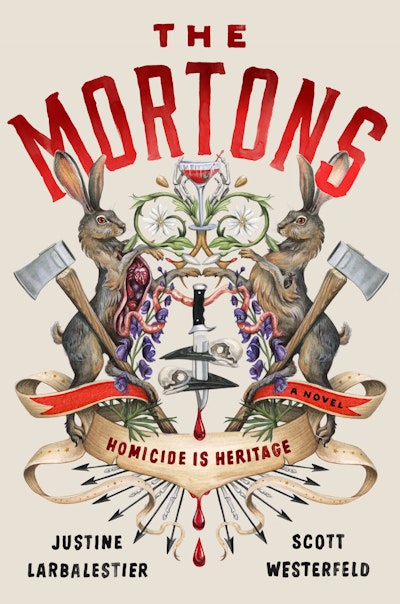
A darkly funny, action-packed gothic thriller following a modern-day, old-money crime family with murderous intent. It's The Secret History meets The Sopranos, with a dash of Saltburn!
We asked developmental paediatrician Dr Billy Garvey about his new book, Ten Things I Wish You Knew About Raising Boys, and how parents can help boys build the emotional and social skills they need to thrive.
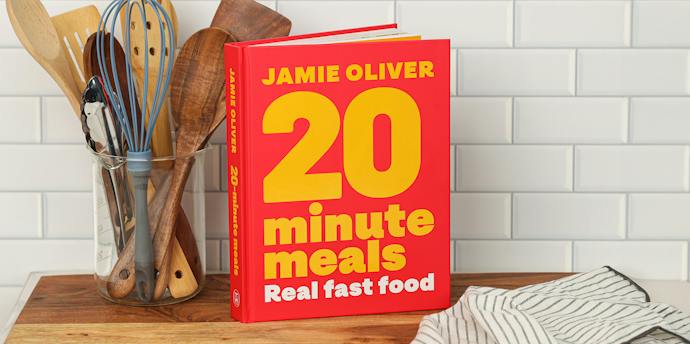
Five quick questions with Jamie Oliver on Aussie produce, cooking on a budget and making delicious meals in just 20 minutes.
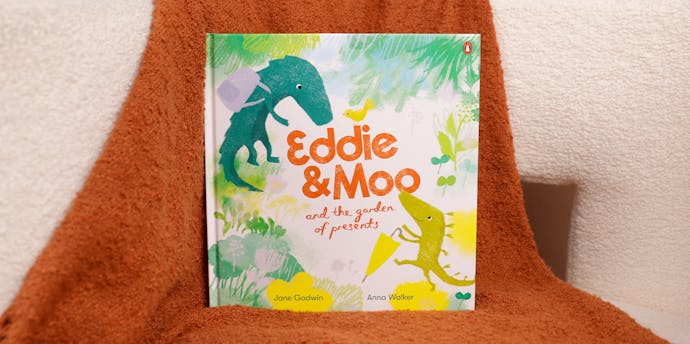
Read about the process of Jane and Anna's 10th picture book together, Eddie and Moo and the Garden of Presents – a delightful adventure for the very young about sharing joyful times together with friends.
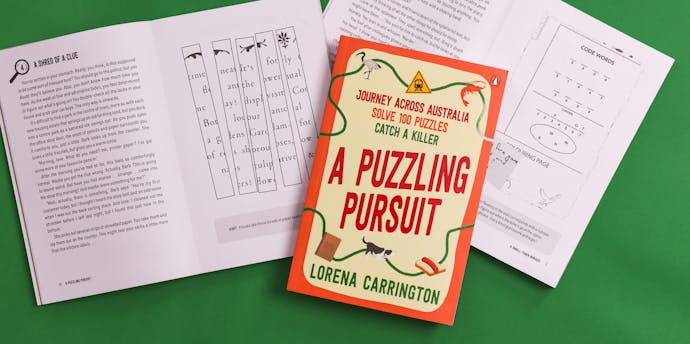
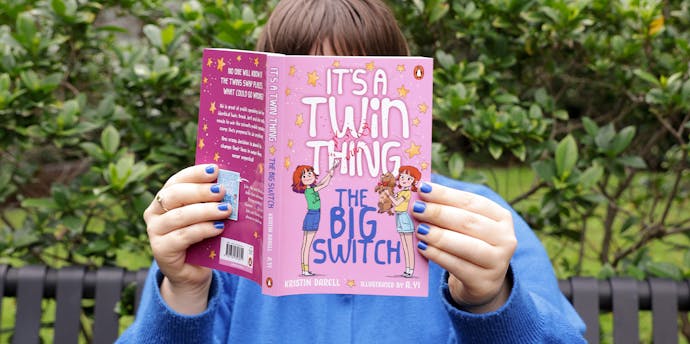
Get to know Kristin Darell and the inspiration behind her It's a Twin Thing series. 'Readers of the Sweet Valley Twins, Baby-Sitters: Little Sister and Click series will enjoy the familiar mix of friendship drama, shifting relationships and sibling rivalry.' - Kirsten Barich, Bookseller + Publisher
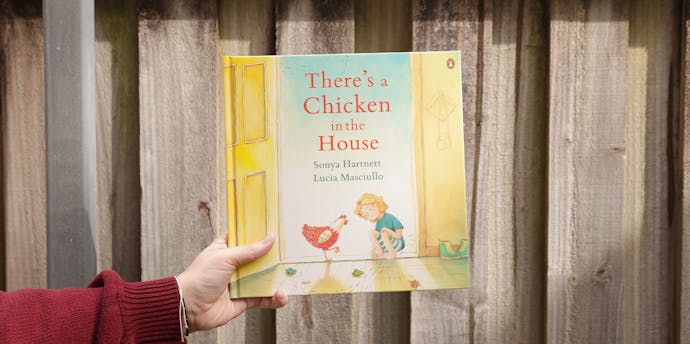
Get to know Sonya Hartnett and the inspiration behind her new title There's a Chicken in the House.
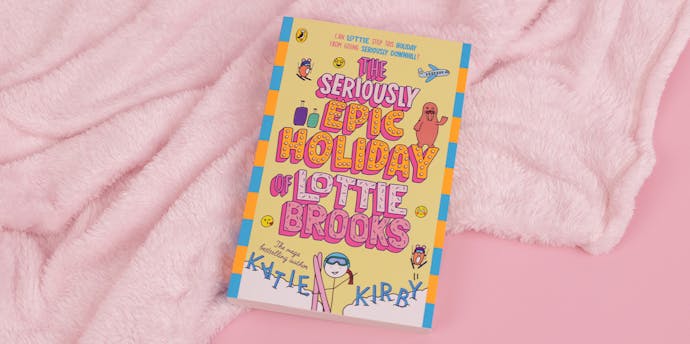
A Q&A with Katie Kirby, author of The Seriously Epic Holiday of Lottie Brooks.
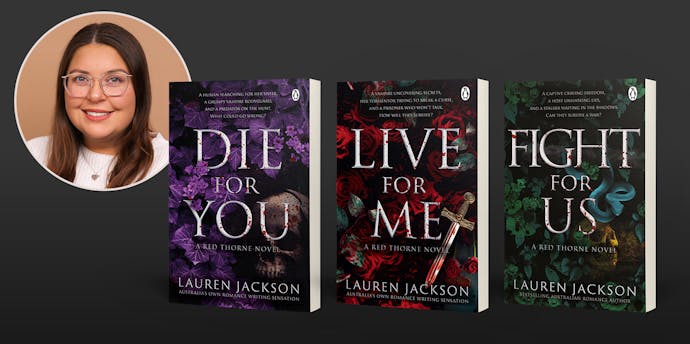
A Q&A between Lauren Jackson and Jodie Ramodien, the editor of Fight for Us, on the conclusion of Lauren’s Red Thorne series.
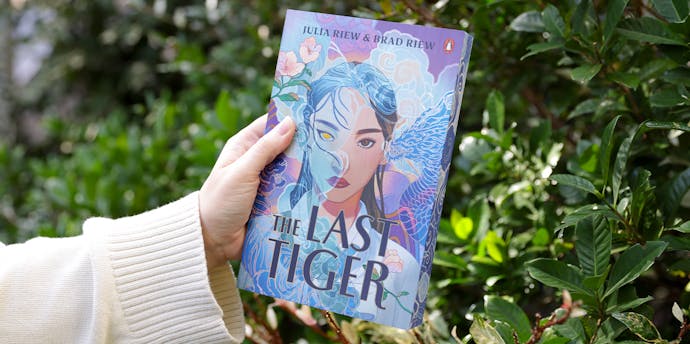
Including what they hope the book teaches young readers about getting through difficult times, and how we can look to ancestors for inspiration.
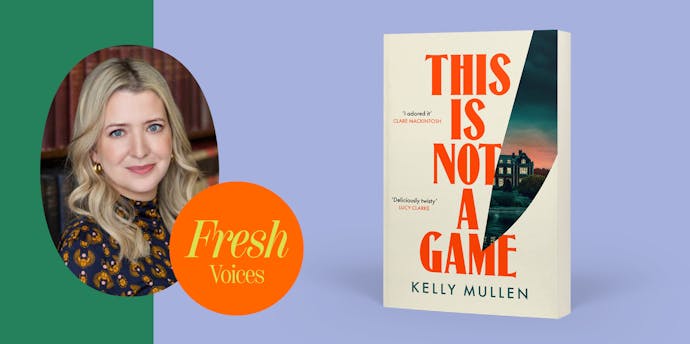
The author of This Is Not a Game on what inspired her novel and how a background in production influences her writing.