'Women in Love is a work of genius. It contains characters which are masterpieces of pure creation' New Statesman
Women in Love begins one blossoming spring day in England and ends with a terrible catastrophe in the snow of the Alps. Ursula and Gudrun are very different sisters who become entangled with two friends, Rupert and Gerald, who live in their hometown. The bonds between the couples quickly become intense and passionate but whether this passion is creative or destructive is unclear.
In this astonishing novel, widely considered to be D.H. Lawrence's best work, he explores what it means to be human in an age of conflict and confusion. It was written during World War I, and while that conflict is never mentioned in the novel, a sense of background danger, of lurking catastrophe, continually informs its drama of two couples dynamically engaged in a struggle with themselves, with each other, and with life's intractable limitations.
Lawrence was a powerful, prophetic writer, but in addition he brought such delicacy to his treatment of the human and natural worlds that E. M. Forster's claim that he was the greatest imaginative novelist of our generation does him too little justice rather than too much.
D.H. Lawrence was born as David Herbert Lawrence. He was born on September 11, 1885, in Eastwood, Nottinghamshire, England, to a working-class family. His early life experiences
and the social environment he grew up in greatly influenced his writing.
In his childhood, Lawrence witnessed the struggles and tensions within his family and the surrounding mining community. His father worked as a miner, and his mother’s
unhappiness and frustrations in her marriage left a lasting impact on Lawrence. Despite the challenges, Lawrence showed an early aptitude for education and was awarded a scholarship to Nottingham High School.
Lawrence’s time at school exposed him to a broader world of literature and ideas. He excelled academically, developing a passion for literature, poetry, and art. His intellectual
pursuits led him to study classics at Nottingham University College (now the University of Nottingham) in 1906. At
university, Lawrence encountered a vibrant literary and artistic community, which further fuelled his creative aspirations.
During his university years, Lawrence began writing poetry, short stories, and essays. He explored themes of human relationships, sexuality, and the profound connection between man and nature.
After leaving university, Lawrence experienced a period of restlessness and uncertainty. He held various jobs, including working as a schoolteacher and a clerk, while continuing to
write.
His early works were not commercially successful, and he struggled financially.
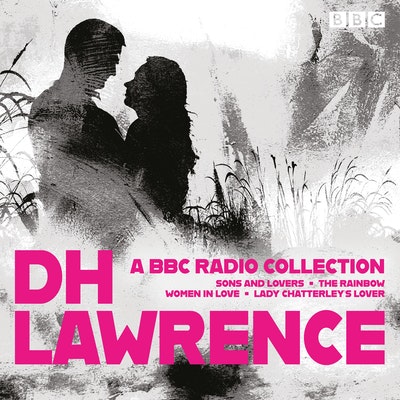
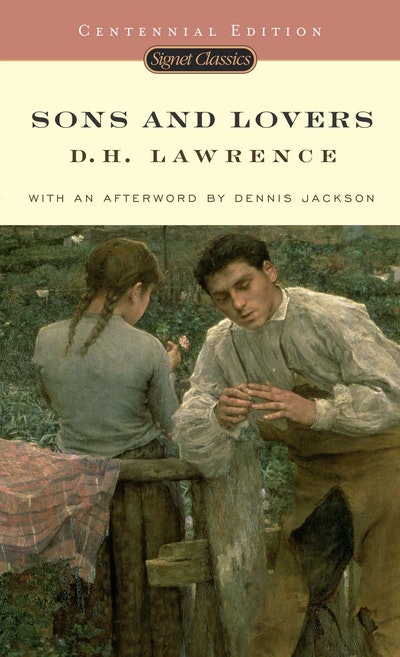
However, Lawrence’s breakthrough came with the publication of his novel Sons and Lovers in 1913. It received critical acclaim for its psychological depth and vivid storytelling. The success of it marked the beginning of Lawrence’s rise to literary fame. In the years that followed, Lawrence published several
notable works, including The Rainbow (1915) and Women in Love (1920). Both faced censorship and controversy due to their explicit depictions of sexuality. Lawrence’s writing
challenged societal norms and conventions. It explored the complexities of human desires and relationships in a candid manner. Lawrence’s reputation as a groundbreaking writer grew, but he faced ongoing struggles with censorship and
public reception.
His works continued to delve into themes
of passion, individuality, and the clash between nature and industrialization. Sadly, Lawrence’s life was cut short when he succumbed to tuberculosis on March 2 1930, in Vence, France.
He was 44 at that time. His literary legacy, however, lives on, and his works have had a profound and lasting impact on 20th-century literature. D.H. Lawrence’s fearless exploration
of human emotions and the complexities of relationships continues to captivate readers to this day.