'Women in Love is a work of genius. It contains characters which are masterpieces of pure creation' New Statesman
Selected by the Modern Library as one of the 100 best novels of all time
With an Introduction by Joyce Carol Oates foreword by the author Commentary by Carl van Doren, Rebecca West, Aldous Huxley, and Henry Miller
It is . . . the world of the poets and the preponderance of the poet in [Lawrence] that is the key to his work. He magnified and deepened experience in the manner of a poet," wrote Anaïs Nin in 1934. Privately printed in 1920 and published commercially in 1921, Women in Love is the novel Lawrence himself considered his masterpiece. Set in the English Midlands, the novel traces the lives of two sisters, Ursula and Gudrun, and the men with whom they fall in love. All four yearn for fufillment in their romantic lives, yet struggle in a world that is increasingly violent and destructive. Commenting on the novel, which was composed in the midst of the First World War in 1916, Lawrence wrote, "The bitterness of the war may be taken for granted in the characters." Rich in symbolism and lyrical prose, Women in Love is a complex meditation on the meaning of love in the modern world. To the critic Alfred Kazin, "No other writer of [Lawrence's] imaginative standing has in our time written books that are so open to life."
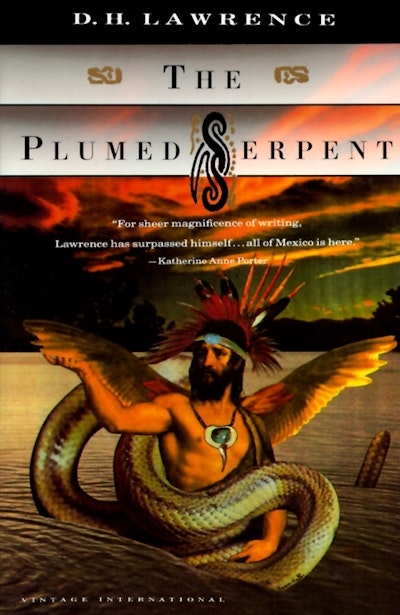
D. H. LAWRENCE (1885-1930), the son of a coal miner and a lace worker, completed his formal studies at University College, Nottingham, in 1908 and began teaching at a boys' school. By 1912, he had abandoned teaching to write full-time. His novels include The White Peacock (1911), The Trespasser (1912), Sons and Lovers (1913), The Rainbow (1915), Women in Love (1920), The Plumed Serpent (1926), and Lady Chatterley's Lover (1928), which was banned as pornographic in England until 1960.
D.H. Lawrence was born as David Herbert Lawrence. He was born on September 11, 1885, in Eastwood, Nottinghamshire, England, to a working-class family. His early life experiences
and the social environment he grew up in greatly influenced his writing.
In his childhood, Lawrence witnessed the struggles and tensions within his family and the surrounding mining community. His father worked as a miner, and his mother’s
unhappiness and frustrations in her marriage left a lasting impact on Lawrence. Despite the challenges, Lawrence showed an early aptitude for education and was awarded a scholarship to Nottingham High School.
Lawrence’s time at school exposed him to a broader world of literature and ideas. He excelled academically, developing a passion for literature, poetry, and art. His intellectual
pursuits led him to study classics at Nottingham University College (now the University of Nottingham) in 1906. At
university, Lawrence encountered a vibrant literary and artistic community, which further fuelled his creative aspirations.
During his university years, Lawrence began writing poetry, short stories, and essays. He explored themes of human relationships, sexuality, and the profound connection between man and nature.
After leaving university, Lawrence experienced a period of restlessness and uncertainty. He held various jobs, including working as a schoolteacher and a clerk, while continuing to
write.
His early works were not commercially successful, and he struggled financially.
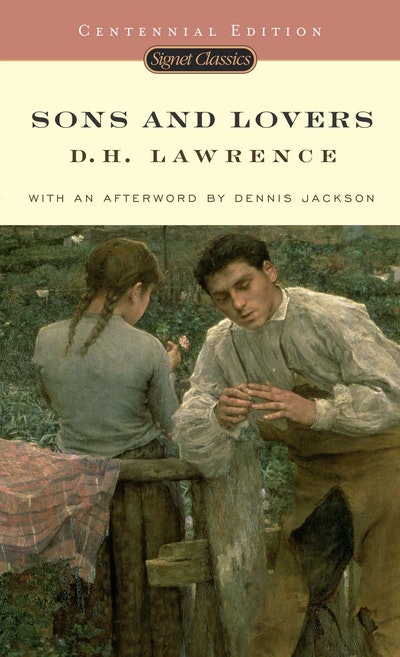
However, Lawrence’s breakthrough came with the publication of his novel Sons and Lovers in 1913. It received critical acclaim for its psychological depth and vivid storytelling. The success of it marked the beginning of Lawrence’s rise to literary fame. In the years that followed, Lawrence published several
notable works, including The Rainbow (1915) and Women in Love (1920). Both faced censorship and controversy due to their explicit depictions of sexuality. Lawrence’s writing
challenged societal norms and conventions. It explored the complexities of human desires and relationships in a candid manner. Lawrence’s reputation as a groundbreaking writer grew, but he faced ongoing struggles with censorship and
public reception.
His works continued to delve into themes
of passion, individuality, and the clash between nature and industrialization. Sadly, Lawrence’s life was cut short when he succumbed to tuberculosis on March 2 1930, in Vence, France.
He was 44 at that time. His literary legacy, however, lives on, and his works have had a profound and lasting impact on 20th-century literature. D.H. Lawrence’s fearless exploration
of human emotions and the complexities of relationships continues to captivate readers to this day.