> Skip to content
[]
  • Published: 15 September 2014
  • ISBN: 9781590177242
  • Imprint: NY Review Books
  • Format: Paperback
  • Pages: 192
  • RRP: $35.00

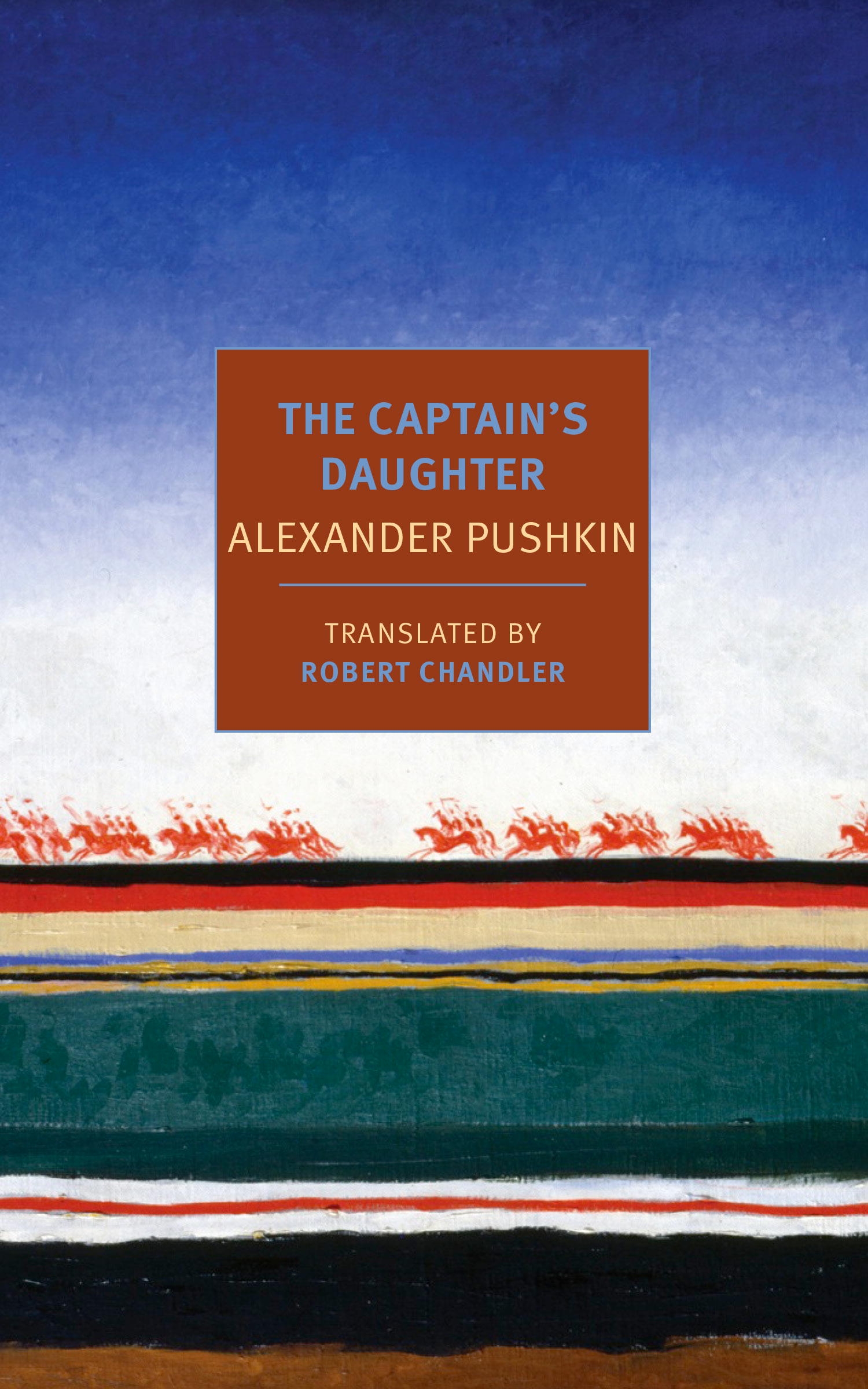
The Captain's Daughter


A classic historical and military novel from the progenitor of the Russian novel, Alexander Pushkin, and translated by one of the best Russian translators today, Robert Chandler. The Captain's Daughter is set during the Pugachev Rebellion, when the Cossacks came close to toppling Catherine the Great, and like Tolstoy's War and Peace, it is individuals, communities, and love that contrasts a human's internal world with the inevitable movements of history.

A classic Russian historical military novel set during the Pugachev Rebellion which contrasts the human internal world with the inevitable movements of history

“Time has done nothing to dull the excitement of the story, which, for all its romantic coincidences, is something more than a mere tale of adventure” —The New York Times

Alexander Pushkin’s short novel is set during the reign of Catherine the Great, when the Cossacks rose up in rebellion against the Russian empress. Presented as the memoir of Pyotr Grinyov, a nobleman, The Captain’s Daughter tells how, as a feckless youth and fledgling officer, Grinyov was sent from St. Petersburg to serve in faraway southern Russia. Traveling to take up this new post, Grinyov loses his shirt gambling and then loses his way in a terrible snowstorm, only to be guided to safety by a mysterious peasant. With impulsive gratitude Grinyov hands over his fur coat to his savior, never mind the cold.

Soon after he arrives at Fort Belogorsk, Grinyov falls in love with Masha, the beautiful young daughter of his captain. Then Pugachev, leader of the Cossack rebellion, surrounds the fort. Resistance, he has made it clear, will be met with death.

At once a fairy tale and a thrilling historical novel, this singularly Russian work of the imagination is also a timeless, universal, and very winning story of how love and duty can summon pluck and luck to confront calamity.

  • Published: 15 September 2014
  • ISBN: 9781590177242
  • Imprint: NY Review Books
  • Format: Paperback
  • Pages: 192
  • RRP: $35.00

About the author

Alexander Pushkin

Alexander Sergeyevich Pushkin was born in Moscow in 1799. He was liberally educated and left school in 1817. Given a sinecure in the Foreign Office, he spent three dissipated years in St Petersburg writing light, erotic and highly polished verse. He flirted with several pre-Decembrist societies, composing the mildly revolutionary verses which led to his disgrace and exile in 1820. After traveling through the Caucasus and the Crimea, he was sent to Bessarabia, where he wrote The Captive of the Caucasus and The Fountain at Bakhchisaray, and began Eugene Onegin. His work took an increasingly serious turn during the last year of his southern exile, in Odessa.

In 1824 he was transferred to his parents' estate at Mikhaylovskoe in north-west Russia, where he spent two solitary but fruitful years during which he wrote his historical drama Boris Godunov, continued Eugene Onegin and finished The Gipsies. After the failure of the Decembrist Revolt in 1825 and the succession of a new tsar, Pushkin was granted conditional freedom in 1826. During the next three years he wandered restlessly between St Petersburg and Moscow. He wrote an epic poem, Poltava, but little else.

In 1829 he went with the Russian army to Transcaucasia, and the following year, stranded by a cholera outbreak at the small family estate of Boldino, he wrote his experimental Little Tragedies in blank verse and The Tales of Belkin in prose, and virtually completed Eugene Onegin. In 1831 he married the beautiful Natalya Goncharova. The rest of his life was soured by debts and the malice of his enemies. Although his literary output slackened, he produced his major prose works The Queen of Spades and The Captain's Daughter, his masterpiece in verse, The Bronze Horseman, important lyrics and fairy tales, including The Tale of the Golden Cockerel. Towards the end of 1836 anonymous letters goaded Pushkin into challenging a troublesome admirer of his wife to a duel. He was mortally wounded and died in January 1837.

Also by Alexander Pushkin

See all

Praise for The Captain's Daughter

"Time has done nothing to dull the excitement of the story, which, for all its romantic coincidences, is something more than a mere tale of adventure because its characters are something more than cardboard." --The New York Times

"One brilliant feature of The Captain's Daughter is that you don't know what sort of narrative is unfolding.... It is a baffled reflection, from the position of political enlightenment, on the extraordinary hold exercised by violence and fanaticism upon the human race." --A. N. Wilson, The Daily Telegraph

"Robert and Elizabeth Chandler's translation reads wonderfully...and captures the plot's wildness, cruelty, and touching romance." --Jonathan Mirsky, The Spectator

"The Captain's Daughter is one of the stories in which Pushkin created Russian prose.... It is true poet's prose, absolutely clear, objective, unpretentious and penetrating." --Robert Conquest, The Spectator

penguin pop image
penguin pop image