> Skip to content
[]
  • Published: 1 April 2003
  • ISBN: 9781588362735
  • Imprint: RH US eBook Adult
  • Format: EBook
  • Pages: 176

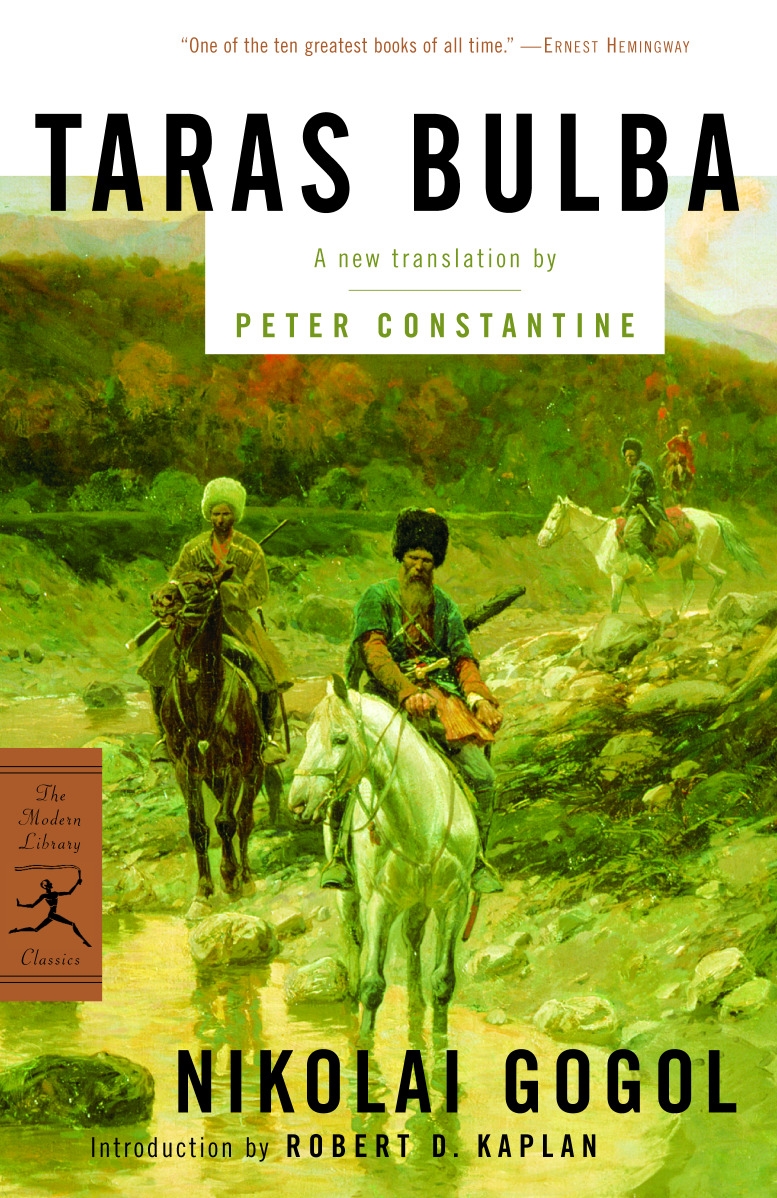
Taras Bulba


The First New Translation in Forty Years

Set sometime between the mid-sixteenth and early-seventeenth century, Gogol’s epic tale recounts both a bloody Cossack revolt against the Poles (led by the bold Taras Bulba of Ukrainian folk mythology) and the trials of Taras Bulba’s two sons.

As Robert Kaplan writes in his Introduction, “[Taras Bulba] has a Kiplingesque gusto . . . that makes it a pleasure to read, but central to its theme is an unredemptive, darkly evil violence that is far beyond anything that Kipling ever touched on. We need more works like Taras Bulba to better understand the emotional wellsprings of the threat we face today in places like the Middle East and Central Asia.” And the critic John Cournos has noted, “A clue to all Russian realism may be found in a Russian critic’s observation about Gogol: ‘Seldom has nature created a man so romantic in bent, yet so masterly in portraying all that is unromantic in life.’ But this statement does not cover the whole ground, for it is easy to see in almost all of Gogol’s work his ‘free Cossack soul’ trying to break through the shell of sordid today like some ancient demon, essentially Dionysian. So that his works, true though they are to our life, are at once a reproach, a protest, and a challenge, ever calling for joy, ancient joy, that is no more with us. And they have all the joy and sadness of the Ukrainian songs he loved so much.”
  • Published: 1 April 2003
  • ISBN: 9781588362735
  • Imprint: RH US eBook Adult
  • Format: EBook
  • Pages: 176

About the author

Nikolai Gogol

Nikolai Vasilevich Gogol was born in 1809; his family were small gentry of Ukrainian cossack extraction, and his father was the author of a number of plays based on Ukrainian popular tales. He attended school in Nézhin and gained a reputation for his theatrical abilities. He went to St Petersburg in 1829 and with the help of a friend gained a post in one of the government ministries. Gogol was introduced to Zhukovsky, the romantic poet, and to Pushkin, and with the publication of Evenings on a Farm near Dikanka (1831) he had an entrée to all the leading literary salons. He even managed for a short period to be Professor of History at the University of St. Petersburg (1834-5). Diary of a Madman and The Story of the Quarrel between Ivan Ivanovich and Ivan Nikiforovich appeared in 1934, The Nose in 1836, and The Overcoat in 1842. Gogol also wrote the play The Inspector (1836), Dead Souls (1842), and several moralizing essays defending the Tsarist regime, to the horror of his liberal and radical friends. He lived a great deal abroad, mostly in Rome, and in his last years became increasingly prey to religious mania and despair. He made a pilgrimage to Jerusalem in 1848, but was bitterly disappointed in the lack of feeling that the journey kindled. He returned to Russia and fell under the influence of a spiritual director who told him to destroy his writings as they were sinful. He burned the second part of Dead Souls, and died in 1852 after subjecting himself to a severe regime of fasting.

Also by Nikolai Gogol

See all