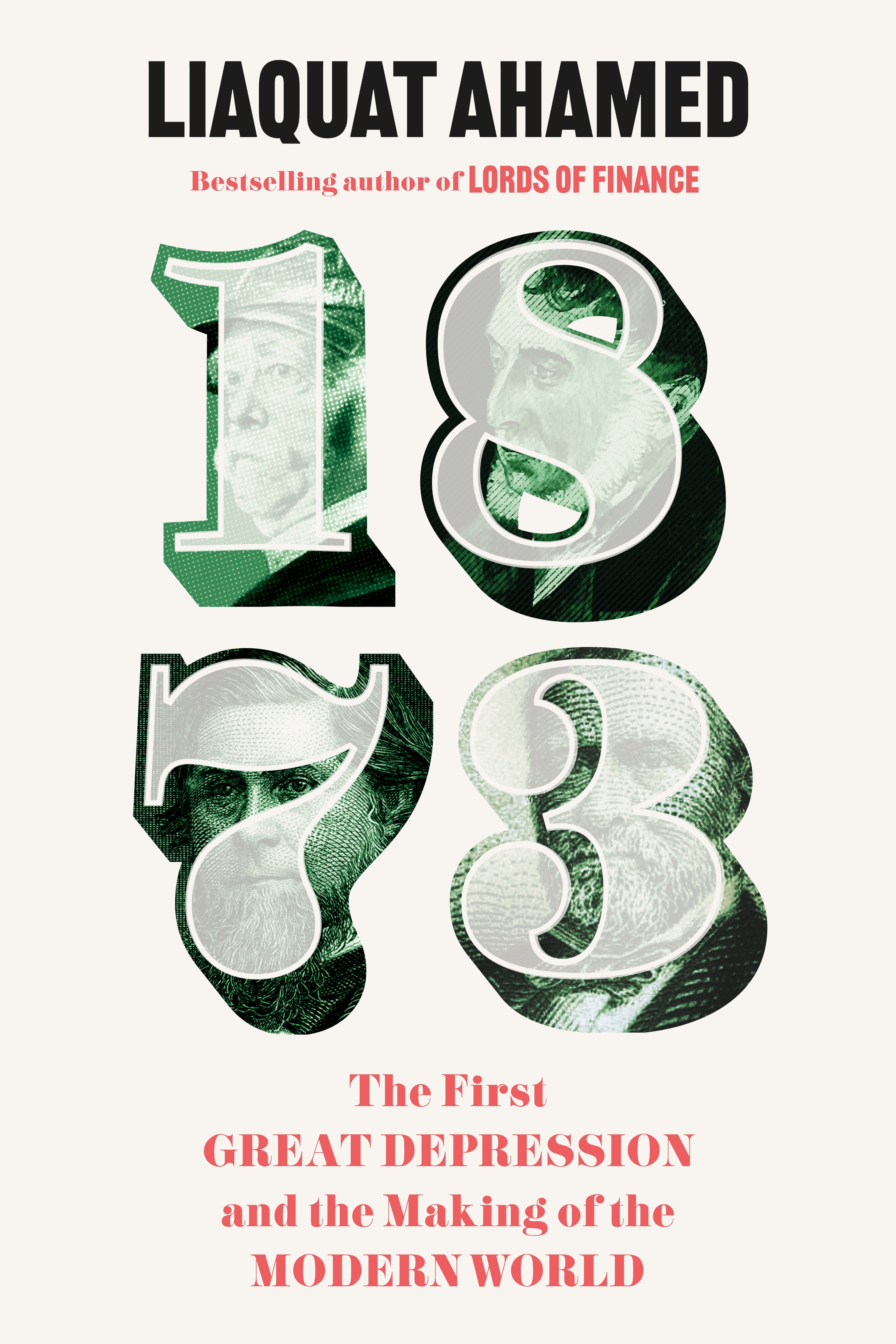
- Published: 11 June 2026
- ISBN: 9781804962312
- Imprint: Penguin
- Format: EBook
- Pages: 368
1873
The First Great Depression and the Making of the Modern World


- Published: 11 June 2026
- ISBN: 9781804962312
- Imprint: Penguin
- Format: EBook
- Pages: 368

Liaquat Ahamed has a unique ability to bring financial and monetary history to life. In this superb book, he weaves together the people, forces and events that led to the global financial crisis of 1873 and then shaped its dire long-term consequences. Not least, he shows how a huge boom-and-bust cycle, combined with the decision to make gold the sole monetary anchor, to create a first global "great depression".
Martin Wolf, author of The Crisis of Democratic Capitalism
With his readable prose and agile analysis, Liaquat Ahamed has a talent for telescoping huge financial fiascoes into compact and exciting books. 1873 describes how speculative mania and misguided monetary policy produced debt and deflation that shadowed the final decades of the nineteenth century. With its cast of coluorful villains, this saga contains a wealth of sobering insights that ought to sound a warning in our own hyper-speculative era.
Ron Chernow, author of Mark Twain
Pendulum shifts in the political economy happen slowly – and then all at once. In this fantastically readable history, Liaquat Ahamed shows us how frothy real estate markets, a burgeoning middle class, failing autocrats, a dodgy bond market, and other seemingly disparate forces eventually came together to produce the first global financial crisis of the modern era. It’s a book that has all too much to tell us about our own time period; indeed, it provides both a warning and a road map for what might come next.
Rana Foroohar, author of Homecoming and Don’t Be Evil
Liaquat Ahamed matches his earlier Lords of Finance with a page-turning saga of the world’s first international financial crisis. By pinpointing the essential characters, from the avaricious Jay Cooke in America to the Turkish sultan blowing his budget on a harem of two hundred women to the mysterious Rothschild banking clan, Ahamed makes 1873 seem as alive as today. And in his hands, it is. By confronting the question of what could topple economies across multiple time zones, this master writer comes again to the question of money, over a quarter century in which prices spiralled out of control – not up but down – sowing misery for the common man, especially in America. We read with fascination how Gilded Age bankers and statemen missed the yawning danger of deflation – and wonder if those in our time have yet to learn their lesson. In this gripping read, Ahamed makes the crisis of 1873 both compelling and accessible.
Roger Lowenstein, author of Ways and Means and Buffett
Ahamed thrillingly brings back to life a boom not unlike today's and a crisis that doesn't resemble 1929 or 20007-9. In the process he illuminates new ways of thinking of finance.
Financial Times
1873 is not... a dry work of financial history. The author is an engaging chronicler – no easy task when the tale covers events from the Franco-Prussian war to the economic travails of the Ottoman empire and Egypt
Financial Times Summer Reads 2026
The book to read right now [is 1873] . . . All of us are reading this
Satya Nadella, CEO of Microsoft, The Times
Liaquat Ahamed has a unique ability to bring financial and monetary history to life. In this superb book, he weaves together the people, forces, and events that led to the global financial crisis of 1873 and then shaped its dire long-term consequences. Not least, he shows how a huge boom-and-bust cycle combined with the decision to make gold the sole monetary anchor, to create a first global ‘great depression'.
Martin Wolf, author of The Crisis of Democratic Capitalism
Liaquat Ahamed matches his earlier Lords of Finance with a page-turning saga of the world’s first international financial crisis. By pinpointing the essential characters, from the avaricious Jay Cooke in America to the Turkish sultan blowing his budget on a harem of two hundred women to the mysterious Rothschild banking clan, Ahamed makes 1873 seem as alive as today. And in his hands, it is. By confronting the question of what could topple economies across multiple time zones, this master writer comes again to the question of money, over a quarter-century in which prices spiralled out of control—not up, but down—sowing misery for the common man, especially in America. We read with fascination how Gilded Age bankers and statemen missed the yawning danger of deflation—and wonder if those in our time have yet to learn their lesson. A gripping read, Ahamed makes the crisis of 1873 both compelling and accessible.
Roger Lowenstein, author of Ways and Means and Buffett
With his readable prose and agile analysis, Liaquat Ahamed has a talent for telescoping huge financial fiascoes into compact and exciting books. 1873 describes how speculative mania and misguided monetary policy produced debt and deflation that shadowed the final decades of the 19th century. With its cast of colorful villains, this saga contains a wealth of sobering insights that ought to sound a warning in our own hyper-speculative era.
Ron Chernow