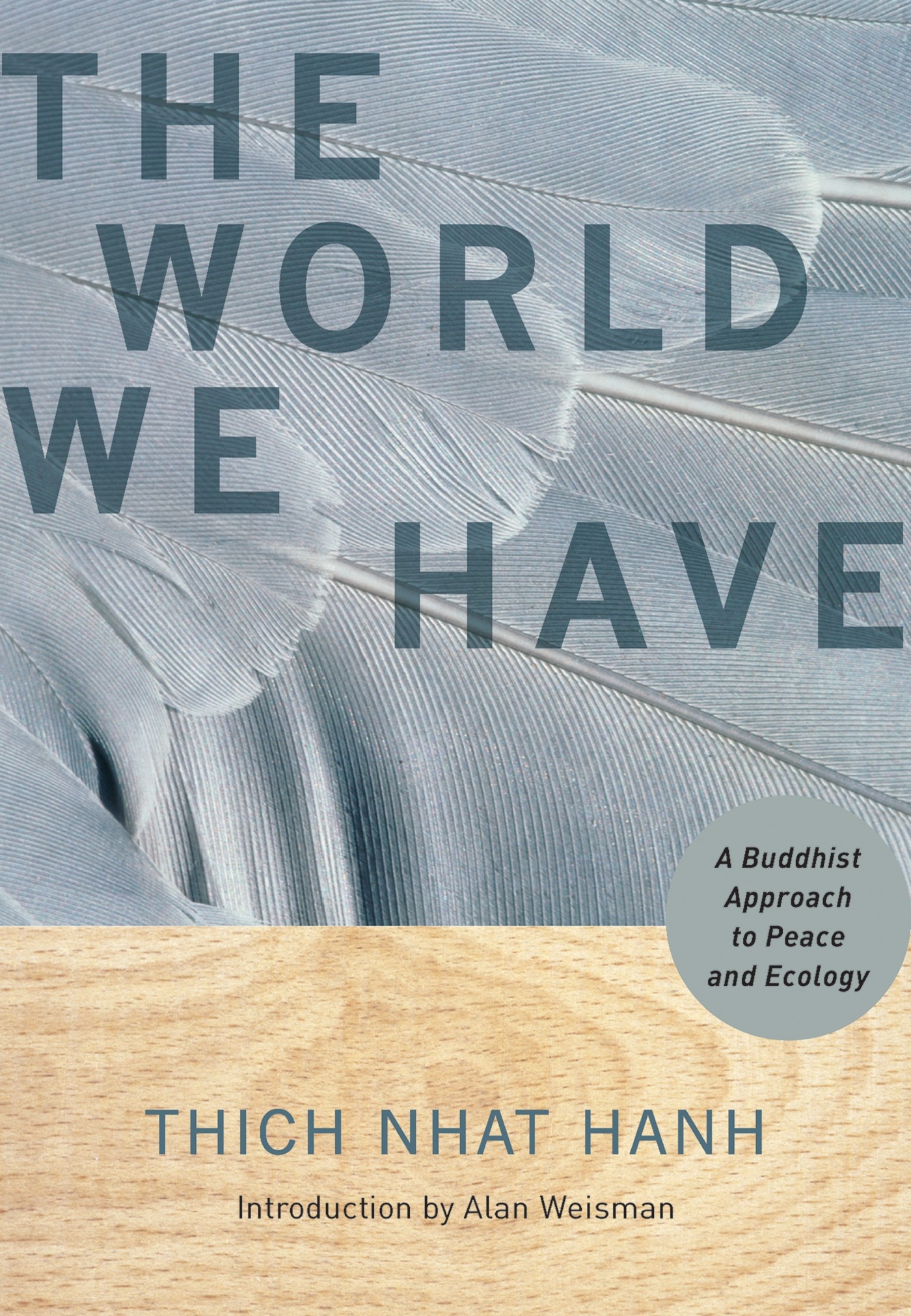
In this provocative book, noted Buddhist teacher Thich Nhat Hanh offers a dramatic vision of the future of a planet overheated by rapidly disappearing fossil fuels, degraded by massive overconsumption, and besieged by unsupportable population growth. Hanh finds answers to these critical problems in the Buddhist teaching of the impermanence of all things. He demonstrates how this teaching can offer inner peace and help us use our collective wisdom and technology to restore the Earth's balance. Mixing inspiring insights with practical strategies, Hanh cites projects his own monastic community has undertaken that can serve as models for any community. Both his " No Car Day," observed once a week, and the "Earth Peace Treaty Commitment Sheet" can impact our ecological footprint on the Earth. Above all, he shows how acceptance of problems is that first critical step toward a deeper understanding of the best way to care for our Earth.
Includes Thich Nhat Hanh’s speech at UNESCO from October 2006 introducing his proposal for a global "No Car Day."
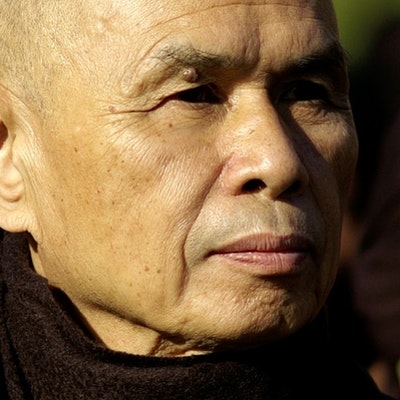
Born in Hue, Vietnam, Thich Nhat Hanh is a Buddhist Zen Master, poet, scholar and human rights activist. In 1967, he was nominated for the Nobel Peace Prize by Martin Luther King. He founded the Van Hanh Buddhist University in Saigon, the School of Youth and Social Service and the Plum Village Buddhist community and meditation centre in France, where he lived for many years. He is the author of many acclaimed books including Peace is Every Step, Old Path White Clouds and Fear, which have sold millions of copies around the world. He lives at the Tu Hieu Temple in Vietnam where he was first ordained when he was sixteen years old.