> Skip to content
[]
  • Published: 15 October 2006
  • ISBN: 9781857152647
  • Imprint: Everyman
  • Format: Hardback
  • Pages: 552
  • RRP: $39.99

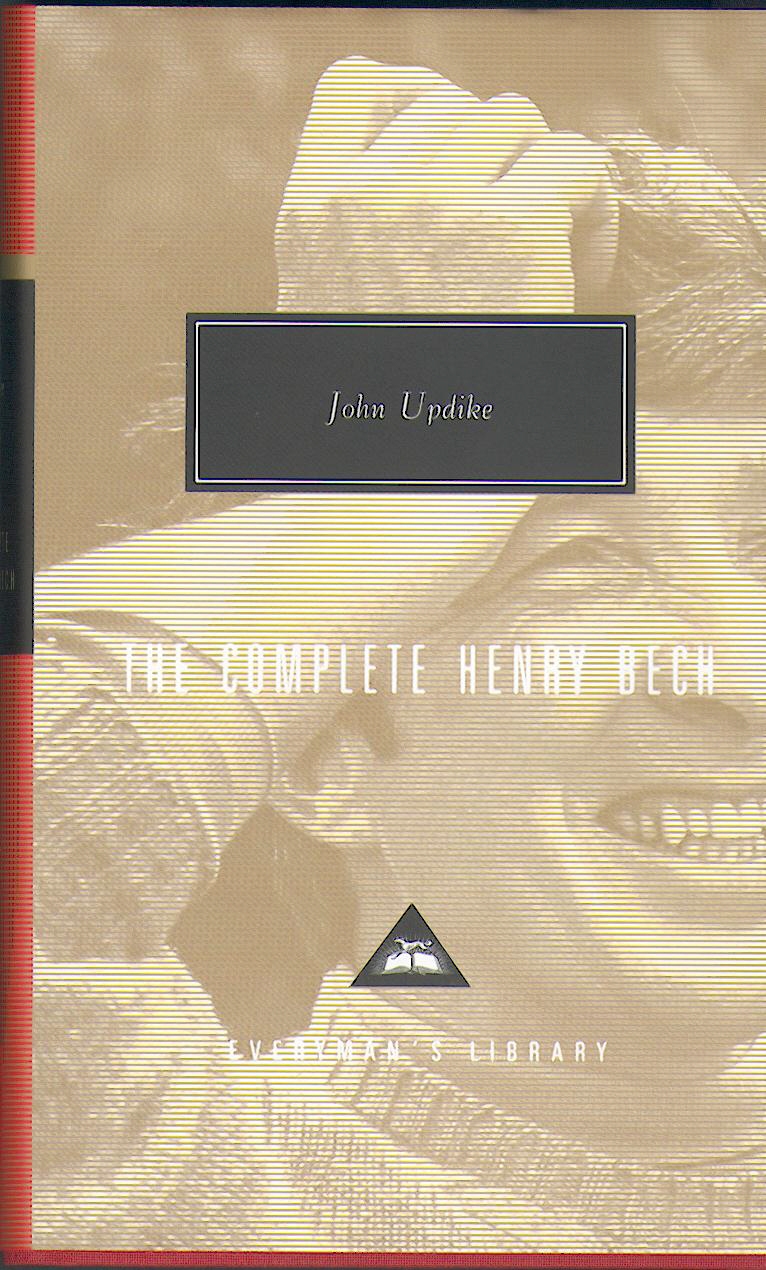
The Complete Henry Bech


The Bech stories-collected in one volume for the first time, and featuring a final, series-capping story, "His Oeuvre"-cast an affectionate eye on the famously unproductive Jewish-American writer, offering up a stream of wit, whimsy, and lyric pungency unmatched in American letters.
"One of Updike's best creations." -Life

From his birth in 1923 to his belated paternity and public apotheosis as a spry septuagenarian in 1999, Bech plugs away, globetrotting in the company of foreign dignitaries one day and schlepping in tattered tweeds on the college lecture circuit the next. By turns cynical and naïve, wry and avuncular, and always amorous, he is Updike's most endearing confection-a Lothario, a curmudgeon, and a winsome literary icon all in one. A perfect forum for Updike's limber prose, The Complete Henry Bech is an arch portrait of the literary life in America from an incomparable American writer.

Since tales of his exploits began appearing in The New Yorker more than thirty years ago, Henry Bech, John Updike's playfully irreverent alter-ego, has charmed readers with his aesthetic dithering and his seemingly inexhaustible libido.

  • Published: 15 October 2006
  • ISBN: 9781857152647
  • Imprint: Everyman
  • Format: Hardback
  • Pages: 552
  • RRP: $39.99

About the author

John Updike

John Updike was born in 1932 in Shillington, Pennsylvania, and died in January 2009. He attended Shillington High School, Harvard College and the Ruskin School of Drawing and Fine Art at Oxford, where he spent a year on a Knox Fellowship. From 1955 to 1957 he was a member of the staff of the New Yorker, to which he has contributed numerous poems, short stories, essays and book reviews. Since 1957 he has lived in Massachusetts as a freelance writer.

John Updike's first novel, The Poorhouse Fair, was published in 1959. It was followed by Rabbit, Run, the first volume of what have become known as the Rabbit books, which John Banville described as 'one of the finest literary achievements to have come out of the US since the war'. Rabbit is Rich (1981) and Rabbit at Rest (1990) were awarded the Pulitzer Prize for Fiction.

Other novels by John Updike include Marry Me; The Witches of Eastwick, which was made into a major feature film; Memories of the Ford Administration; Brazil; In the Beauty of the Lilies; Toward the End of Time; Terrorist; Villages; and The Widows of Eastwick, a sequel to The Witches of Eastwick. He wrote a number of volumes of short stories, and a selection entitled Forty Stories – which includes stories taken from The Same Door; Pigeon Feathers; The Music School; and Museums and Women – is published in Penguin, as is the highly acclaimed The Afterlife and Other Stories. His criticism and his essays, which first appeared in magazines such as The New Yorker and The New York Review of Books, have been collected in five volumes. Golf Dreams, a collection of his writings on golf, has also been published. His Collected Poems 1953-1993 brings together almost all of the poems from five previous volumes, including 'Hoping for a Hoopoe', 'Telephone Poles' and 'Tossing and Turning', as well as seventy poems previously unpublished in book form. John Updike's last books were Endpoint, a final collection of poems, and My Father's Tears and Other Stories, a collection of short stories. Both were published by Penguin in 2009.

Also by John Updike

See all

Praise for The Complete Henry Bech

A deft poke at what it means to be a writer in America.

New York Times

In his extraordinarily productive career, John Updike has given us a multitude of memorable characters, but none more lovable than the high-minded, mild-mannered, rather hapless writer Henry Bech.

Chicago Tribune

As imaginative territory, literary Manhattan has proved irresistible to Updike the satirist, and he has done it full justice and then some in his volumes of stories concerning the doings of New York novelist Henry Bech.

The New Criterion

A mordantly comic look at literary life.

Time