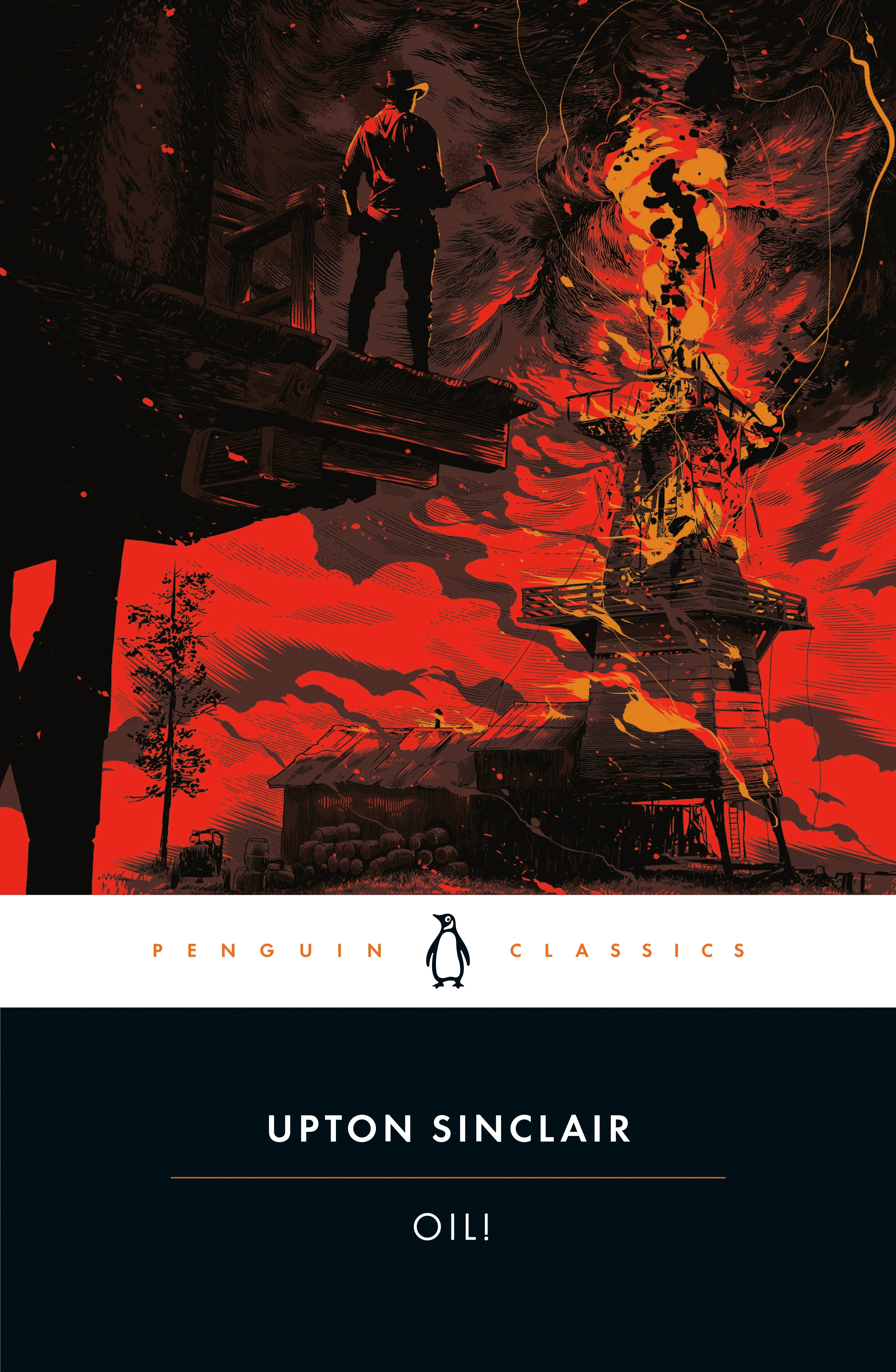
Upton Sinclair's searing indictment of fossil fuels that predicts our current warming planet while imagining a greener and more inclusive future
A Penguin Classic
Upton Sinclair's searing indictment of fossil fuels that predicts our current warming planet while imagining a greener and more inclusive future
A Penguin Classic
Perhaps most well-known today as the inspiration for Paul Thomas Anderson’s film There Will Be Blood, Upton Sinclair’s novel Oil! burst into the literary limelight amid soaring petroleum profits and gaping inequalities in 1927. By turns an ardent family saga, scintillating potboiler, and anti-capitalist tirade, Oil! ranks among the most important critiques of fossil energy ever printed; and while anticipating how fossil fuels have shaped the dilemmas of our present, it also looks toward a greener, more inclusive, and altogether more livable world yet to come. This edition features a contextual introduction by Michael Tondre that illuminates the novel’s urgent timeliness in our warming world.
UPTON SINCLAIR was the leading socialist American writer of the 20th century, publishing nearly a hundred books before his death in 1968. His work includes dozens of historical novels, numerous non-fiction works of muckraking journalism, socialist political tracts, drama, poetry, and several volumes of autobiography. Sinclair was also a socialist political organizer and was nearly elected governor of California in 1934. His most famous novel, The Jungle, published in 1906, exposed the horrific conditions in the US meatpacking industry, and is still a best selling book today. Jack London called it "the Uncle Tom's Cabin of wage slavery." Sinclair won the 1943 Pulitzer Prize for fiction for Dragon's Teeth, a novel set during the Nazi takeover of Germany during the 1930s. Oil!, his Southern California political satire, was the inspiration for the 2007 film There Will Be Blood. Numerous other works by Sinclair were adapted for film, television, and the stage. Sinclair engaged with and supported progressive and socialist work of all kinds. He founded a utopian community, edited works by other progressive writers and artists, was arrested at numerous protests, and traveled and lectured widely in support of progressive causes. His novel The Millennium: A Comedy of the Year 2000 and the collection he edited The Cry for Justice: An Anthology of Social Protest were both reissued by Seven Stories Press in 2000 and 2020, respectively.