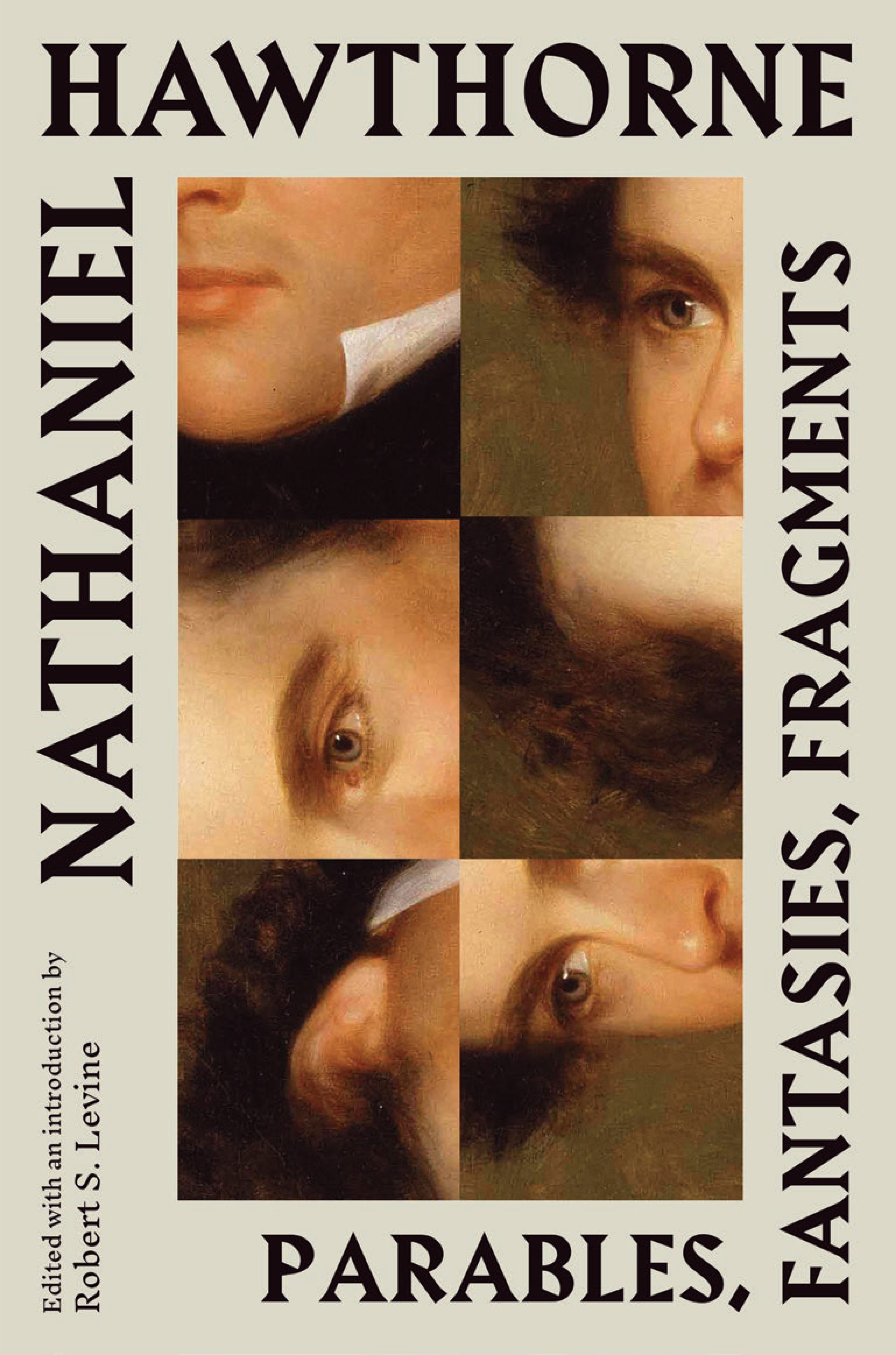
Nathaniel Hawthorne’s haunting short parables, fantasies, and fragments gathered from his private notebooks for the first time.
After graduating from college in 1825, Nathaniel Hawthorne returned home to Salem, Massachusetts, where he lived with his mother and sisters for most of the next two decades, honing his craft in his third-story bedroom. During that time, he kept a series of journals, now called the American Notebooks, that became a vital taproot for his stories and novels. They also served as a laboratory where Hawthorne could experiment with fictional ideas and premises, letting his extraordinary imagination play with intriguing, sometimes wild possibilities. Some of his oddest, boldest, and most secretive writing—virtually unknown to readers until now—are the microfictions sprinkled throughout these notebooks, none more than a paragraph long, and many just a single sentence.
Acclaimed Hawthorne scholar Robert S. Levine has selected 200 of these intriguing short works, arranging them into thematic groups covering topics like the writing life, divided selves, and death and imagined afterlives. They reveal Hawthorne as a radical, strikingly modern literary experimenter, their extreme compression and dreamlike strangeness calling to mind Kafka’s parables and aphorisms. Gathered here in a single volume for the first time, they offer thrilling access to what Hawthorne called “the inmost Me behind its veil”—the creative essence of one of America’s greatest storytellers.