> Skip to content
[]
  • Published: 10 January 2006
  • ISBN: 9780812975093
  • Imprint: Random House US Group
  • Format: Paperback
  • Pages: 608
  • RRP: $45.00

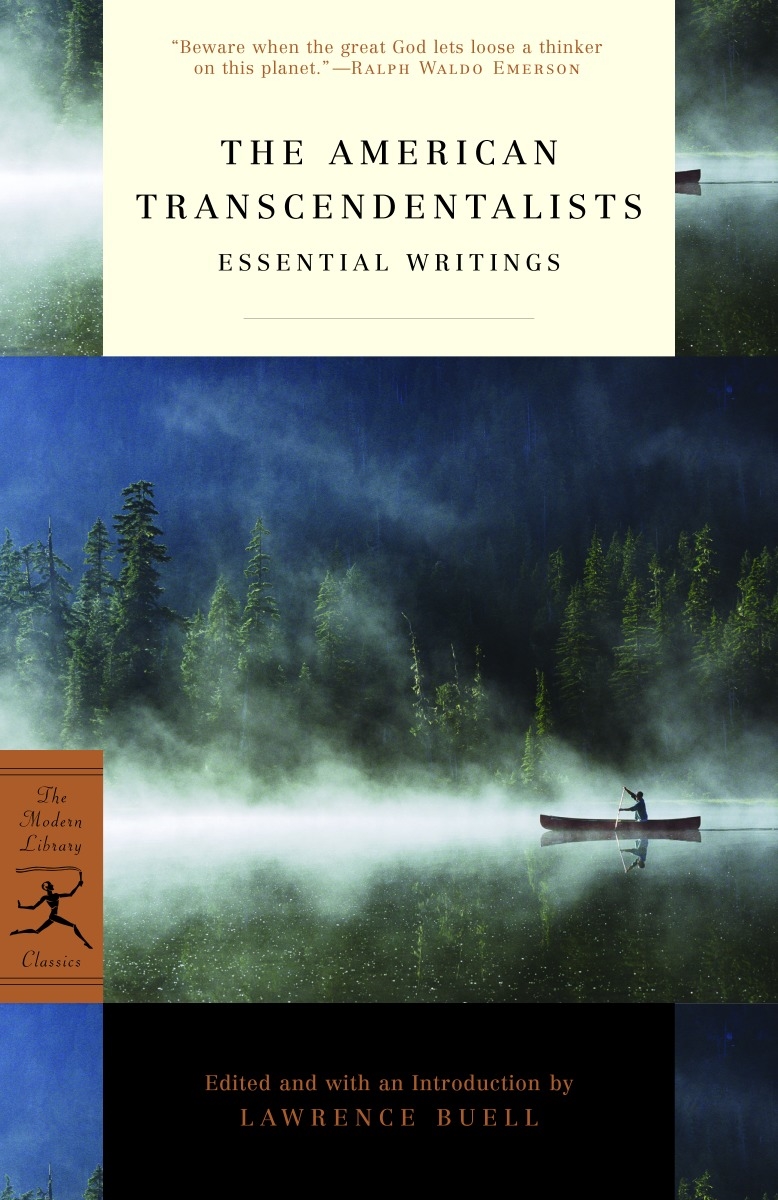
The American Transcendentalists

Essential Writings


The best Transcendentalism reader on the market, edited and introduced by a preeminent scholar of American Transcendentalism and environmental/nature writing.

Transcendentalism was the first major intellectual movement in U.S. history, championing the inherent divinity of each individual, as well as the value of collective social action. In the mid-nineteenth century, the movement took off, changing how Americans thought about religion, literature, the natural world, class distinctions, the role of women, and the existence of slavery.
Edited by the eminent scholar Lawrence Buell, this comprehensive anthology contains the essential writings of Ralph Waldo Emerson, Henry David Thoreau, Margaret Fuller, and their fellow visionaries. There are also reflections on the movement by Charles Dickens, Henry James, Walt Whitman, Louisa May Alcott, and Nathaniel Hawthorne. This remarkable volume introduces the radical innovations of a brilliant group of thinkers whose impact on religious thought, social reform, philosophy, and literature continues to reverberate in the twenty-first century.
  • Published: 10 January 2006
  • ISBN: 9780812975093
  • Imprint: Random House US Group
  • Format: Paperback
  • Pages: 608
  • RRP: $45.00

About the authors

Margaret Fuller

Margaret Fuller (1810–1850), a brilliant intellectual and courageous radical thinker, is most often associated with the Transcendentalist movement of the nineteenth century. Fuller, a mentor to the women who would lead the abolitionist and suffragist movements, penned America's first feminist treatise, Woman in the Nineteenth Century.

Nathaniel Hawthorne

Nathaniel Hawthorne (1805–64) was an American novelist and short story writer. He was born in Salem, Massachusetts, and graduated from Bowdoin College. His first novel, Fanshawe, was published anonymously in 1828, followed by several collections of short stories, including Twice-Told Tales and Mosses from an Old Manse. His later novels include The Scarlet Letter, The House of the Seven Gables, The Blithedale Romance, and The Marble Faun.

Henry David Thoreau

Henry David Thoreau was born in 1817 in Concord, Massachusetts, the town where he would live for most of his life. Along with Ralph Waldo Emerson, he is the most famous of the American Transcendentalists, a group of philosophical thinkers who frequently explored the relationship between human beings and the natural world. He was educated at Harvard, and over the course of his life took on a number of different occupations, including lead-pencil maker, schoolteacher and surveyor. Thoreau was outspokenly critical of the American government, fervently opposed to slavery, and an advocate of passive resistance. Whilst Walden (1854) is his best-known work, his 1849 essay ‘Civil Disobedience’ has inspired non-violent political activists the world over, including Mahatma Ghandi and Martin Luther King Jr, and his nature writings are considered ground-breaking works in ecology. He died in his hometown of Concord in 1862.