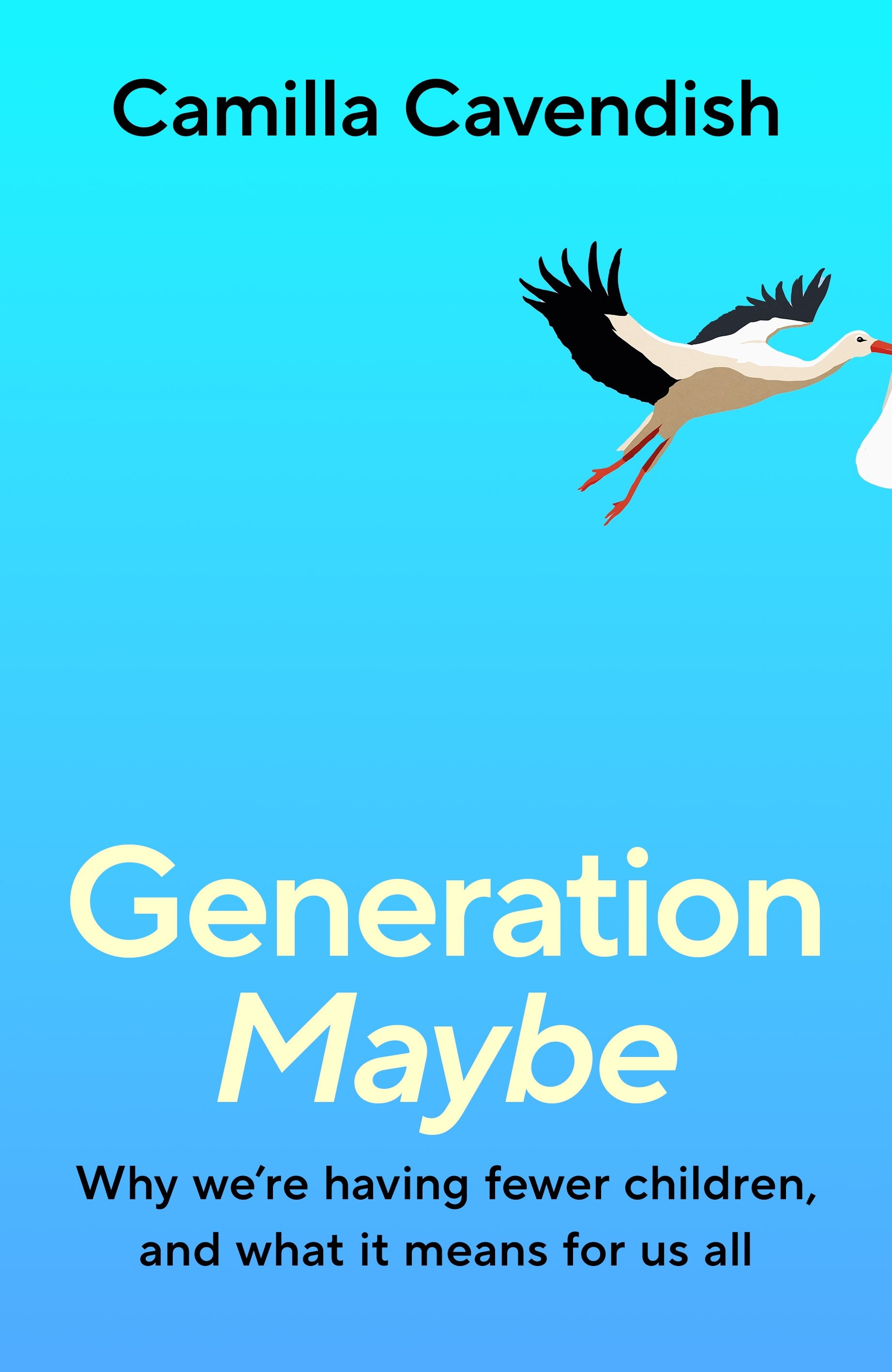
- Published: 1 October 2026
- ISBN: 9781529971514
- Imprint: Vintage Digital
- Format: EBook
- Pages: 304
Generation Maybe
Why We're Having Fewer Children, and What It Means for Us All


- Published: 1 October 2026
- ISBN: 9781529971514
- Imprint: Vintage Digital
- Format: EBook
- Pages: 304
About the author

Essential reading for anyone curious enough to ask where we are heading as a human race — and that’s all of us. Packed full of mind-blowing facts that you will be quoting to friends, this is a wise, compassionate and non-judgmental story of our times, told with empathy and real understanding
Emily Maitlis
With her characteristic elegance and insight, Camilla Cavendish has written the definitive account of one of the great challenges facing too many nations: the postponement of parenthood and the collapse in the average birth rate. Generation Maybe is vital reading for anyone worried about whether we can avoid a dire future of gerontocratic stagnation
Robert Peston
An entertaining and meaningful read
Claudia Goldin
Fascinating
Emily Bootle
Generation Maybe upends many of the assumptions that used to govern this debate [and] calls for a radical redesign of society around family life ... As a lively, deeply empathetic survey of a global crisis, Generation Maybe excels… it will make you want to revolt or go forth and multiply. Or both
Johanna Thomas-Corr, Sunday Times
Camilla’s thinking is fresh and fascinating
Amol Rajan
Drawing on a wealth of reporting, her book seeks to present a more nuanced picture ... focusing on the lived experience of men and women who find themselves with fewer children than they expected … There is no hectoring or finger-wagging in this book. What's offered instead is an empathic and curious approach ... In so doing, Generation Maybe illuminates the enormous gulf between popular talking points about fertility and the actual conversations potential parents are having
Mythili Rao, Guardian
Analysis of the birth crunch tends to fall into two camps: data-heavy studies, or thin, thesis-driven polemic built on anecdote. Cavendish goes beyond both, delving into data while bringing the problem to life by speaking to people with different experiences, expertise and political persuasions. The result is a well-researched, humane and constructive book.
Tiffany Jenkins, Spectator
Cavendish thoroughly interrogates the modern global landscape for the reasons for the fertility crash, as well as exploring the myriad options for those hoping to have children in an unconventional way
Emily Bootle, Scotland on Sunday
What will surprise readers is how widespread falling birthrates are ... An interesting seam that Cavendish pries open is social contagion - how once a new normal sets in, people follow ....This book is an enormously satisfying read . It's a pleasure to encounter Cavendish's clear writing and fresh ideas.
Mary McCarthy, Irish Independent
Ambitious ... compassionate and non-judgemental ... very readable ... Cavendish does not sugar-coat the scale of the challenge She does however offer some solutions ... an important contribution to the debate on fertility rates
Laura Perrins, The Critic
A new feminist revolution that foregrounds the presence of children as pivotal to human flourishing
Michele Pridmore-Brown, Literary Review
In a fascinating new book, she examines why "what we once thought of as the most profound human instinct, to continue the line, is on the wane."
The Economist
Cavendish attempts a balance between the two extremes: the demographer’s God-like view and the ultra-specificity of any one person’s fertility rationalisations ... Her book is ambitious in scope, covering not only why people are having fewer babies, but also the consequences of falling birthrates and ways governments can address the problem. It also has an admirably international focus, trying to tease out puzzles ... She is good at breaking problems down into constituent parts ... One of the most interesting and nuanced parts of the book lies in Cavendish’s discussions about social contagion.
Sophie McBain, Observer
This thorough and adventurous quest to work out why we're having fewer children basically everywhere in the world ... The book is studded with decimals ... [with] all sorts of terrible consequences for economic growth, as Cavendish lays out as any loyal FT foot soldier must. But there is a more profound and personal problem sensitively explored at the heart of this book: the missed opportunity for so many women and men who long to become parents but for a constellation of reasons are being left behind ... It is refreshing to read such a measured and humane analysis of the defining demographic shift of our age. If Andy Burnham needs a baby tsar, he knows where to find one
Anoosh Chakelian, New Statesman