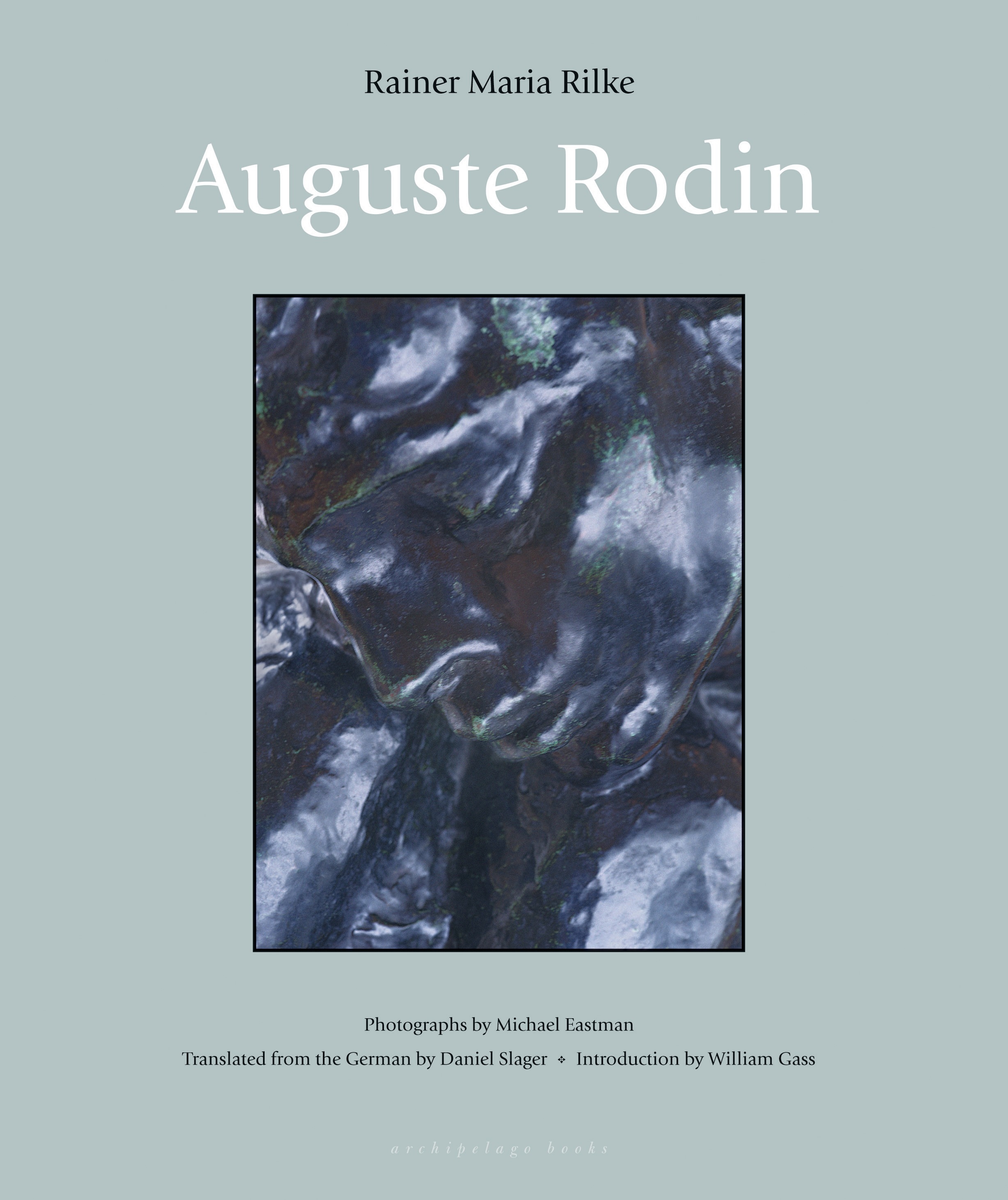
An “elegant translation” of Rilke’s writings on sculptor Auguste Rodin that “offers a fresh look at an unlikely mentorship” and two extraordinary artists (The New York Times Book Review).
Sculptor Auguste Rodin was fortunate to have his secretary Rainer Maria Rilke, one of the most sensitive poets of our time. These two pieces discussing Rodin’s work and development as an artist are as revealing of Rilke as they are of his subject.
Written in 1902 and 1907, these essays mark the entry of the poet into the world of letters. Rilke’s description of Rodin reveals the profound psychic connection between the two great artists, both masters of giving visible life to the invisible. Michael Eastman’s evocative photographs of Rodin’s sculptures shed light on both Rodin’s art and Rilke’s thoughts and catapult them into the 21st century.
Rainer Maria Rilke was born in 1875 in Prague. He studied literature, art history and philosophy in both Munich and Prague, and is often considered one of the German language's greatest 20th century poets. His two most famous verse sequences are the Sonnets to Orpheus and the Duino Elegies; his two most famous prose works are the Letters to a Young Poet and the semi-autobiographical The Notebooks of Malte Laurids Brigge. He died in 1926 in Switzerland after suffering from undiagnosed, chronic acute leukemia during his final months.