- Published: 17 November 2026
- ISBN: 9798896230977
- Imprint: NY Review Books
- Format: Paperback
- Pages: 496
- RRP: $60.00
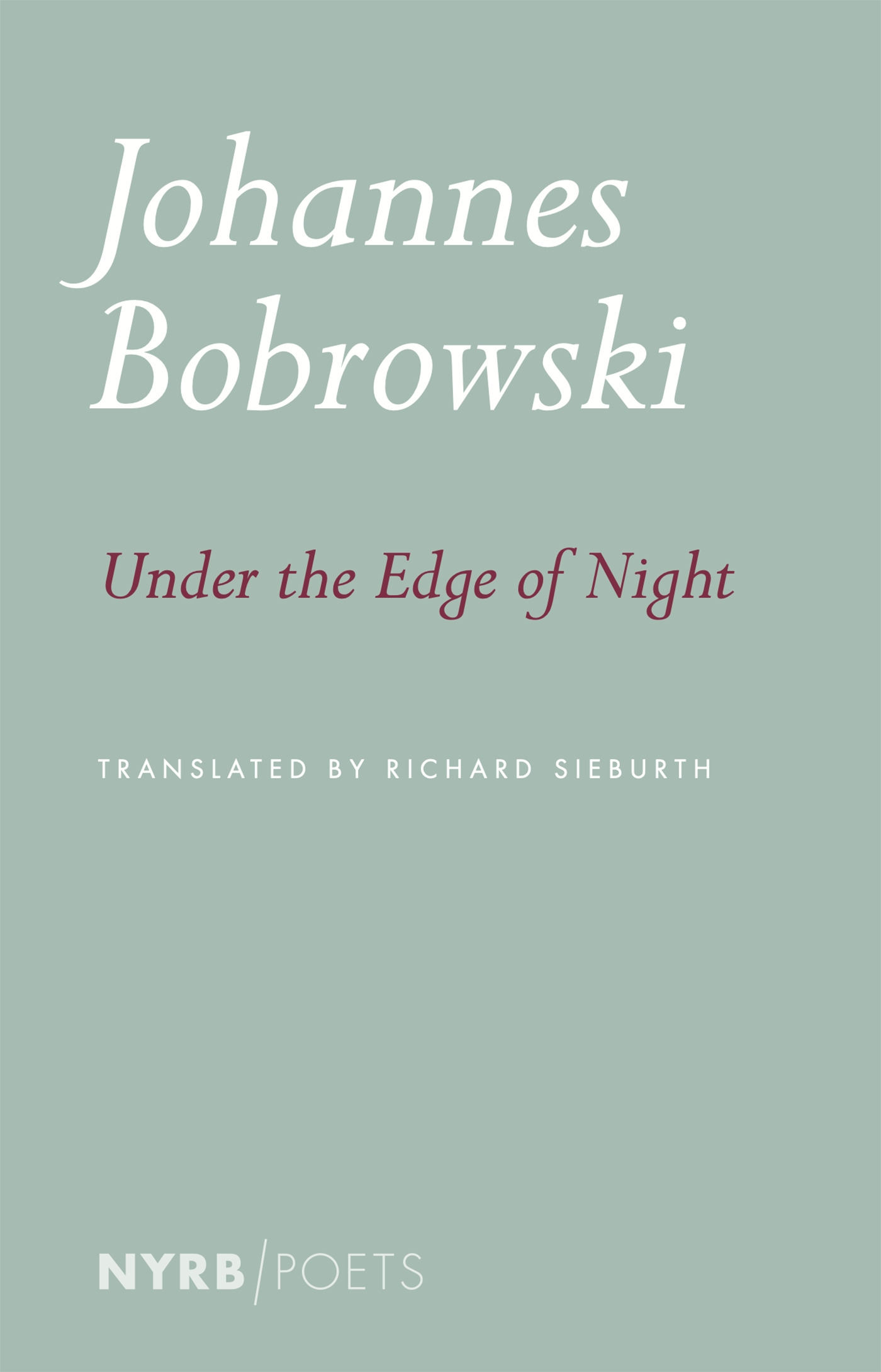
Under the Edge of Night


- Published: 17 November 2026
- ISBN: 9798896230977
- Imprint: NY Review Books
- Format: Paperback
- Pages: 496
- RRP: $60.00
"Reading Johannes Bobrowski, I felt I had entered the shadowlands of history, where landscape bears witness and every name becomes an act of remembrance. Stark, musical, and haunted by beauty, guilt, and longing, these poems restore speech to the silenced places of Eastern Europe. Richard Sieburth has done it again; his extraordinary translations make this indispensable poet thrillingly alive in English." —Peter Gizzi
"When Theodor Adorno said that "to write a poem after Auschwitz is barbaric," he was not circumscribing poetry so much as reminding writers that the corrosion of an entire culture enabled the rise of a murderous nationalism. Richard Sieburth's brilliant new translations from three of Johannes Bobrowski's books of poems of the 1960s are a moving testimony to how one poet fought such corrosion. On his return to East Berlin after years as a German soldier and Russian prisoner of war, Bobrowski used his lyric gifts to record a Baltic prehistory of violence and transcendence and to memorialize the world of multi-lingual villages, permeable boundaries, and cultural exchange that the war destroyed. In homage to the poets killed by the Holocaust, these moving lyrics are as clear and fragile as a breeze in "crow light." Their pastoral themes celebrate what is sub-specie aeternitatis: the beauty of Bach, the landscape of the steppes, the hospitality of strangers traveling roads and rivers, birdsong at dawn and dusk." —Susan Stewart
"His poetry is beautifully lyrical, and yet impersonal, oracular in the manner of Hölderlin..... By invoking a river or village he evokes a whole world and a whole tradition. His work is occult, but hardly ever obscure, and his artistry has the 'hiddenness of all perfect things.' Few poets of our time have written as beautifully as Bobrowski."—The Times Literary Supplement