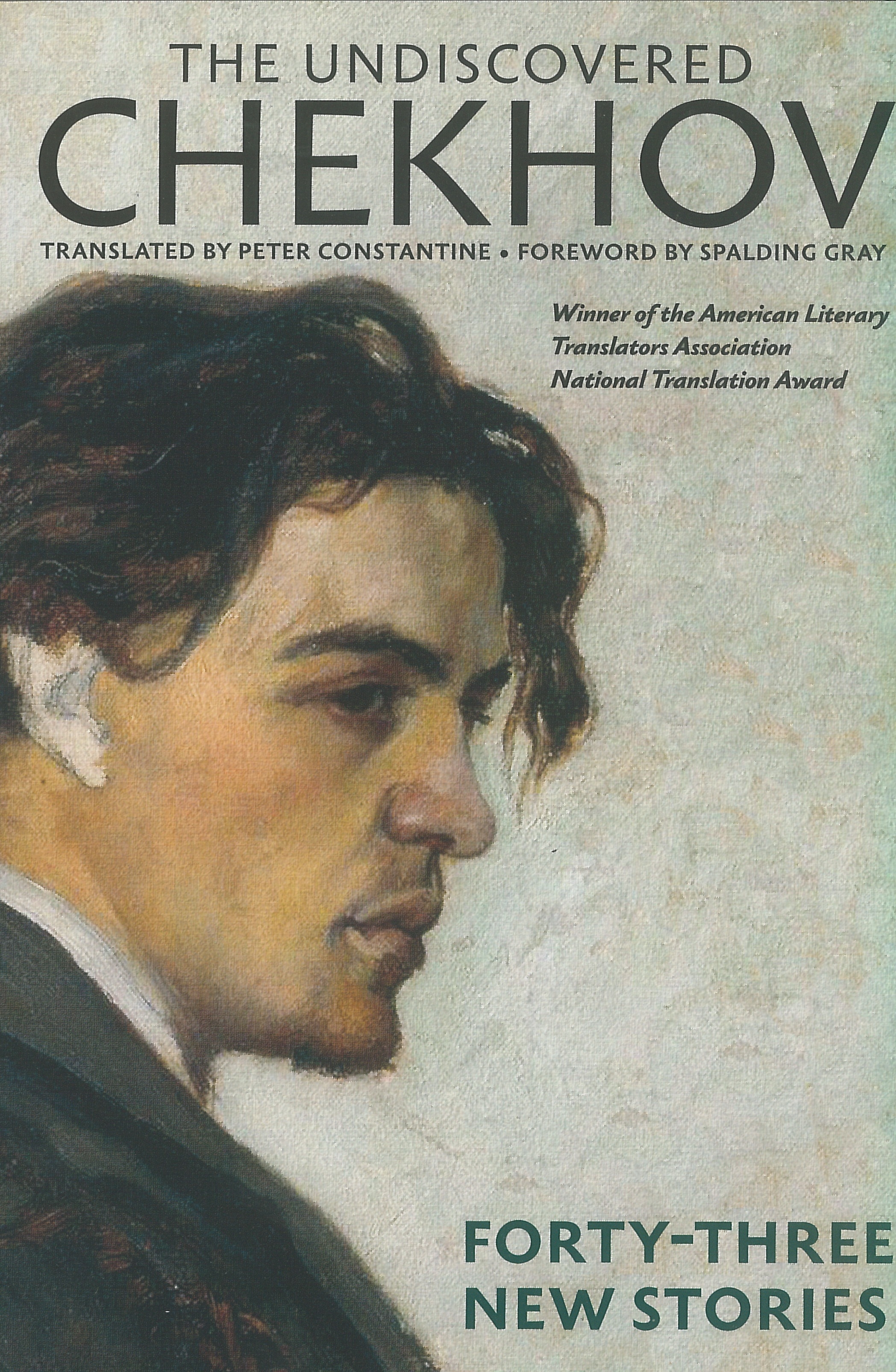
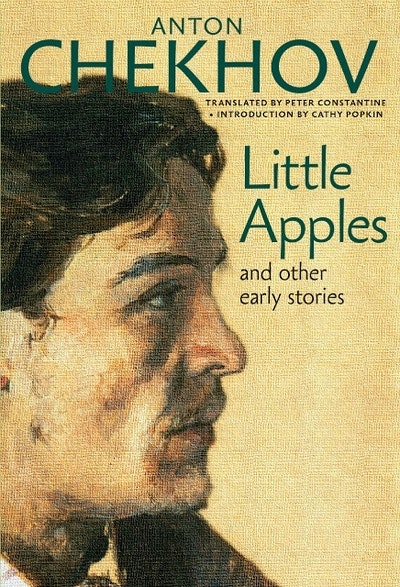
The Undiscovered Chekhov gives us, in rich abundance, a new Chekhov. Peter Constantine's historic collection presents 38 new stories and with them a fresh interpretation of the Russian master. In contrast to the brooding representative of a dying century we have seen over and over, here is Chekhov's work from the 1880s, when Chekhov was in his twenties and his writing was sharp, witty and innovative. Many of the stories in The Undiscovered Chekhov reveal Chekhov as a keen modernist. Emphasizing impressions and the juxtaposition of incongruent elements, instead of the straight narrative his readers were used to, these stories upturned many of the assumptions of storytelling of the period. Here is "Sarah Bernhardt Comes to Town," written as a series of telegrams, beginning with "Have been drinking to Sarah's health all week! Enchanting! She actually dies standing up!..." In "Confession...," a thirty-nine year old bachelor recounts some of the fifteen times chance foiled his marriage plans. In "How I Came to be Lawfully Wed," a couple reminisces about the day they vowed to resist their parents' plans that they should marry. And in the more familiarly Chekhovian "Autumn," an alcoholic landowner fallen low and a peasant from his village meet far from home in a sad and haunting reunion in which the action of the story is far less important than the powerful impression it leaves with the reader that each man must live his life and has his reasons.
Anton Chekhov (1860-1904), the grandson of a former serf and son of a grocer, was born in Taganrog, a port in Southern Russia. His childhood was overshadowed by his frightening father, but he was close to his mother. While he was at university, his father was defrauded and went bankrupt, leaving the family in dire financial straits; Chekhov supported them almost single-handedly by selling stories and sketches to magazines. Although a doctor by profession, he soon became famous for his brilliant stories and plays, and is today recognized as one of the greatest short story writers of all time.