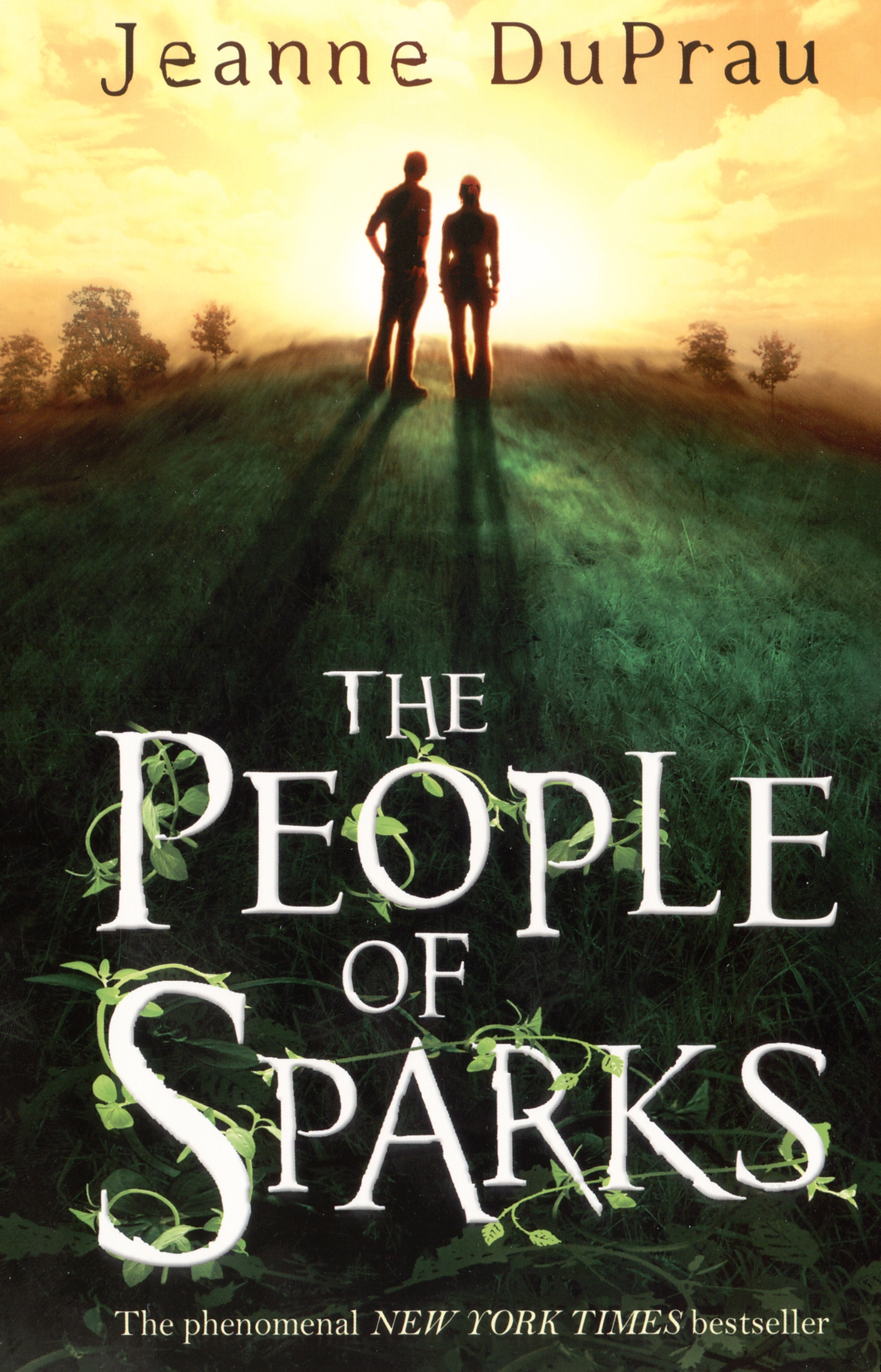
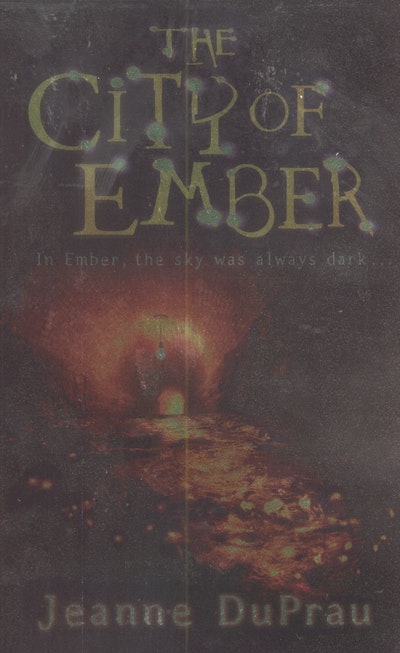
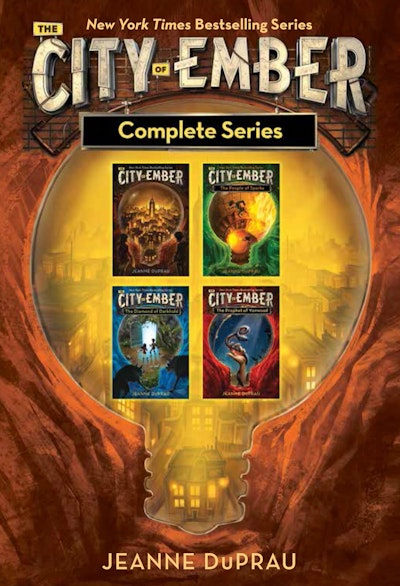
The fantastic sequel to the highly acclaimed The City of Ember.
When the people of the underground city of Ember follow Lina and Doon to the surface, little prepares them for what they will encounter. Leaving behind the darkness that has been their home for generations, they discover a world of colour, warmth and light. The people of the small village of Sparks seem willing to help them . . . at first . . . but life on the surface has it's dark side too.
Before long the villagers of Sparks become more reluctant to share their precious resources with the strange, new underground people. Lina and Doon watch in horror as the differences between the two groups grow into resentment, anger and hate. Somehow they must help overcome the distrust and bring the people of Ember and Sparks together.
"What could be more interesting than thinking of mysterious happenings, finding the answers to intriguing questions, and making up new worlds?"--Jeanne DuPrau
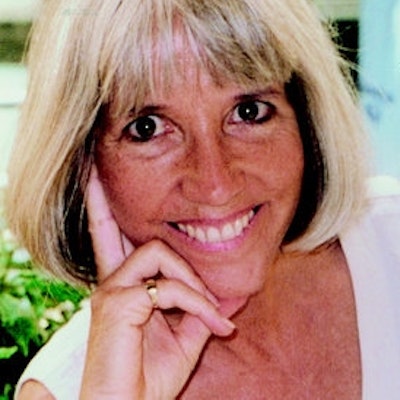
Jeanne DuPrau has been a teacher, an editor, and a technical writer. The People of Sparks is her second novel and the sequel to the highly acclaimed The City of Ember. Ms. DuPrau lives in Menlo Park, California, where she keeps a big garden and a small dog.
ABOUT THE AUTHOR
“When did you decide to be a writer?” people often ask me. Well, it was like this:
At about age 6, I wrote my first book, or at least the first book of mine that survives to the present day. It’s called “Frosty the Snowman.” It’s five pages long, illustrated with red and green crayon, and bound with loops of yarn.
My next extant work dates, I think, from the seventh grade. It’s a collection of stories handwritten on lined newsprint. One is about a merry-go-round that mysteriously flies off into the air. Another is about a girl who mysteriously disappears while ice skating. A third is about a seashell that mysteriously opens a door to an underwater world. It’s not hard to deduce that mysterious happenings were what I loved best at the time–a wardrobe door leading to Narnia, a rabbit hole leading to Wonderland, a nanny who flew away when the wind changed.
A year or two later, I started reading Dickens. I loved the world of Dickens’s novels, full of colorful characters and wildly complicated plots. I decided to write Dickensian stories myself. To prepare for this, I put together notebooks with headings on each page for character names, settings, plot ideas, and beginning sentences. I wrote pages and pages of great names (Ophelia Gordonswaithe, Hester Hollyhock), lists of settings (an insane asylum, a deserted railway station), and beginning sentences (“A sharp laugh broke the heavy silence”). I didn’t actually write very many stories, though. I think I wrote three or four, but only one of them went all the way to the end. The rest petered out after a couple of pages–or a couple of paragraphs.
But I kept at it. All through school, I wrote and wrote. Some of this writing my teachers assigned–book reports, college essays, my senior thesis. Some I assigned myself–stories, poems, journals, letters. After I graduated from college (an English major, of course), I did several different kinds of work, but they all involved writing and reading in one way or another. I taught high school English (and started a creative writing club for my students). I worked as an editor in educational publishing companies (and wrote stories for reading textbooks). I worked for a computer company (and wrote about how to use computers).
At the same time, after work, on weekends, whenever I could fit it in, I was doing my own writing. I wrote about people I knew, experiences I’d had, books I’d read, ideas that had occurred to me. I started sending these pieces of writing out into the world, and quite often they were published. I wrote a book, and then another book. The more I wrote, the more things I thought of to write about.
So the answer to the question, “When did you decide to be a writer?” is: Never. I never decided anything–I just wrote and kept on writing, because writing was what I liked to do. What could be more interesting than thinking of mysterious happenings, finding the answers to intriguing questions, and making up new worlds? Writers have a great job. I’m glad to be one.
Jeanne DuPrau has written one of the most important fables of our time, addressing both our fear of annihilation and of immigration, and she has done it with captivating grace and style . . . The People of Sparks is full of suspense and asks good questions about what we owe each other in a community
Amanda Craig, The Times
The anti-war message of The People of Sparks is more valid now than ever before
Achuka
The second in the trilogy but deserves to be read in its own right . . . It has a powerful message for now. Jeanne DuPrau has embedded a topical issue into a completely credible future
Mary Hoffman, TES
This is a gripping thriller with a biting message - violence has consequences. Well worth reading
Fiona Lowe, The School Librarian
Interesting and often provocative
Clodagh Corcoran, Inis
Our top books, exclusive content and competitions. Straight to your inbox.
Thank you! Please check your inbox and confirm your email address to finish signing up.