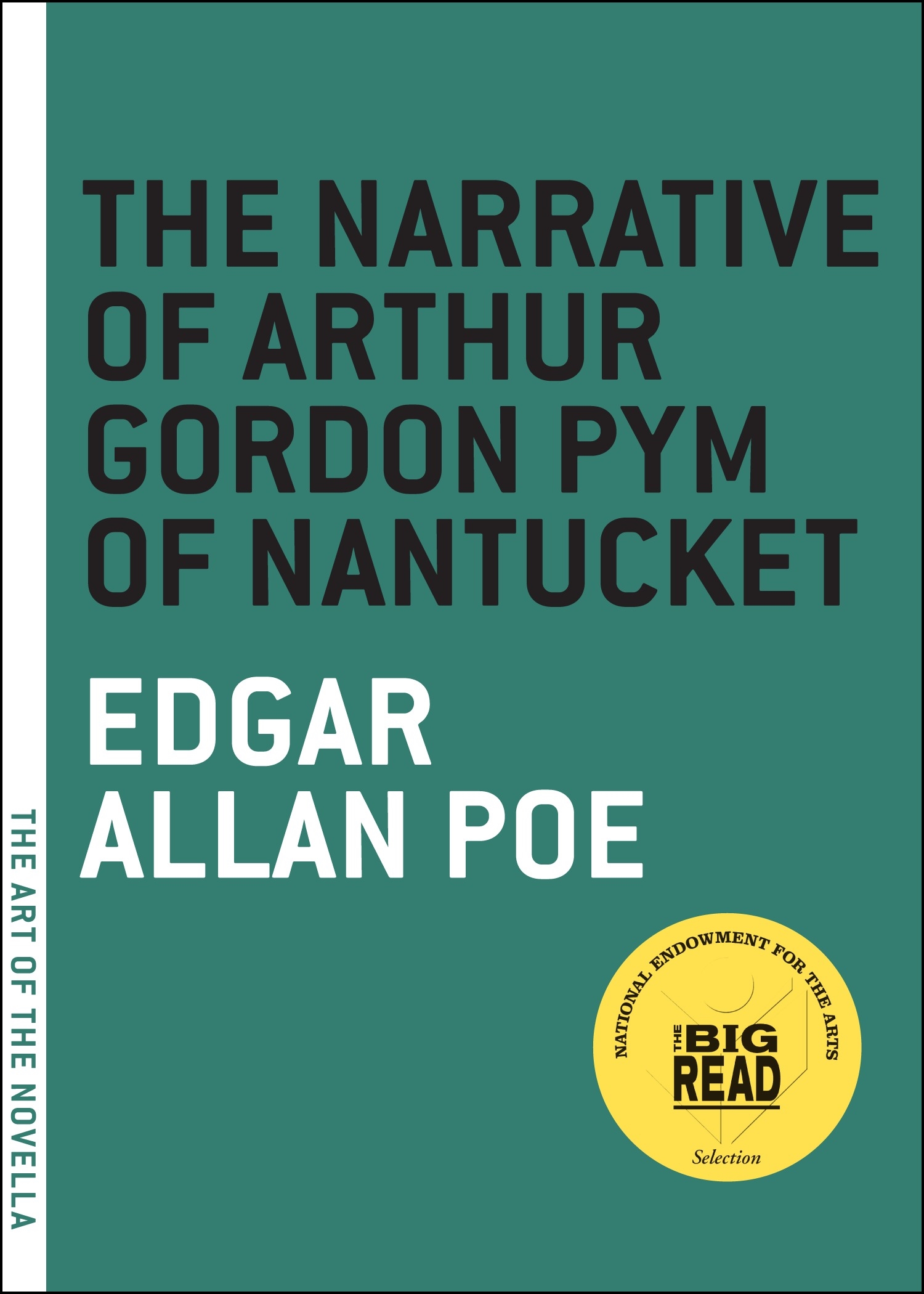
When Edgar Allan Poe’s only novella was first published in 1838, the reviews were slow in coming and dismissive when they arrived. The book’s failure left Poe in such dire financial straits that he even accepted a job at one of the magazines that had panned it. But The Narrative of Arthur Gordon Pym of Nantucket has since become one of his most influential works: Baudelaire translated it, Paul Theroux read it out loud to Jorge Luis Borges, Jules Verne wrote a sequel to it, H. P. Lovecraft drew on it in creating his own tales of the Antarctic . . .
Ostensibly, it’s a classic adventure story about a young boy who runs away to sea and encounters all the classic scenarios: mutinies, storms, shipwrecks, ravenous sharks, hostile natives. And Poe drew on many contemporary accounts of exploration in the South Seas to give his story a sense of verisimilitude.
But there are far deeper currents at work in the book than mere adventure: elements of the supernatural as they near the South Pole, evocations of the protagonists’ experiences at sea that rival Poe’s best tales of horror, and a disturbing ending that continues to stir debate.
Edgar Allan Poe was born in Boston, USA, in 1809. Poe, short story writer, editor and critic, he is best known for his macabre tales and as the progenitor of the detective story. He died in 1849, in mysterious circumstances, at the age of forty.
J. Gerald Kennedy is Boyd Professor of English Emeritus at Louisiana State University and a past president of the Poe Studies Association. His books on Poe include Poe, Death, and the Life of Writing (1987), “The Narrative of Arthur Gordon Pym” and the Abyss of Interpretation (1995), and several edited volumes including A Historical Guide to Edgar Allan Poe (2001), Romancing the Shadow: Poe and Race (2001; with Liliane Weissberg), and Poe and the Remapping of Antebellum Print Culture (2012; with Jerome McGann). His major contribution to American literary studies is Strange Nation: Literary Nationalism and Cultural Conflict in the Age of Poe (2016), written with the support of fellowships by the John Simon Guggenheim Memorial Foundation and the National Endowment for the Humanities. He has also published Imagining Paris: Exile, Writing, and American Identity (1993), and he edited the Penguin Classics edition of The Life of Black Hawk (2008). He has appeared in many Poe documentary films, including The Mystery of Edgar Allan Poe(1994) for the A&E Biography series and Eric Stange’s film for the PBS American Masterpiece series, Edgar A. Poe: Buried Alive (2017).