.
Illustrations and close readings of 68 original texts offer new insights on the American Revolution, the Civil War, and other key moments and figures in American history.
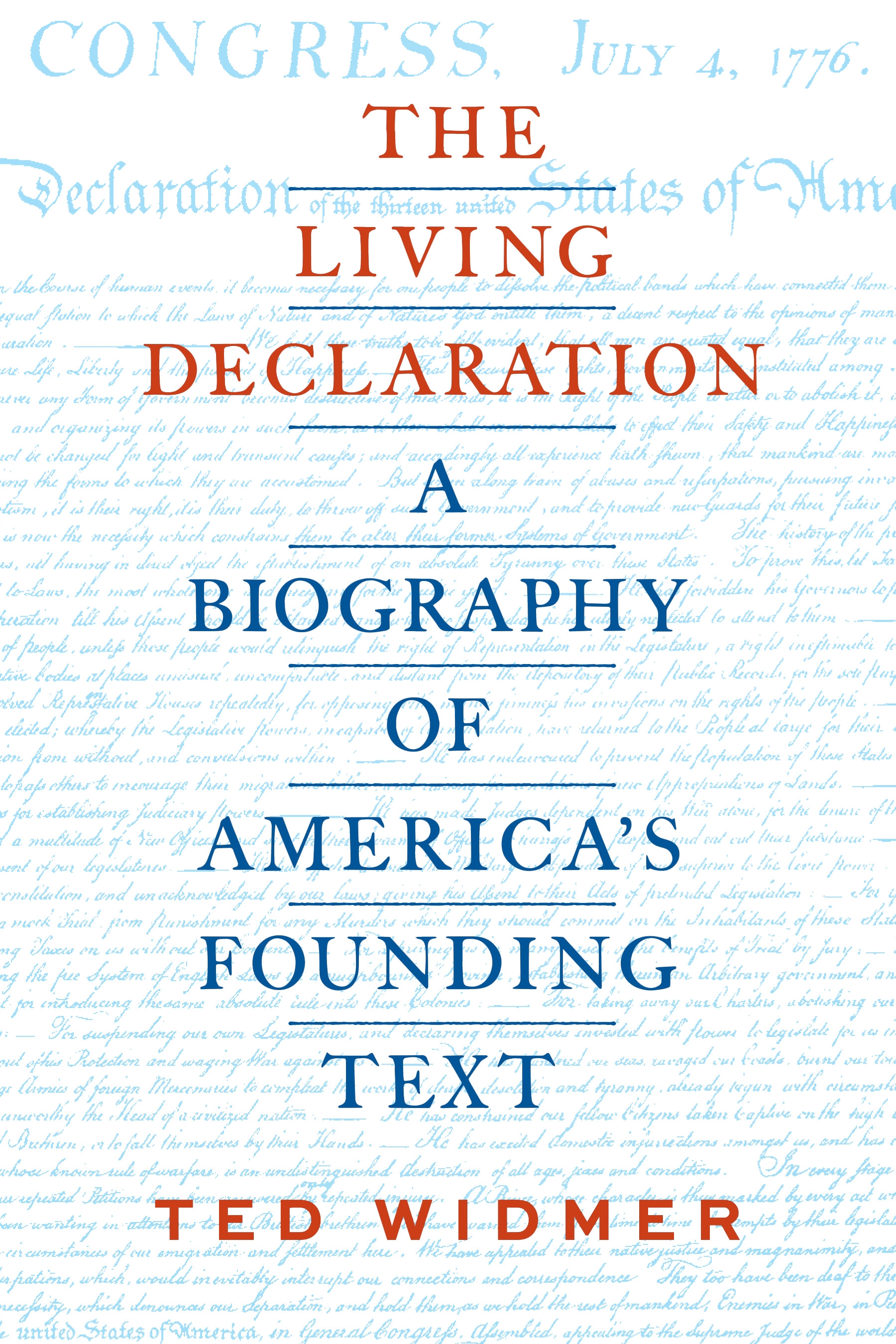
We hold these truths to be self-evident . . . all men are created equal . . . with certain inalienable rights . . . life, liberty, and the pursuit of happiness.” 250 years after they were written, these words remain at once familiar and startling. What do they mean to us today? Do we understand them in the same way the Founders did? Historian and former presidential speechwriter Ted Widmer seeks to answer these questions by returning to where the nation’s story began, the Declaration of Independence, to trace the remarkable history of how it came to be and how it has shaped the democratic aspirations of Americans and others for more than two centuries.
Weaving together more than sixty fascinating original texts, Widmer finds in the words of succeeding generations of Americans—radicals and conservatives, revolutionary insurgents and civil rights leaders, presidents and philosophers—the key to understanding the extraordinary durability of America’s founding ideas.
An expert guide, Widmer introduces us to:
- the revolutionary writings that set the stage for the Declaration
- Noah Webster, of dictionary fame, offering a surprising definition of “equality”
- the true story of a fake declaration of independence “discovered” in Mecklenburg, North Carolina, in 1819
- searing challenges to the Declaration’s philosophical claims by Frederick Douglass and Elizabeth Cady Stanton
- radically divergent readings of the Declaration that contributed to the Civil War, and Abraham Lincoln’s vision of a “new birth of freedom”
- the ways in which the Declaration inspired civil rights activists in the twentieth and twenty-first centuries
- how the Declaration inspired democratic aspirations globally.
The voices gathered here are impassioned and often disagree, but they are united in the belief that the Declaration has something crucial to tell us about the American people and the larger struggle for human freedom. “They speak to us,” Widmer writes, “and they talk to each other as well, in a conversation that will never end.”