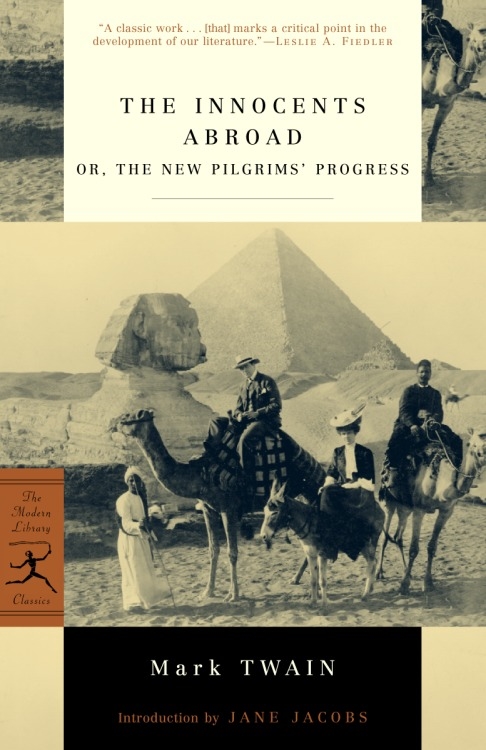
The Innocents Abroad is one of the most prominent and influential travel books ever written about Europe and the Holy Land. In it, the collision of the American “New Barbarians” and the European “Old World” provides much comic fodder for Mark Twain—and a remarkably perceptive lens on the human condition. Gleefully skewering the ethos of American tourism in Europe, Twain’s lively satire ultimately reveals just what it is that defines cultural identity. As Twain himself points out, “Broad, wholesome, charitable views of men and things cannot be acquired by vegetating in one little corner of the earth all one’s lifetime.” And Jane Jacobs observes in her Introduction, “If the reader is American, he may also find himself on a tour of his own psyche.”