- Published: 2 February 2027
- ISBN: 9781911742432
- Imprint: Torva
- Format: Trade Paperback
- Pages: 368
- RRP: $39.99
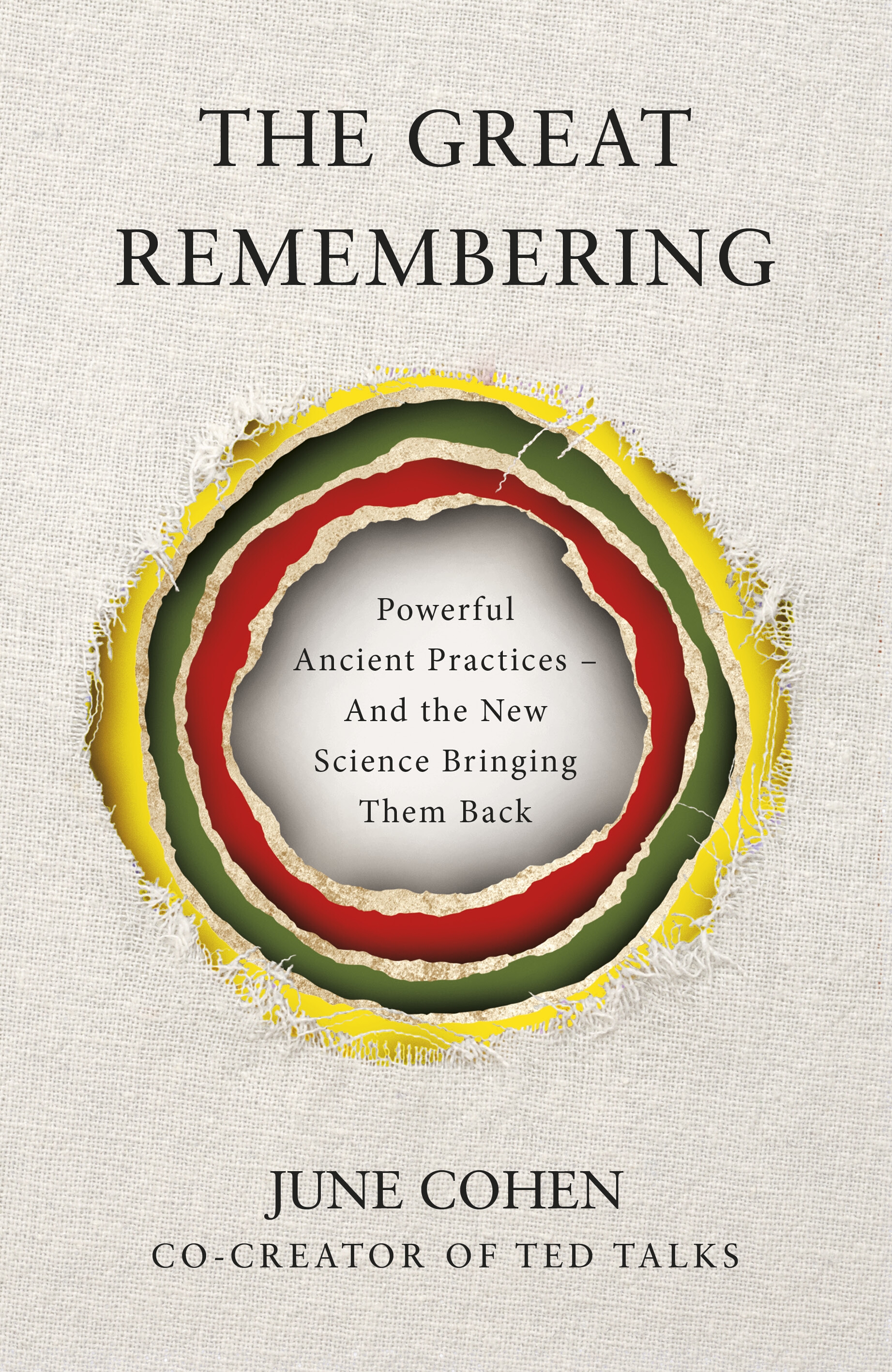
The Great Remembering
Powerful Ancient Practices – and the New Science Bringing Them Back


- Published: 2 February 2027
- ISBN: 9781911742432
- Imprint: Torva
- Format: Trade Paperback
- Pages: 368
- RRP: $39.99

With compassionate curiosity about what makes us human, June takes us on an archeological tour of the ancient yearning pulsating beneath all of our evolving technologies and changing moral fashions – to make sense of our mortality and rejoice in our aliveness, to salve our suffering and give shape to our joy. What a revelation, what an invitation, to discover that people who had no notion of gravity, genetics, or democracy answered the questions we live with more wisely than we do – a beckoning to rethink how we make of our fragile embodiment a cathedral of meaning.
Maria Popova, creator of The Marginalian
With compassionate curiosity about what makes us human, June takes us on an archeological tour of the ancient yearning pulsating beneath all of our evolving technologies and changing moral fashions – to make sense of our mortality and rejoice in our aliveness, to salve our suffering and give shape to our joy. What a revelation, what an invitation, to discover that people who had no notion of gravity, genetics, or democracy answered the questions we live with more wisely than we do – a beckoning to rethink how we make of our fragile embodiment a cathedral of meaning.
Maria Popova, creator of The Marginalian
June Cohen’s essential book hooks you from the very first sentence and takes you on a journey of rediscovery that will fill you with joy and rouse you with determination to implement the wisdom she animates with effortless grace. The Great Remembering is an urgent and important book that you won’t soon forget.
Bruce Feiler, seven-time best-selling author of Walking The Bible, Life is in the Transitions and A Time to Gather
June Cohen’s essential book hooks you from the very first sentence and takes you on a journey of rediscovery that will fill you with joy and rouse you with determination to implement the wisdom she animates with effortless grace. The Great Remembering is an urgent and important book that you won’t soon forget.
Bruce Feiler, seven-time best-selling author of Walking The Bible, Life is in the Transitions and A Time to Gather
An electrifying, dizzying, wondrous celebration of humanity, then and now. I finished it feeling connected, inspired, hopeful.
Keith Ferrazzi, best-selling author of Never Eat Alone
An electrifying, dizzying, wondrous celebration of humanity, then and now. I finished it feeling connected, inspired, hopeful.
Keith Ferrazzi, best-selling author of Never Eat Alone
June Cohen is such a friendly, open-hearted, deeply informed guide to recovering the wisdom that can make us whole and alive once more. She knows all the science, she writes with a professional's clarity and precision and, most of all, she can make us feel joyful and in love again as we go about the beautiful business of living.
Chip Conley, Founder, Modern Elder Academy; Founder, Joie de Vivre Hospitality Group
June Cohen is such a friendly, open-hearted, deeply informed guide to recovering the wisdom that can make us whole and alive once more. She knows all the science, she writes with a professional's clarity and precision and, most of all, she can make us feel joyful and in love again as we go about the beautiful business of living.
Chip Conley, Founder, Modern Elder Academy; Founder, Joie de Vivre Hospitality Group
I’ve never seen the science explained better for a lay audience.
Charles Raison, Professor of Psychiatry and Human Ecology, University of Wisconsin-Madison
I’ve never seen the science explained better for a lay audience.
Charles Raison, Professor of Psychiatry and Human Ecology, University of Wisconsin-Madison
We were right all along. A joyous baedeker of six ancient traditions that can recharge, inspire and perhaps change us for the better.
Seth Godin, author, The Knot
We were right all along. A joyous baedeker of six ancient traditions that can recharge, inspire and perhaps change us for the better.
Seth Godin, author, The Knot
An epic and intimate journey into what makes us human, what heals us, and what binds us together. June Cohen is an unparalleled guide to the ancient wisdom and modern science that remind us why we’re here and how we find joy and meaning in our lives each and every day. What a gift she has rescued from our ancestors.
Doug Abrams, Co-Author of the New York Times-bestselling The Book of Joy and The Book of Hope
An epic and intimate journey into what makes us human, what heals us, and what binds us together. June Cohen is an unparalleled guide to the ancient wisdom and modern science that remind us why we’re here and how we find joy and meaning in our lives each and every day. What a gift she has rescued from our ancestors.
Doug Abrams, Co-Author of the New York Times-bestselling The Book of Joy and The Book of Hope
The Great Remembering is a joy to read, Cohen’s own sense of awe and wonder on display as we time-travel with her around the globe. The bottom line: June Cohen has much to teach us about how to live today. Pay attention.
Steven Petrow, The Washington Post
The Great Remembering is a joy to read, Cohen’s own sense of awe and wonder on display as we time-travel with her around the globe. The bottom line: June Cohen has much to teach us about how to live today. Pay attention.
Steven Petrow, The Washington Post