> Skip to content
[]
  • Published: 24 March 2020
  • ISBN: 9780771048692
  • Imprint: McClelland & Stewart
  • Format: Paperback
  • Pages: 176
  • RRP: $39.99
Categories:

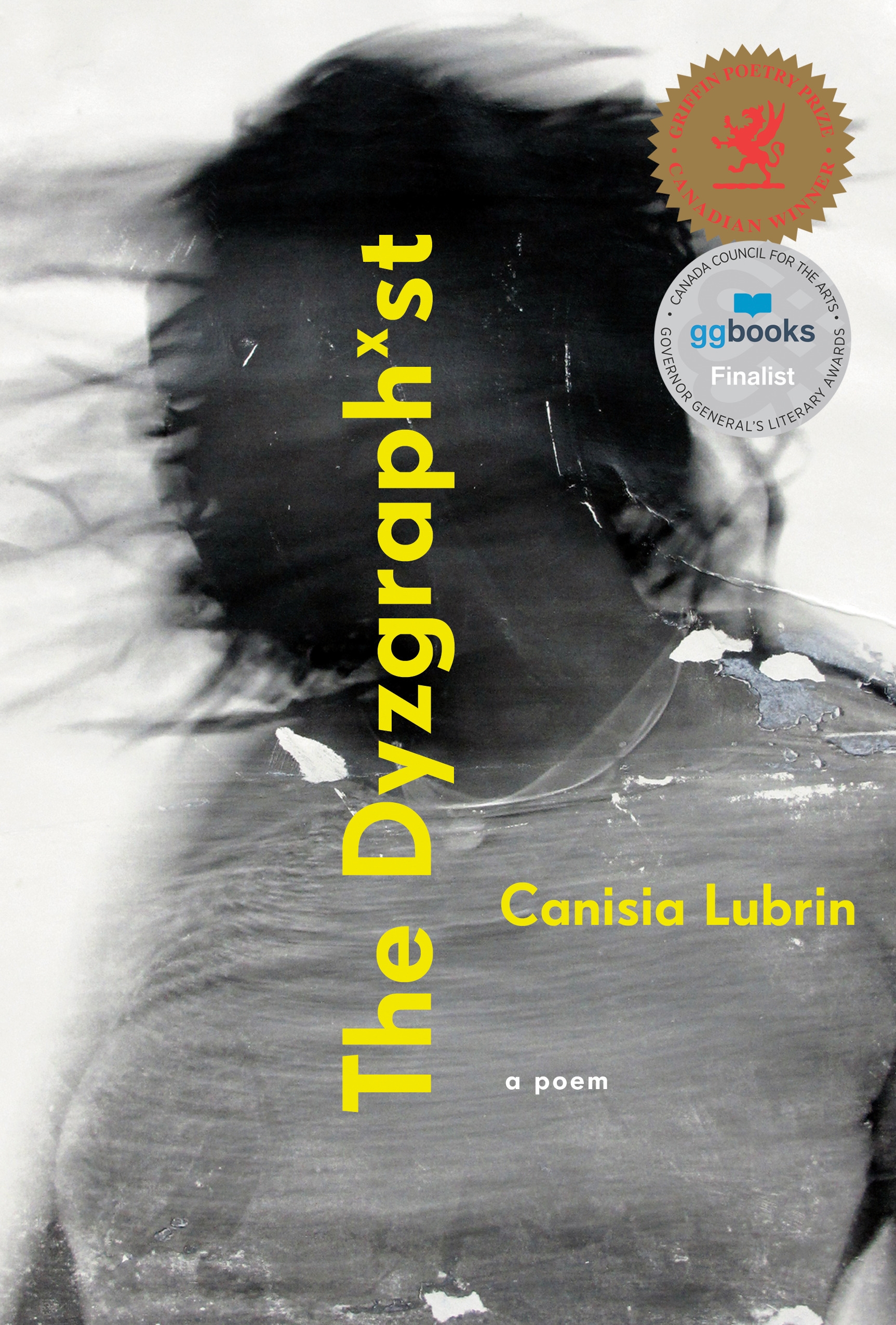
The Dyzgraphxst


Windham-Campbell Prize, Winner
OCM Bocas Prize for Caribbean Literature, Winner
OCM Bocas Prize for Caribbean Literature Poetry, Winner
Griffin Poetry Prize, Winner
Derek Walcott Prize for Poetry, Winner 
Rebel Women Lit Caribbean Readers' Awards, Finalist
Governor General's Literary Award for Poetry, Finalist
Trillium Book Award for Poetry, Finalist
Raymond Souster Award, Longlist
Pat Lowther Memorial Award, Longlist
Quill & Quire 2020 Books of the Year: Editor’s Picks
CBC Best Canadian Poetry of 2020
Winnipeg Free Press Top 10 Poetry Picks of 2020
The Paris Review, Contributor's Edition, Best Books of 2020
 

Windham-Campbell Prize, Winner
OCM Bocas Prize for Caribbean Literature, Winner
OCM Bocas Prize for Caribbean Literature Poetry, Winner
Griffin Poetry Prize, Winner
Derek Walcott Prize for Poetry, Winner 
Rebel Women Lit Caribbean Readers' Awards, Finalist
Governor General's Literary Award for Poetry, Finalist
Trillium Book Award for Poetry, Finalist
Raymond Souster Award, Longlist
Pat Lowther Memorial Award, Longlist
Quill & Quire 2020 Books of the Year: Editor’s Picks
CBC Best Canadian Poetry of 2020
Winnipeg Free Press Top 10 Poetry Picks of 2020
The Paris Review, Contributor's Edition, Best Books of 2020
 

The Dyzgraphxst presents seven inquiries into selfhood through the perennial figure Jejune. Polyvocal in register, the book moves to mine meanings of kinship through the wide and intimate reach of language across geographies and generations. Against the contemporary backdrop of intensified capitalist fascism, toxic nationalism, and climate disaster, the figure Jejune asks, how have I come to make home out of unrecognizability. Marked by and through diasporic life, Jejune declares, I was not myself. I am not myself. My self resembles something having nothing to do with me.

  • Published: 24 March 2020
  • ISBN: 9780771048692
  • Imprint: McClelland & Stewart
  • Format: Paperback
  • Pages: 176
  • RRP: $39.99
Categories:

About the author

Canisia Lubrin

CANISIA LUBRIN’s books include Voodoo Hypothesis and The Dyzgraphxst. Lubrin’s work has been recognized with the Griffin Poetry Prize, the OCM Bocas Prize for Caribbean Literature, the OCM Bocas Prize for Poetry, the Derek Walcott Prize for Poetry, the Writer’s Trust of Canada Rising Stars prize, and others. Also a finalist for the Trillium Book Award for Poetry and the Governor General's Literary Award, Lubrin has held fellowships at the Banff Centre, Civitella Ranieri in Italy, Simon Fraser University, Literature Colloquium Berlin, Queen’s University, and Victoria College at the University of Toronto. She studied at York University and the University of Guelph, where she now coordinates the Creative Writing MFA in the School of English & Theatre Studies. In 2021, Lubrin received a Windham-Campbell Prize for poetry, and the Globe and Mail named her Poet of the Year. Code Noir: Metamorphoses is her debut fiction, and includes stories listed for the Journey Prize (2019, 2020), Toronto Book Award (2018) and the Shirley Jackson Award (2021). Born in St. Lucia, Lubrin now lives in Whitby, Ontario, and is the poetry editor at McClelland & Stewart.

Also by Canisia Lubrin

See all

Praise for The Dyzgraphxst

Praise for Canisia Lubrin and Voodoo Hypothesis:

   • "In Canisia Lubrin's debut collection of poetry, she pointedly observes that 'the alien we think we know is the alien we only dream up.' Voodoo Hypothesis is an imperative invocation of black dreams, an invitation for the living and the dead to define themselves. With poems at once epic and intimate, Voodoo Hypothesis requires a reverence for the individual word, to bear witness to Lubrin's 'brilliance indistinguishable from magic.'" --Vivek Shraya, author of I'm Afraid of Men
   • "Voodoo Hypothesis is an interior in motion: a gorgeous, searching intelligence. It is a womb/tomb of luminous inquiry. A semi-permeable ship where your mind is in concert with Lubrin's forward propagating lineation, a participatory dreamscape that leads you back to your own culpability. This is a work that reads you, too." --Liz Howard, author of Infinite Citizen of the Shaking Tent