A masterpiece of mood and setting, character and remembrance, The Cuban Club is Barry Gifford's ultimate coming-of-age story told as sixty-four linked tales, a creation myth of The Fall as seen through the eyes of an innocent boy on the cusp of becoming an innocent man. Set in Chicago in the 1950s and early ‘60s against the backdrop of small-time hoodlums in the Chicago mob and the girls and women attached to them, there is the nearness of heinous crimes, and the price to be paid for them. To Roy and his friends, these twists and tragedies drift by like curious flotsam. The tales themselves are koan-like, often ending in questions, with rarely a conclusion. One story, a letter from Roy to his father four years after his father's death, is written as if the older man were still alive. Indeed, throughout The Cuban Club Roy is in some doubt whether divorce or even death really exists in a world where everything seems so alive and connected. Barry Gifford has been writing his Roy stories on and off for over thirty years, and earlier Roy stories have been published in Wyoming, Memories from a Sinking Ship and The Roy Stories. But it is in The Cuban Club that he brings the form he has created in these stories to its crystallization. Indeed, to find precedents for The Cuban Club, we must look not to other story collections, but to other creation myths—to Gilgamesh, or the Old Testament, or Eduardo Galeano's Memory of Fire trilogy. Roy's age here wends back and forth between six and nineteen and back to twelve. He sees with the ageless eyes of a seer and knows not to judge the good or the bad in circumstances or people, or even to question why things are as they are, instead gathering to himself the romance of a world that teeters on catastrophe always, even as it abounds in saving graces.
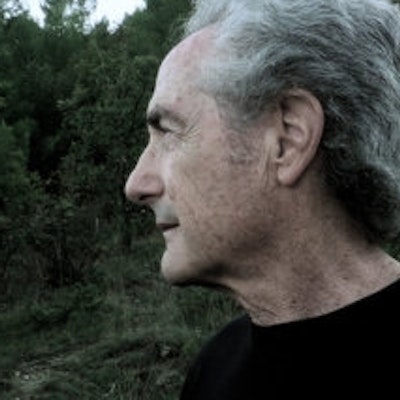
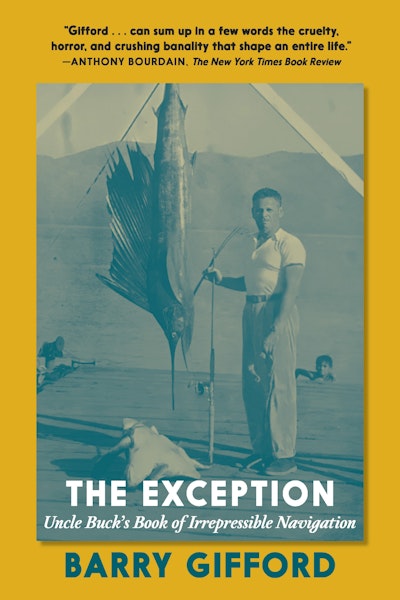
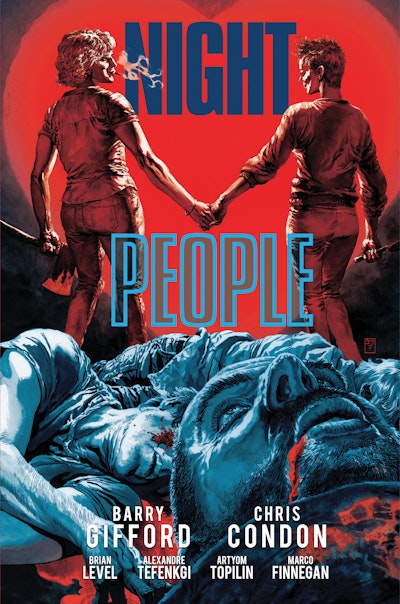
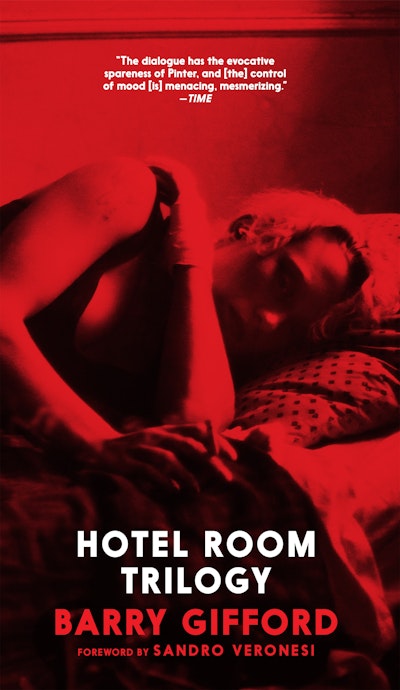
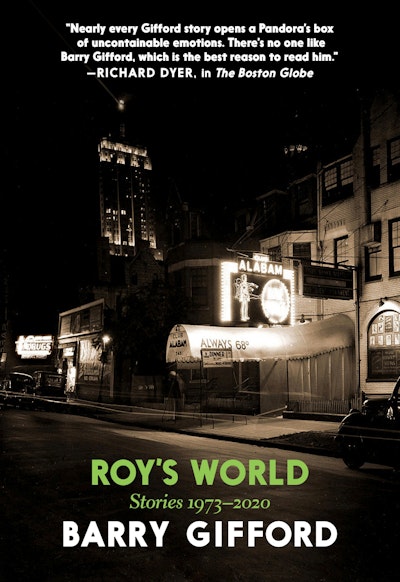
BARRY GIFFORD’s fiction, nonfiction, and poetry have been published in thirty languages. His novel Night People was awarded the Premio Brancati, established by Pier Paolo Pasolini and Alberto Moravia, in Italy, and he has been the recipient of the Maxwell Perkins Award and Syndicated Fiction Awards from PEN, as well as awards from the National Endowment for the Arts, the American Library Association, the Writers Guild of America, and the Christopher Isherwood Foundation. He has also been awarded the Ingmar Bergman Chair on Cinema and Theater from the National University of Mexico. His books Sailor’s Holiday and The Phantom Father were each named a Notable Book of the Year by The New York Times, and his book Wyoming was named a Novel of the Year by The Los Angeles Times. He has written librettos for operas by the composers Toru Takemitsu, Ichiro Nodaira, and Olga Neuwirth. Gifford’s work has appeared in many publications, including The New Yorker, Punch, Esquire, La Nouvelle Revue Française, El País, La Repubblica, Rolling Stone, Brick, Film Comment, El Universal, Projections, Cosmopolitan, and The New York Times. His film credits include Wild at Heart, winner of the Palme d’Or at the Cannes Film Festival, Perdita Durango, Lost Highway, City of Ghosts, Ball Lightning, American Falls, and The Phantom Father. Barry Gifford’s most recent books are Sailor & Lula: The Complete Novels, The Up-Down, Imagining Paradise: New and Selected Poems, Writers, Southern Nights, Black Sun Rising / La Corazonada, and Roy’s World: Stories 1973–2020. He lives in the San Francisco Bay Area. For more information visit www.BarryGifford.net