- Published: 30 June 2010
- ISBN: 9780307757173
- Imprint: RH US eBook Adult
- Format: EBook
- Pages: 192
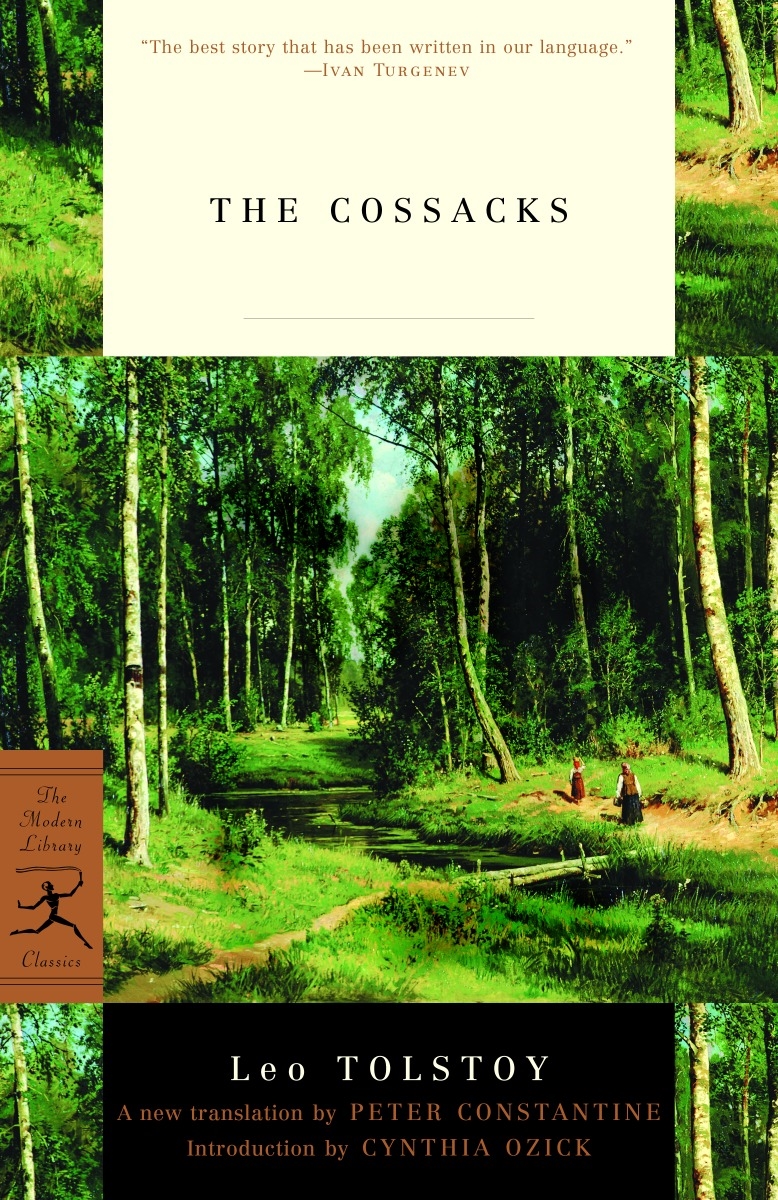
The Cossacks
Introducing Little Clothbound Classics: irresistible, mini editions of short stories, novellas and essays from the world's greatest writers, designed by the award-winning Coralie Bickford-Smith.
A brilliant short novel inspired by Leo Tolstoy’s experience as a soldier in the Caucasus, The Cossacks has all the energy and poetry of youth while also foreshadowing the great themes of Tolstoy’s later years. His naïve hero, Olenin, is a young nobleman who is disenchanted with his privileged and superficial existence in Moscow and hopes to find a simpler life in a Cossack village. As Olenin foolishly involves himself in their violent clashes with neighboring Chechen tribesmen and falls in love with a local girl, Tolstoy gives us a wider view than Olenin himself ever possesses of the brutal realities of the Cossack way of life and the wild, untamed beauty of the rugged landscape.
This novel of love, adventure, and male rivalry on the Russian frontier—completed in 1862, when the author was in his early thirties—has always surprised readers who know Tolstoy best through the vast, panoramic fictions of his middle years. Unlike those works, The Cossacks is lean and supple, economical in design and execution. But Tolstoy could never touch a subject without imbuing it with his magnificent many-sidedness, and so this book bears witness to his brilliant historical imagination, his passionately alive spiritual awareness, and his instinctive feeling for every level of human and natural life.
Translated by Louise and Aylmer Maude
- Published: 30 June 2010
- ISBN: 9780307757173
- Imprint: RH US eBook Adult
- Format: EBook
- Pages: 192
Other books in the series
About the author
Leo Tolstoy was born in central Russia in 1828. He studied Oriental languages and law (although failed to earn a degree in the latter) at the University of Kazan, and after a dissolute youth eventually joined an artillery regiment in the Caucasus in 1851. He took part in the Crimean War, and the Sebastopol Sketches that emerged from it established his reputation. After living for some time in St Petersburg and abroad, he married Sophie Behrs in 1862 and they had thirteen children. The happiness this brought him gave him the creative impulse for his two greatest novels, War and Peace (1869) and Anna Karenina (1877). Later in life his views became increasingly radical as he gave up his possessions to live a simple peasant life. After a quarrel with his wife he fled home secretly one night to seek refuge in a monastery. He became ill during this dramatic flight and died at the small railway station of Astapovo in 1910.