> Skip to content
[]
  • Published: 2 June 2008
  • ISBN: 9780345498908
  • Imprint: Random House Worlds
  • Format: Paperback
  • Pages: 352
  • RRP: $34.99

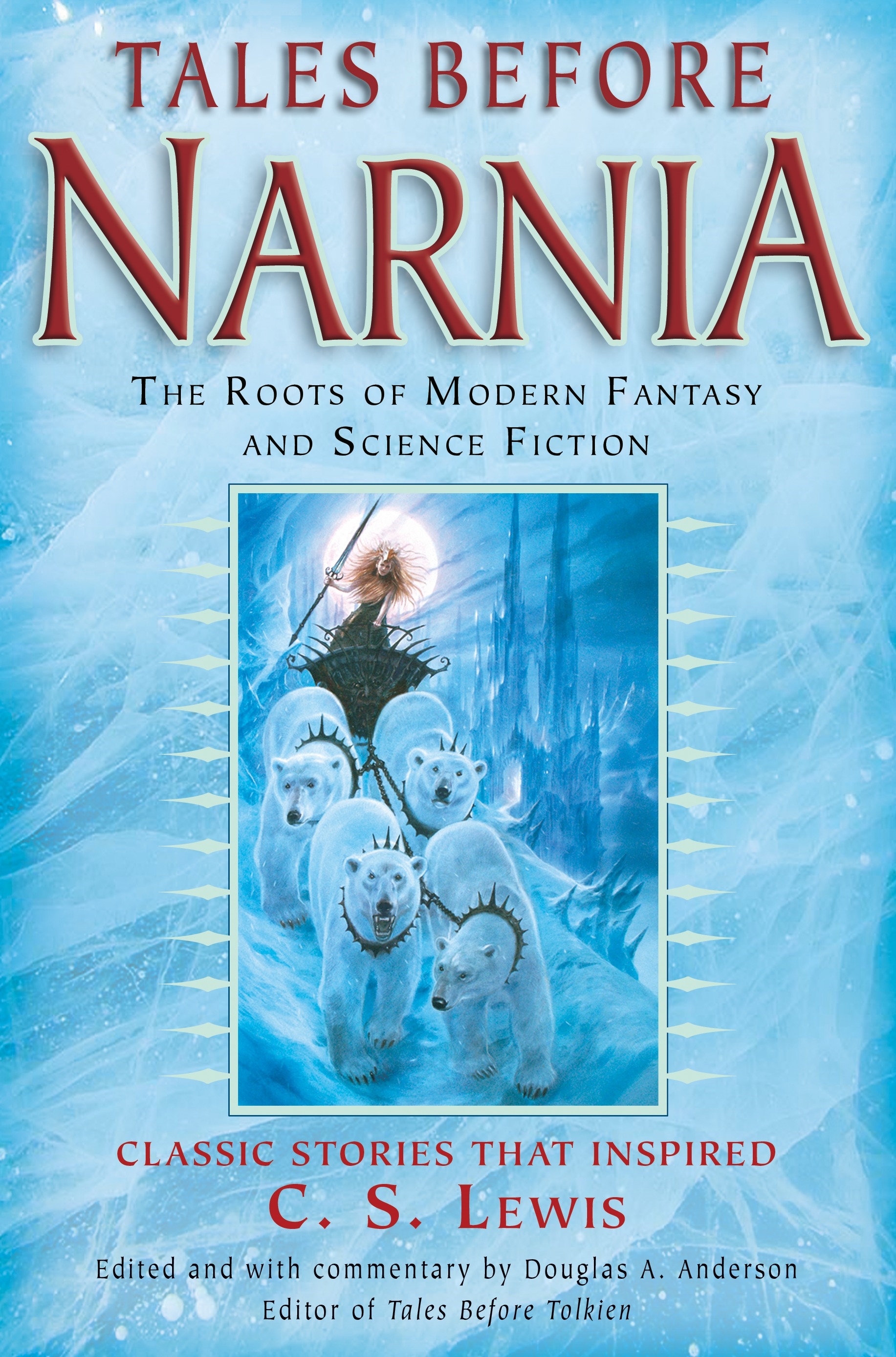
Tales Before Narnia

The Roots of Modern Fantasy and Science Fiction


Companion volume to Del Rey's successful Tales Before Tolkien--a collection of classic fantasy tales that inspired bestselling author C.S. Lewis.

In his acclaimed collection Tales Before Tolkien, Douglas A. Anderson illuminated the sources, inspirations, and influences that fired J.R.R. Tolkien’s genius. Now Anderson turns his attention to Tolkien’s colleague and friend C. S. Lewis, whose influence on modern fantasy, through his beloved Narnia books, is second only to Tolkien’s own.

In many ways, Lewis’s influence has been even wider than Tolkien’s. For in addition to the Narnia series, Lewis wrote groundbreaking works of science fiction, urban fantasy, and religious allegory, and he came to be regarded as among the most important Christian writers of the twentieth century. It will come as no surprise, then, that such a wide-ranging talent drew inspiration from a variety of sources. Here are twenty of the tributaries that fed Lewis’s unique talent, among them:

“The Wood That Time Forgot: The Enchanted Wood,” taken from a never-before-published fantasy by Lewis’s biographer and friend, Roger Lancelyn Green, that directly inspired The Lion, the Witch, and the Wardrobe; E. Nesbit’s charming “The Aunt and Amabel,” in which a young girl enters another world by means of a wardrobe; “The Snow Queen,” by Hans Christian Andersen, featuring the abduction of a young boy by a woman as cruel as she is beautiful; and many more, including works by Charles Dickens, Kenneth Grahame, G. K. Chesterton, and George MacDonald, of whom Lewis would write, “I have never concealed the fact that I regarded him as my master.”

Full of fascinating insights into Lewis’s life and fiction, Tales Before Narnia is the kind of book that will be treasured by children and adults alike and passed down lovingly from generation to generation.

INCLUDING SEVENTEEN MORE WORKS BY THE PROGENITORS OF MODERN FANTASY AND SCIENCE FICTION:
“Tegnér’s Drapa” by Henry Wadsworth Longfellow
“The Magic Mirror” by George MacDonald
“Undine” by Friedrich de la Motte Fouqué
“Letters from Hell: Letter III” by Valdemar Thisted
“Fastosus and Avaro” by John Macgowan
“The Tapestried Chamber; or, The Lady in the Sacque” by Sir Walter Scott
“The Story of the Goblins Who Stole a Sexton” by Charles Dickens
“The Child and the Giant” by Owen Barfield
“A King’s Lesson” by William Morris
“The Waif Woman: A Cue—From a Saga” by Robert Louis Stevenson
“First Whisper of The Wind in the Willows” by Kenneth Grahame
“The Wish House” by Rudyard Kipling
“Et in Sempiternum Pereant” by Charles Williams
“The Dragon’s Visit” by J.R.R. Tolkien
“The Coloured Lands” by G. K. Chesterton
“The Man Who Lived Backwards” by Charles F. Hall
“The Dream Dust Factory” by William Lindsay Gresham
  • Published: 2 June 2008
  • ISBN: 9780345498908
  • Imprint: Random House Worlds
  • Format: Paperback
  • Pages: 352
  • RRP: $34.99

About the authors

Robert Louis Stevenson

Robert Louis Stevenson (1850–1894) was a Scottish novelist, poet, essayist, and travel writer who spent the last part of his life in the Samoan islands. His best-known books include Treasure Island, Kidnapped, The Master of Ballantrae, and Dr. Jekyll and Mr. Hyde.

Rudyard Kipling

Rudyard Kipling was born in Bombay, India, to British parents on December 30, 1865. In 1871 Rudyard and his sister, Trix, aged three, were left to be cared for by a couple in Southsea, England. Five years passed before he saw his parents again. His sense of desertion and despair were later expressed in his story "Baa Baa, Black Sheep" (1888), in his novel The Light That Failed (1890), and in his autobiography, Something of Myself (1937). As late as 1935, Kipling still spoke bitterly of the "House of Desolation" at Southsea: "I should like to burn it down and plough the place with salt." Kipling and his wife settled in Brattleboro, Vermont, where Kipling wrote The Jungle Book (1894), The Second Jungle Book (1895), and most of Captains Courageous (1897). By this time Kipling's popularity and financial success were enormous. In 1899 the Kiplings settled in Sussex, England, where he wrote some of his best books: Kim (1901), Just So Stories (1902), and Puck of Pook's Hill (1906). In 1907 he received the Nobel Prize for Literature. By the time he died, on January 18, 1936, critical opinion was deeply divided about his writings, but his books continue to be read by thousands.

Praise for Tales Before Narnia

Praise for Tales Before Tolkien, also edited by Douglas A. Anderson:

"A fascinating tribute to the roots of all modern fantasy; recommended for public and academic libraries."
    --Library Journal
"The collection, with its impressive array of distinctive styles, deserves to be treasured alongside or independently of Tolkien. Youngsters and the young-at-heart alike will enjoy the whimsy, wit and wildness of these distinctive fairy lands." --Curledup.com

Praise for Tales Before Tolkien, also edited by Douglas A. Anderson:

"A fascinating tribute to the roots of all modern fantasy; recommended for public and academic libraries."
    --Library Journal
"The collection, with its impressive array of distinctive styles, deserves to be treasured alongside or independently of Tolkien. Youngsters and the young-at-heart alike will enjoy the whimsy, wit and wildness of these distinctive fairy lands." --Curledup.com