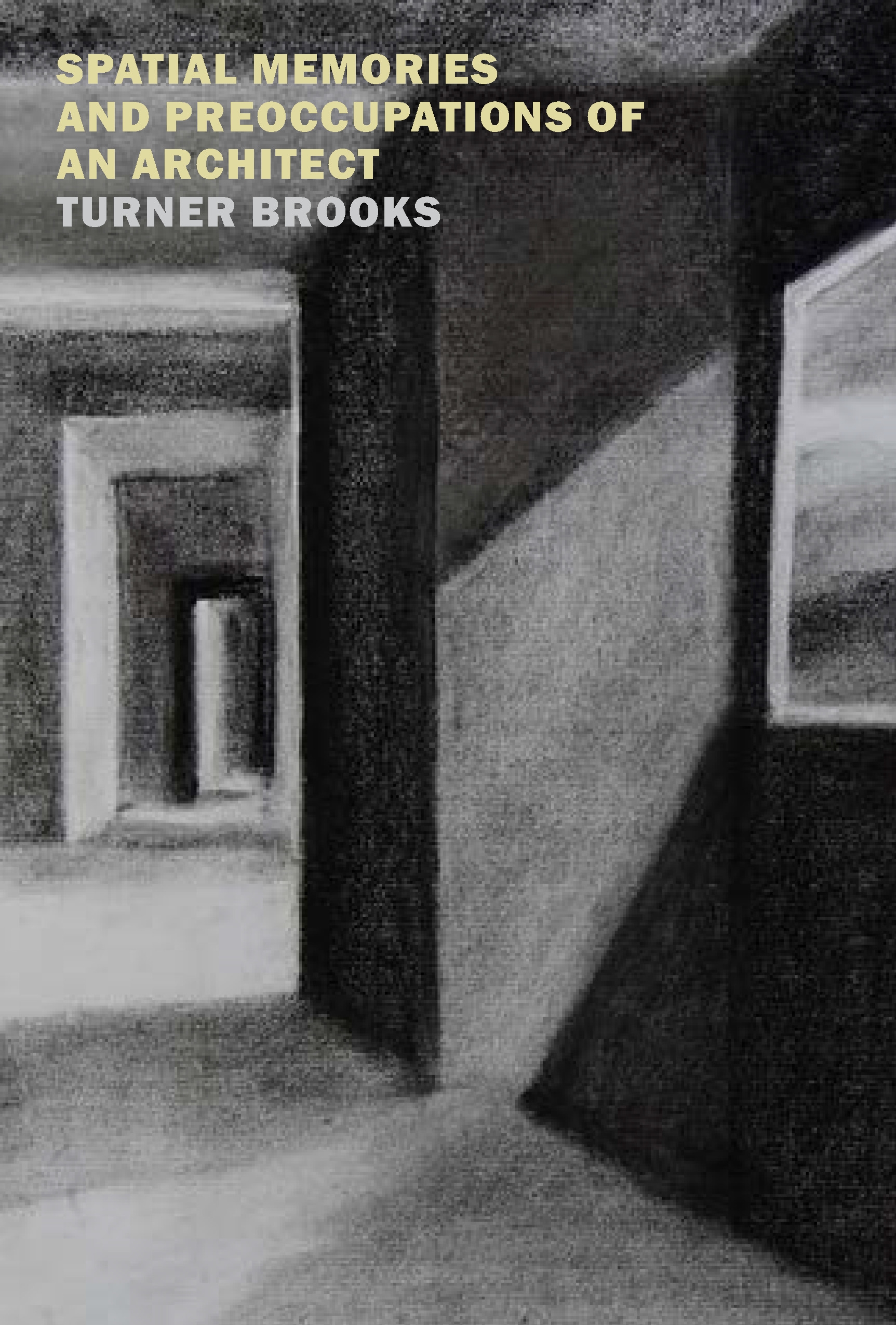
How does an architect become an architect? In this intimate and playful work of autobiography and criticism, Turner Brooks explores this very question, mapping the way his childhood impressions and enthusiasms later influenced his award-winning architectural work.
How does an architect go about imagining and shaping space and how is that work shaped by his own experience? In Spatial Memories, Turner Brooks, an award-winning architect and a longtime teacher at the Yale School of Architecture, describes how memories of spatial experiences—a small child occupying a father's gigantic overcoat, lying awake in a tiny bedroom in an old house in Maine, traversing the soaring concourse of Grand Central Terminal—evolved into a lifelong preoccupation with architecture.
Brooks's Emersonian eye considers the kinetic work of Frank Furness in Philadelphia, John Soane's perception-defying museum in London, and the sublime pyrotechnics of Borromini in Rome and baroque palazzos in Sicily, as well as the experience of space in books and paintings, from Clement Hurd's illustrations for Goodnight Moon to Kafka's "The Burrow" to Edward Hopper's Rooms by the Sea. An assignment in architecture school, the "dominant void"—to construct a space that is more palpable than the material used to define it—becomes a divining rod for Brooks's own arresting, intimate designs.
A beautifully written, idiosyncratic, moving meditation in the tradition of Gaston Bachelard and Witold Rybczynski, Spatial Memories is a revelation of the profoundly personal character of the architectural imagination.