> Skip to content
[]
  • Published: 5 January 2027
  • ISBN: 9781911764205
  • Imprint: Ebury Vine
  • Format: Paperback
  • Pages: 176
  • RRP: $26.99
Categories:

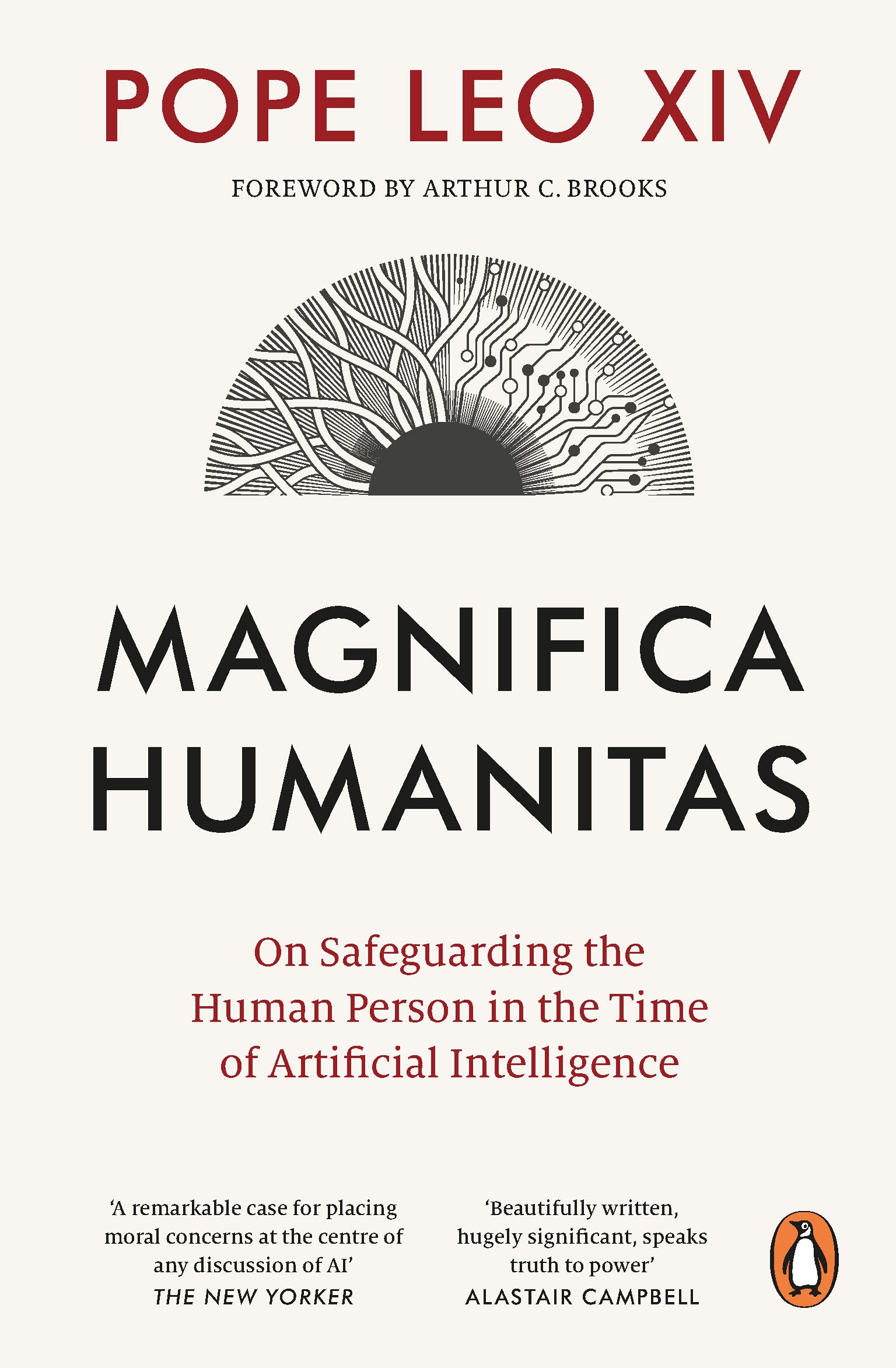
Magnifica Humanitas

On Safeguarding the Human Person in the Time of Artificial Intelligence


Pope Leo XIV's opening statement to the world, offering an exciting, bold and urgent vision of what it means to be human in modern times and the coming age of artificial intelligence

.

‘A remarkable case for placing moral concerns at the centre of any discussion of AI’ THE NEW YORKER

‘Beautifully written, hugely significant, speaks truth to power’ ALASTAIR CAMPBELL

As AI transforms work, creativity, communication and everyday life, the deepest questions it raises are not technological, but moral: What is progress for? What must never be surrendered to the machine? And what does it truly mean to be human?

In his landmark first encyclical, Pope Leo XIV draws on the rich tradition of Catholic social teaching to explore the questions at the heart of the AI revolution. Calling for a future in which innovation serves human dignity rather than diminishes it, he offers a compelling vision for technology in service of humanity.

Neither fearful nor naïve, this is an invitation for us all to think more deeply about the world we are building – and the people we are becoming.

  • Published: 5 January 2027
  • ISBN: 9781911764205
  • Imprint: Ebury Vine
  • Format: Paperback
  • Pages: 176
  • RRP: $26.99
Categories:

About the author

Pope Leo XIV

Pope Leo XIV was born Robert Francis Prevost in the South Side of Chicago in 1955, the son of a superintendent and a librarian. After studying mathematics at Villanova University in Philadelphia, Pennsylvania, he made solemn vows in the Order of St Augustine and was ordained a priest in Rome in 1982. He served as the Prior General in the Order of Saint Augustine, was consecrated bishop in 2014 and was made cardinal in 2023. On 8 May 2025, he was elected to the papacy.

Also by Pope Leo XIV

See all

Praise for Magnifica Humanitas

How grateful I am to this leader of kindness for explaining to us—and even warning us—what it means to be human, not only now but also for future generations.

Elizabeth Strout, Pulitzer Prize winning novelist

Presents a remarkable case for placing moral concerns, and not profit, or competitive advantage, or efficiency, at the center of any discussion of artificial intelligence.

The New Yorker

The first attempt for a very significant global public figure to make the moral case for how we should think about AI, bringing with him hundreds of millions of Catholics and articulating things that resonate, not just with Christians, but with many, many people... the strongest way of looking at AI I've seen.

Rory Stewart, former cabinet minister and co-host of Britain's biggest podcast, The Rest Is Politics