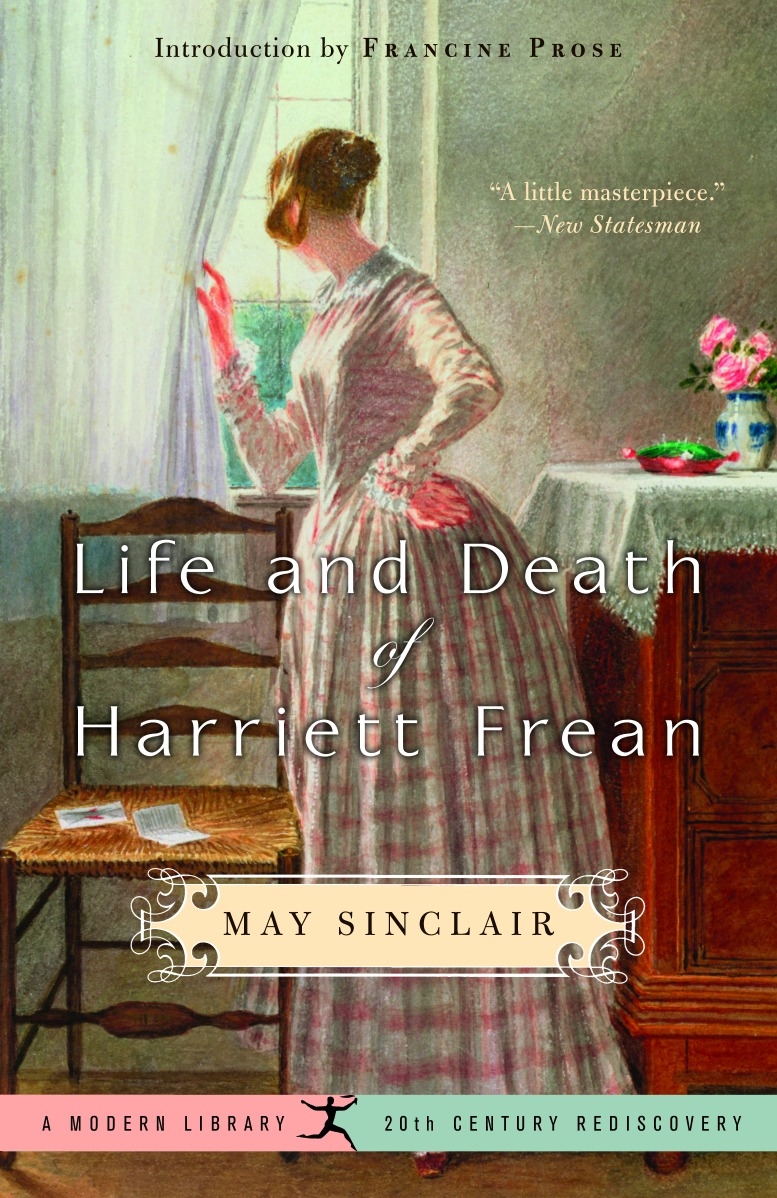
“In a few short pages,” writes Francine Prose in her Introduction, “May Sinclair succeeds in rendering the oppressive weight and strength of the chains of family love.” Young Harriett Frean is taught that “behaving beautifully” is paramount, and she becomes a self-sacrificing woman whose choices prove devastating to herself and to those who love her most. An early pioneer of stream-of-consciousness writing, Sinclair employs the technique brilliantly in this finely crafted psychological novel. Evoking the style and depth of her contemporaries Virginia Woolf and D. H. Lawrence, Sinclair’s haunting narrative also reflects her keen interest in the theories of Jung and Freud. The text of this Modern Library 20th Century Rediscovery was set from the first American edition of 1922.
May Sinclair (1863-1946) has been compared, in stature and choice of themes, to George Eliot and Virginia Woolf. She was born in Liverpool. Her father, an unsuccessful businessman in the shipping trade, abandoned his family, leaving May, with little formal education, to support herself and her mother with her poetry, translations, criticism, and popular literary fiction that evolved into "stream of consciousness" writing (a term she coined). An active Suffragette, influenced by Freud and Jung, her best known works are psychological novels. Rediscovered by Virago in the '80s, her novels include MARY OLIVER: A LIFE, and THE THREE SISTERS.
Related titles
Our top books, exclusive content and competitions. Straight to your inbox.
Thank you! Please check your inbox and confirm your email address to finish signing up.