- Published: 11 August 2026
- ISBN: 9780241733912
- Imprint: Allen Lane
- Format: Hardback
- Pages: 336
- RRP: $59.99
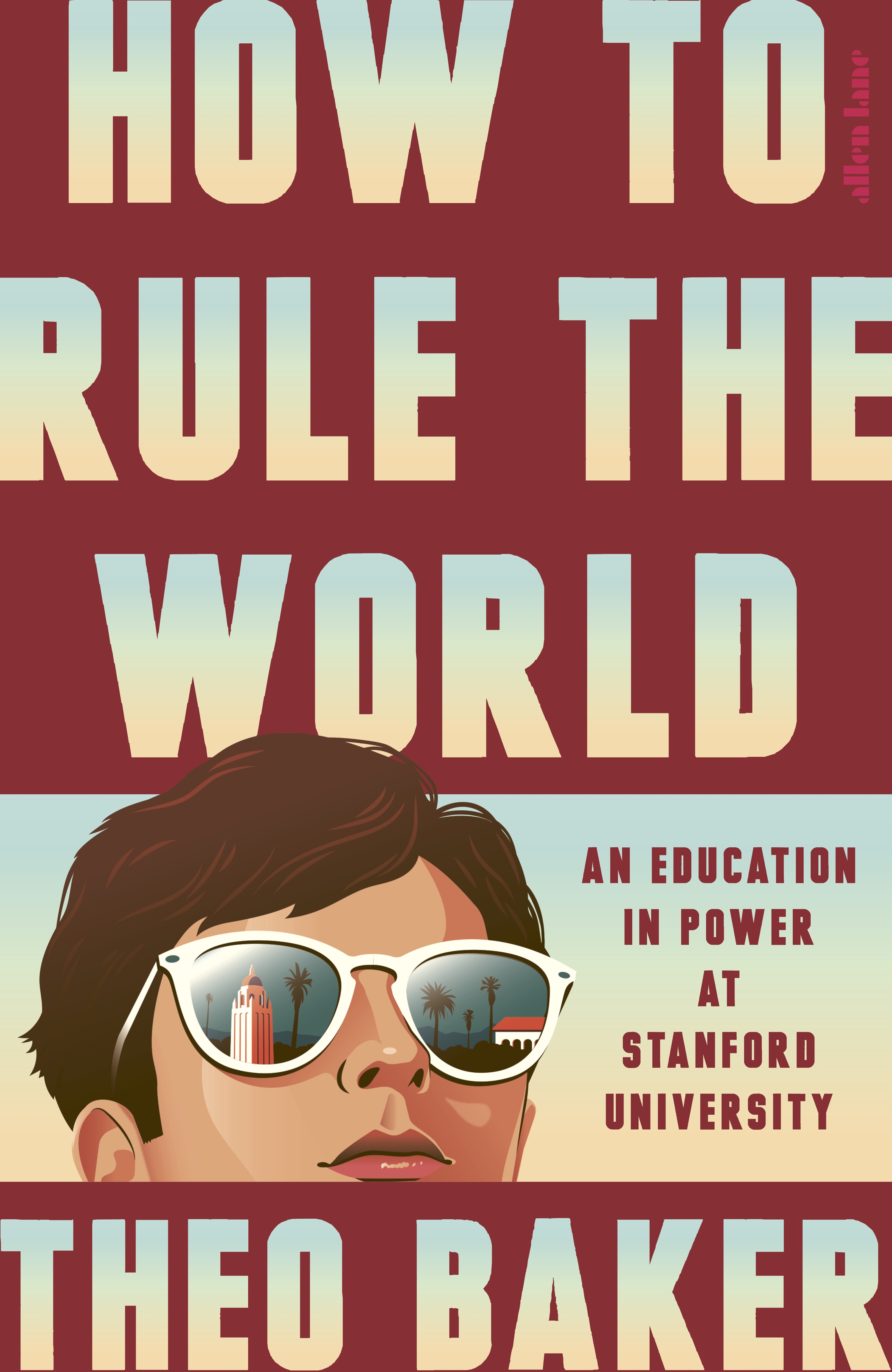
How to Rule the World
An Education in Power at Stanford University


- Published: 11 August 2026
- ISBN: 9780241733912
- Imprint: Allen Lane
- Format: Hardback
- Pages: 336
- RRP: $59.99
About the author

I am a sucker for books that illuminate cultures born of hubris, stories that make you say, ‘I had no idea this world existed.’ Theo Baker achieves this for several such worlds at the same time: Silicon Valley, ‘Nerd Nation’ (as Stanford calls itself), oligarchy, and precocious youth generally. Poignant, maddening, and genuinely hilarious, How to Rule the World is to be devoured—and fast, before Stanford buys up and sets fire to every copy. (Talk about a burn book!)
Mark Leibovich, #1 <i>New York Times</i> bestselling author of <i>This Town</i>
How to Rule the World is the story of a young reporter unafraid to challenge Silicon Valley’s billionaires and the powerful institutions that enable them—including his own university. Dogged, fearless, unflinching—Baker proves journalism’s future is alive and fighting. Both a gripping personal journey and a searing indictment of our entanglement with tech wealth and influence, this book shows how real reporting can still unsettle, expose, and hold the powerful to account
Emily Chang, national bestselling author and Emmy Award–winning journalist at Bloomberg Originals
I first loved How to Rule The World because it manages to tell you everything you need to know about America in this particular moment by focusing so closely on the cloistered yet unimaginably powerful world of Stanford. And then I met Theo, a young man so brilliant and erudite that I walked away from our first meeting with a full reading list. His vulnerability and brilliance leap off the page in equal measure
Amy Pascal, former chairwoman of Sony Pictures Entertainment, founder of Pascal Pictures, and producer of the <i>Spider-Man</i> films, <i>James Bond, The Post, Little Women, and The Social Network</i>
Theo Baker has written a page-turning drama about what happens when the search for scientific truth has to compete with personal and institutional power. His remarkable reporting has permanently changed the way we discuss research misconduct. Yet How to Rule the World is so much more. It’s a vital story about how higher education has lost sight of the students and ideals it was created to serve
Holden Thorp, editor-in-chief of <i>Science</i> and former chancellor at the University of North Carolina at Chapel Hill
In How to Rule the World, the wunderkind Theo Baker combines the remarkable story of his astounding reporting as a Stanford freshman that led to the downfall of the university’s president with his wry, insightful observations about Stanford’s unique form of Silicon Valley arrogance. Both strands are rendered in spare and propulsive prose, making it a nearly unfathomable accomplishment from someone so young
William Cohan, bestselling author of <i>House of Cards</i>
How to Rule the World is a fascinating safari through modern academia, based on meticulous, damning reporting. Essential reading for anyone seeking to understand the culture of money and ambition that has taken hold at one of America’s most storied institutions
Jake Tapper, #1 <i>New York Times</i> bestselling author and Emmy Award–winning anchor at CNN
Stanford is one of America’s most influential and fascinating institutions, and the gulf between those qualities and the attention it receives is vast. The world badly needs an inside account of this mysterious corner of the country from which so much wealth has oozed, and Theo Baker is the perfect author to deliver it
Jonathan Chait, staff writer at <i>The Atlantic</i>
A rigorous, self-assured, propulsive, at times terrifying portrait of a dweebocracy that ‘sets the agenda for the planet.’ In every age, there is some place that epitomizes how power works. Baker’s Stanford is a strong candidate, and his book follows in the tradition of Michael Lewis’s Wall Street chronicle Liar’s Poker
Anand Giridharadas, The New York Times
Baker’s book is a thrilling story of journalistic investigation: effectively, it’s All the President’s Men as a campus novel. . . Every one of us now lives in the domain of Stanford’s self-styled Übermenschen. Baker’s undeniable talent might make me sick with envy, but the truly nauseating thing here is the moral void he sketches at the heart of the tech world
Sarah Ditum, The Times
The true significance of Baker’s book lies not in the story of a brave student journalist nor in the size of the scalp he eventually claimed, but in what it reveals about the ethos of the institution now routinely referred to as ‘America’s top university
Stefan Collini, New Statesman
A romp and rollick of a read
Andrew Ross Sorkin, #1 New York Times bestselling author of 1929
What a journalist. If Baker’s portrait of Stanford could be its own movie (The Internship crossed with The Skulls), his gripping account of how a tip turned into a history-making investigation has the makings of All the President’s Men
Lily Janiak, San Francisco Chronicle
The Bonfire of the VCs . . . A vivid, dishy exposé of the sometimes comical, at times seemingly corrupt, efforts by tech funders to seduce undergraduates who smell like future moguls and geniuses, and vice versa
Axios
Theo Baker, an investigative journalist wunderkind and soon-to-be Stanford graduate, is not the first to trace Silicon Valley’s rot to his university...But he is the first to document, with rigor and detail, the institution’s recent history and culture...It reads like a memoir crossed with a spy thriller
Alex Bronzini-Vender, Washington Monthly
How to Rule the World sounds like exactly the right book for this moment in time
Connie Loizos, Tech Crunch
In this incendiary account . . . Baker is frank about the toll his reporting took on his social life and his faith in higher education; the book is at its most fascinating when detailing his disillusionment with the ‘rot’ at the heart of academia that prizes the appearance of success over the truth. It’s a confident testament to the power of independent journalism from an author with a bright future
Publishers Weekly (starred review)