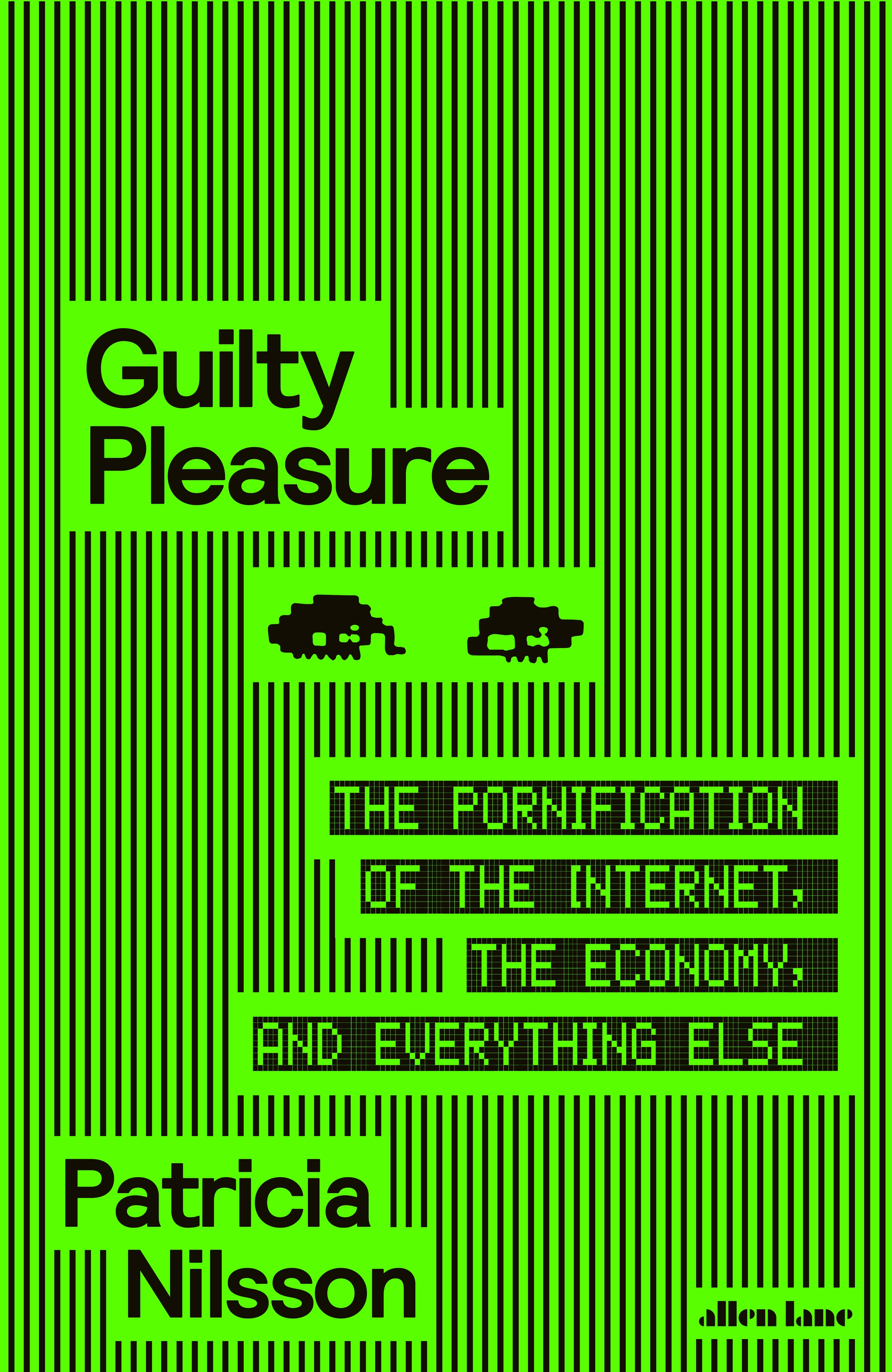
- Published: 1 December 2026
- ISBN: 9780241711293
- Imprint: Allen Lane
- Format: Hardback
- Pages: 288
- RRP: $59.99
Guilty Pleasure
The Pornification of the Internet, the Economy, and Everything Else


- Published: 1 December 2026
- ISBN: 9780241711293
- Imprint: Allen Lane
- Format: Hardback
- Pages: 288
- RRP: $59.99
About the author

A fascinating and terrifying read about the history of porn - and the unsettling ways it has come to shape our everyday lives and desires, whether we realise it or not. Nilsson’s thorough research illuminates dark corners of the internet, revealing truths that shouldn’t be ignored
Sophia Chetin-Leuner
A brave journey into a dark world, and a remarkable feat of investigative journalism. This is a book everyone should read - especially parents
Johann Hari
From streaming video clips to creators broadcasting themselves for money, pornography pioneered much of what we know and (sometimes) love about the internet today. Patricia Nilsson's vital volume makes an important argument that we're living an online life created by porn, even if we're not all on OnlyFans. Revealing and insightful, this book offers a key to understanding not just digital technology but the way we are all but forced to commodify our selves online
Kyle Chayka
What she reports is so disturbing but I was compelled to keep going and learn. Brilliant research
Susie Orbach
Patricia Nilsson has cracked open an industry most have squeamishly dismissed – and, with a cool incisiveness, convincingly argued how it has laid the rails for the entire online economy. She takes the reader for a wild ride, where her forensic and colourful examination of pornography reveals a chilling truth about the co-optability of our attention and desires. This is a foundational work if you want to understand how capitalism has come for pleasure and how the commodification of the self in the name of intimacy has, in fact, fractured real connection. Nilsson has threaded the needle here with a perspective that is unflinching and which carefully avoids relying on easy, obvious narratives
Sarah Manavis
Substantial, enriching and enjoyable … There rarely is a dull moment in Guilty Pleasure … It ought to make for a depressing read but, happily, Nilsson’s observations and prose always manage to keep you entertained
Marie Le Conte, Observer
Today, the global porn industry makes tens of billions of dollars a year. It’s tempting to think of it as a seedy underground thing, which good people ignore and to which bad people are addicted, but as the journalist Patricia Nilsson argues in her fascinating study Guilty Pleasure, porn is nothing less than the model for the internet we all use today
Lucy Thynne, Telegraph
A forensic examination of the industry which, at peak times, commands a tenth of global internet traffic … What Nilsson finds isn't a shadowy underworld of grubby studios and back alleys. Instead, what she explores is how payment processors and nerdy software engineers displaced the likes of Hugh Hefner and Larry Flint as industry power brokers. We train algorithms with our most privates desires and in turn they train us, helping shape our behaviour in the bedroom
Ash Sarkar, Novara Media
[Nilsson] traces the evolution of porn from the advent of X-rated VHS tapes, through the rise of "tube sites" like Pornhub, YouPorn, and RedTube, to current times where eroticised content is almost inescapable in our social media feeds. But even more importantly, she explores the expansion of porn’s "masturbatory business model" into a foundational logic of the internet at large … It can be difficult to talk about the negative effects and dynamics of porn without sounding prudish, or even downplaying the autonomy of the performers who take part in the industry. But Guilty Pleasure does a good job of walking the tightrope
Thom Waite, Dazed
As a business journalist, Nilsson began rigorously reporting on the power players of the adult industry, who prefer to remain in the shadows. Along the way, she uncovered how porn has shaped the internet – and our lives as a whole
Amelia Gentleman, Guardian
Subtle and interesting … A compelling argument
Sarah Ditum, The Times