- Published: 9 August 2026
- ISBN: 9781911709817
- Imprint: Torva
- Format: Hardback
- Pages: 480
- RRP: $69.99
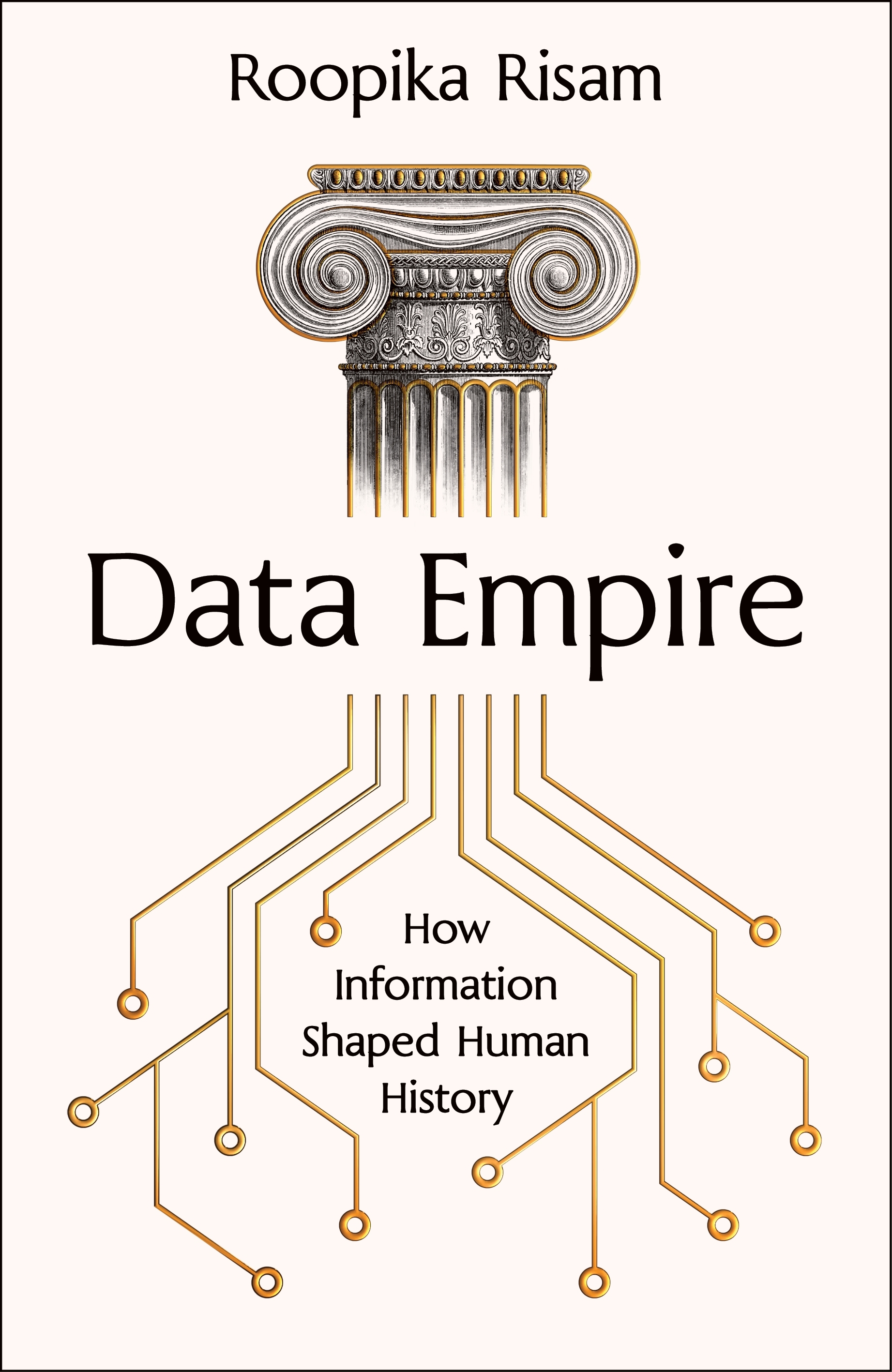
Data Empire
How information shaped human history


- Published: 9 August 2026
- ISBN: 9781911709817
- Imprint: Torva
- Format: Hardback
- Pages: 480
- RRP: $69.99
About the author

This brilliant, readable book offers a striking new historical perspective on accountants and number-crunchers, demonstrating the extent to which data has shaped and controlled people’s lives across centuries and continents.
Professor Corinne Fowler, author of Our Island Stories
A timely and ambitious history of humanity’s oldest technology: keeping track. For millennia, humans have counted and recorded the world – first with pebbles, notched bones, and cave art, later with ledgers, censuses, and now algorithms. Data Empire traces how these practices became instruments of power, shaping trade, governance, and the fate of entire populations. A compelling, highly readable account of data’s often unseen influence on our lives.
Professor Brooke N. Newman, author of The Crown’s Silence
From the earliest inscriptions, through the record-keeping of the Han dynasty or the Domesday book, to the modern world of the internet and AI, Risam demonstrates how data has both controlled and liberated us and so moulded the human story. Breathtaking in its scope and enormously fulfilling in its depth, this book is profoundly fascinating.
Professor Lewis Dartnell, author of Being Human
Data is everywhere – and has been for over 67,000 years. In Data Empire, Roopika Risam retells the epic, tragic, and triumphal stories of how humans generated data to encode and organize their worlds. Risam explores information as a powerful tool, one that can help us to recover historical memories or deliver "engines of control" into the hands of Silicon Valley tech firms. From Palaeolithic cave paintings to ancient shipwrecks to Mesoamerican calendars to ICE raids: every age is presented with choices about their data. Data Empire demonstrates that we are not beholden to the stories that corporations wish to tell or sell about us. We can choose to resist and to take back our data – if we work together.
Professor Sarah E. Bond, author of Strike
Professor Risam’s Data Empire offers fascinating perspectives on data’s role in classifying persons, controlling resources, and hardening hierarchies. Her longue duree history – from King Sargon to cybernetics – puts record-keeping at centre stage. As Risam argues, far from being the mere residue of events, data often shapes and sparks them. Read this book both to enjoy her captivating historical narrative, and to bring a fresh new perspective to current debates on privacy and AI.
Professor Frank Pasquale, author of The Black Box Society and New Laws of Robotics
What if the story of data is the story of humanity? In a work of enormous erudition, Risam guides readers across continents and centuries to reach a sobering conclusion: data is us – our societies, our cultures, our futures – and we are ceding control to an unaccountable few.
Dr Dan Bouk, author of Democracy’s Data
A powerful and thought-provoking deep history of data and power, essential reading for understanding the opportunities and dangers of the technological revolution now transforming our world.
Dr Jonathan Kennedy, author of Pathogenesis
Here is the new history of mankind demanded by our times. We can understand our past, going all the way back to our emergence as a species, as a struggle over data. Data used to turn into power through intermediates like money and politics, but now it does so more directly. Humanity was forced to enact reforms to make money and politics survivable. This book asks what we will do about data now that we have no choice but to do something.
Jaron Lanier, computer scientist, founder of Virtual Reality and author of Who Owns the Future?
Roopika Risam has let data's story unfurl over centuries and across continents. The result is something profound, a chance to see how our current moment of LLMs and data brokers and ubiquitous surveillance sits in the bigger story of human history. This is an essential book.
Jer Thorp, author of Living in Data
If data is the new oil, then Roopika Risam’s Data Empire can stand next to Daniel Yergin’s epic history of oil, The Prize as a fascinating tale of how data slowly became the most consequential commodity in our world.
Jonathan Taplin, author of Move Fast and Break Things and The End of Reality
An expansive and sobering history of the interplay of human data, conquest, and control.
Kirkus
A sweeping and convincing argument that information undergirds power.
Michael Rodriguez, Library Journal
Elegantly weaving scholarly research with trenchant political analysis, this is a must-read for those seeking to understand the deep history of the AI boom.
Publishers Weekly
Both a historical survey and a call to action, this work challenges readers to imagine digital resistance in a world defined by corporate and state extraction. Data Empire is essential for historians, digital humanities scholars, and social activists.
Dominic J. Caraccilo, Booklist
With a sharply critical eye through a historical lens, Data Empire brings to light the power data holds above humanity while also giving us hope to imagine what resistance against it looks like.
Electric Literature
Her account is strongest is in the final chapters, on our present world, in which the economy is now dominated by data-driven companies, with huge implications for society on how the info they trade in is derived
Observer
As we stare, often helplessly, at the plethora of hyperconnected, pervasive, personally extractive tech heading at us, shaping the future needs the insights of people like Risam
New Scientist
Risam is a vivid writer, and she has a gift for recasting her impressive bibliography on everything from ancient Roman surveying to Soviet flirtations with cybernetics into colorful human stories.
Los Angeles Review of Books