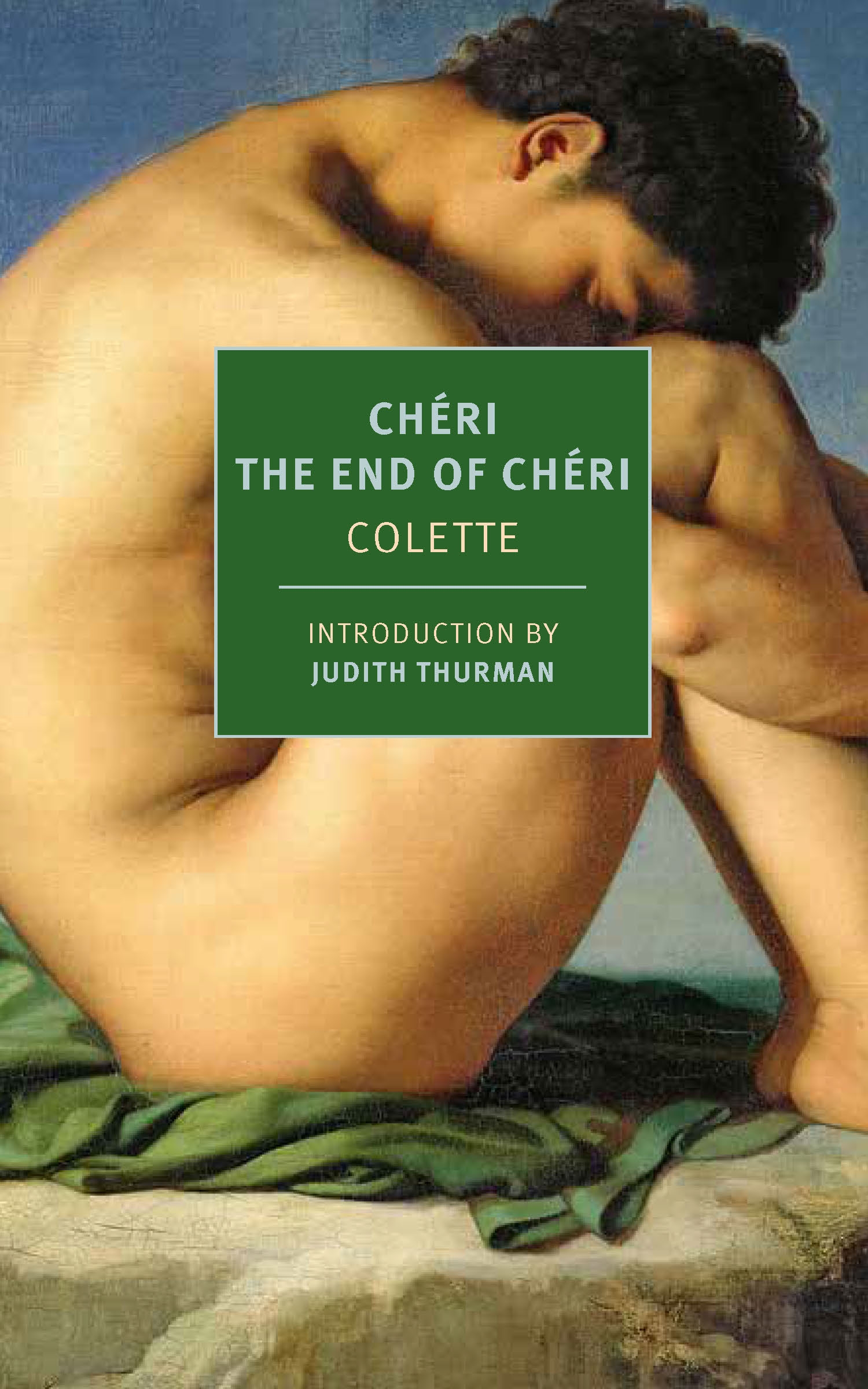
Colette's celebrated novels about an older courtesan and her young lover, now in a new translation and published in one volume.
Colette’s Chéri (1920) and its sequel, The End of Chéri (1926), are widely considered her masterpieces. In sensuous, elegant prose, the two novels explore the evolving inner lives and the intimate relationship of an unlikely couple: Léa de Lonval, a middle-aged former courtesan, and Fred Peloux, twenty-five years her junior, known as Chéri. The two have been involved for years, and it is time for Chéri to get on with life, to make something of himself, but he, the personification of male beauty and vanity, doesn’t know how to go about it. It is time, too, for Léa to let go ofChéri and the sensual life that has been hers, and yet this is more easily resolved than done. Chéri marries, but once married he is restless and is inevitably drawn back to his mistress, as she is to him. And yet to reprise their relationship is only to realize even more the inevitability of its end. That end will come when Chéri, back from World War I, encounters a world that the war has changed through and through. Lost in his memories of time past, he is irremediably lost to the busy present. Paul Eprile’s new translation of these two celebrated novels brings out a vivid sensuality and acute intelligence that past translations have failed to capture.
Colette, the creator of Claudine, Cheri and Gigi, and one of France’s outstanding writers, had a long, varied and active life. She was born in Burgundy on 1873 into a home overflowing with dogs, cats and children, and educated at the local village school. At the age of twenty she moved to Paris with her first husband, the notorious writer and critic Henry Gauthier-Villas (Willy). By locking her in her room, Willy forced Collette to write her first novels (the Claudine sequence), which he published under his name. They were an instant success. Colettte left Willy in 1906 and worked in music-halls as an actor and dancer. She had a love affair with Napoleon’s niece, married twice more, had a baby at 40 and at 47. Her writing, which included novels, portraits, essays and a large body of autobiographical prose, was admired by Proust and Gide. She was the first woman President of the Académie Goncourt, and when she died, aged 81, she was given a state funeral and buried in Père Lachaise Cemetery in Paris.
Related titles
Our top books, exclusive content and competitions. Straight to your inbox.
Thank you! Please check your inbox and confirm your email address to finish signing up.