> Skip to content
[]
Play sample
  • Published: 19 May 2022
  • ISBN: 9781529159066
  • Imprint: Penguin
  • Format: EBook
  • Pages: 320
Categories:

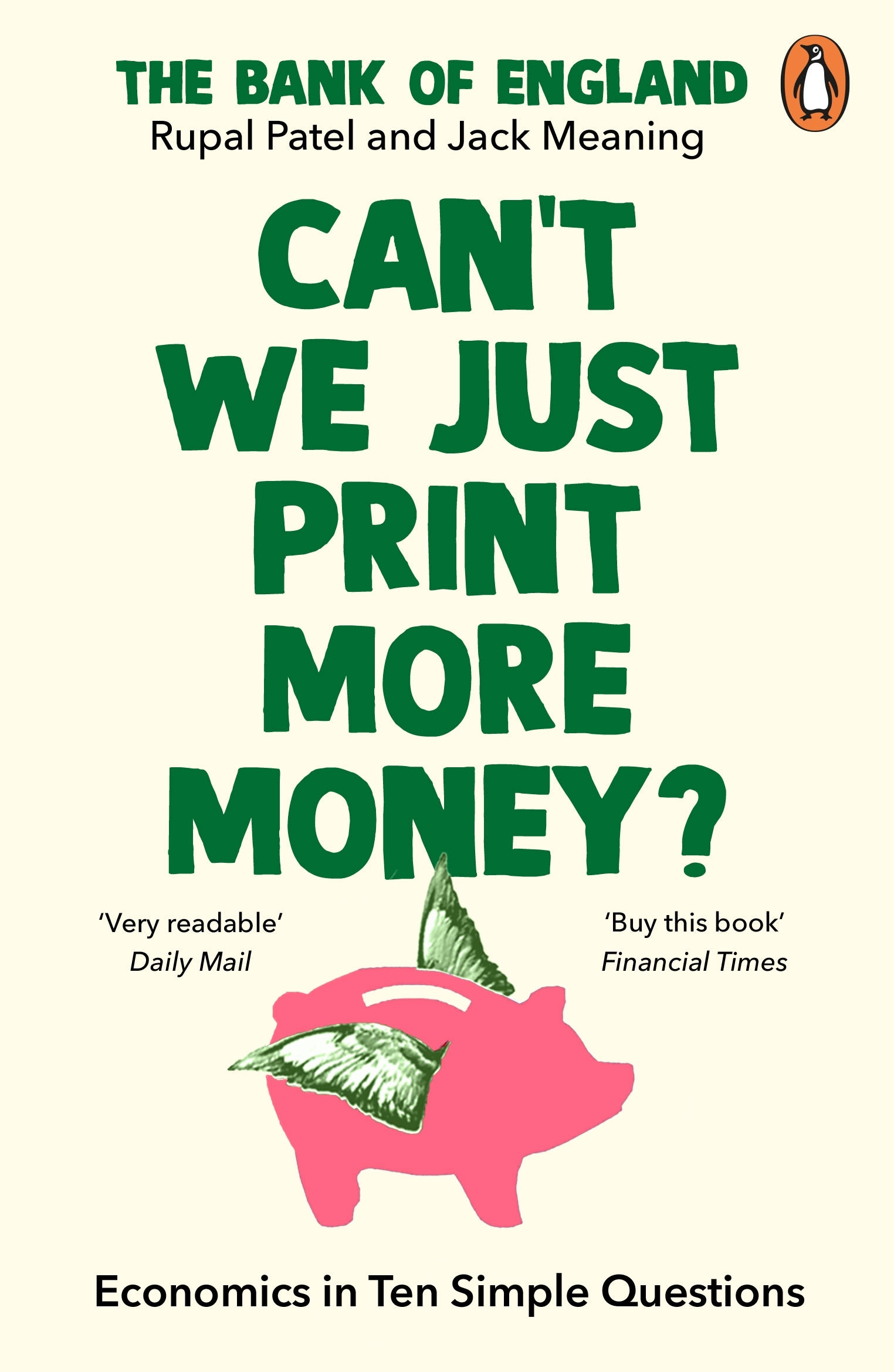
Can’t We Just Print More Money?

Economics in Ten Simple Questions


'If you feel you should understand how economists think but have no idea where to start, this book is the answer' Financial Times

Why are all my clothes made in Asia?
How do I get a pay-rise?
And what even is money?

Join Britain's most venerable financial institution for a rip-roaring crash-course in economics. From financial crises to Freddo prices, it will help you make sense of your job, your life and maybe your world.
_

'A well-written treat . . . Using examples including the Bank of England canteen, The Simpsons and Beanie Babies, the authors encourage us all to understand, and even challenge, what economists do' Professor David Spiegelhalter, author of The Art of Statistics

'A well-timed attempt to show the public what goes on inside the Bank of England - and familiarise them with some basic economic concepts . . . Punctuated with jaunty anecdotes and neat examples' Guardian

'An entertaining and essential read at a time when understanding how our money, governments and banks interact has never felt more important' Laura Whateley, author of Money: A User's Guide

  • Published: 19 May 2022
  • ISBN: 9781529159066
  • Imprint: Penguin
  • Format: EBook
  • Pages: 320
Categories:

About the authors

Rupal Patel and Jack Meaning

Rupal Patel and Jack Meaning are economists at The Bank of England, the UK's central bank. One of the most important institutions in British public life, the Bank is responsible for overseeing the UK money supply, regulating financial bodies, and setting interest rates. Founded in 1694, it formed the model for most modern central banks around the world.

Rupal Patel

Rupal Patel and Jack Leslie are economists at the Bank of England and work as advisers to the committee who set interest rates. Rupal spends most of her time thinking about inflation and now and then writes books about economics. Jack is focused on understanding the UK economy, which means charts, spreadsheets, and more charts.

The Bank of England

Rupal Patel and Jack Leslie are economists at the Bank of England and work as advisers to the committee who set interest rates. Rupal spends most of her time thinking about inflation and now and then writes books about economics. Jack is focused on understanding the UK economy, which means charts, spreadsheets, and more charts. Founded in 1694, the Bank of England is the UK's central bank, responsible for setting interest rates, running the country’s payments system and regu­lating the financial sector – or in other words, making sure that money works. Over the last decade, the Bank's staff have been on a mission to get outside the City of London and promote economic literacy across the UK: whether by delivering talks in schools, running Citizens' Panels on people's eco­nomic experiences, or publishing the bestselling primer on economics Can’t We Just Print More Money?.

Praise for Can’t We Just Print More Money?

A great place to start your economic journey. With the Bank of England as your guide, this accessible book shows how economics affects so many aspects of our daily lives.

Dr Linda Yueh, author of THE GREAT ECONOMISTS

Economics affects every aspect of our lives, but it can often seem like an inaccessible, off-puttingly jargon-laden subject. This is the guide you need! An entertaining and essential read at a time when understanding how our money, governments and banks interact has never felt more important.

Laura Whateley, author of MONEY: A USER'S GUIDE

A well-written treat . . . Using examples including the Bank of England canteen, The Simpsons and Beanie Babies, the authors encourage us all to understand, and even challenge, what economists do.

Professor David Spiegelhalter, author of THE ART OF STATISTICS

An enjoyable introduction to the so-called dismal science . . . Patel and Meaning have done an admirable job in simplifying and popularising some of the key elements of their subject.

The Times

A well-timed attempt to show the public what goes on inside the Bank of England - and familiarise them with some basic economic concepts . . . Punctuated with jaunty anecdotes and neat examples.

Guardian

A very readable guide to economics . . . contains some great facts . . . Entertaining.

Daily Mail

A good introduction to concepts such as inflation, quantitative easing, supply and globalisation.

New Statesman

If you feel you should understand how economists think but have no idea where to start, this book is the answer . . . The Bank should be congratulated on this effort at education. Buy this book for the inquiring person, young, old or in between.

Martin Wolf, Summer Books, Financial Times

The authors want to inspire a new generation of economists, both at school level and among older students . . . If Patel and Meaning could help turn that tide, they will have performed a great public service.

Alex Brummer, Daily Mail

[One of] a range of accessible introductory books that can give people a basic understanding of the subject that may even prompt them to dig deeper . . . A great primer.

City A.M.
penguin pop image
penguin pop image