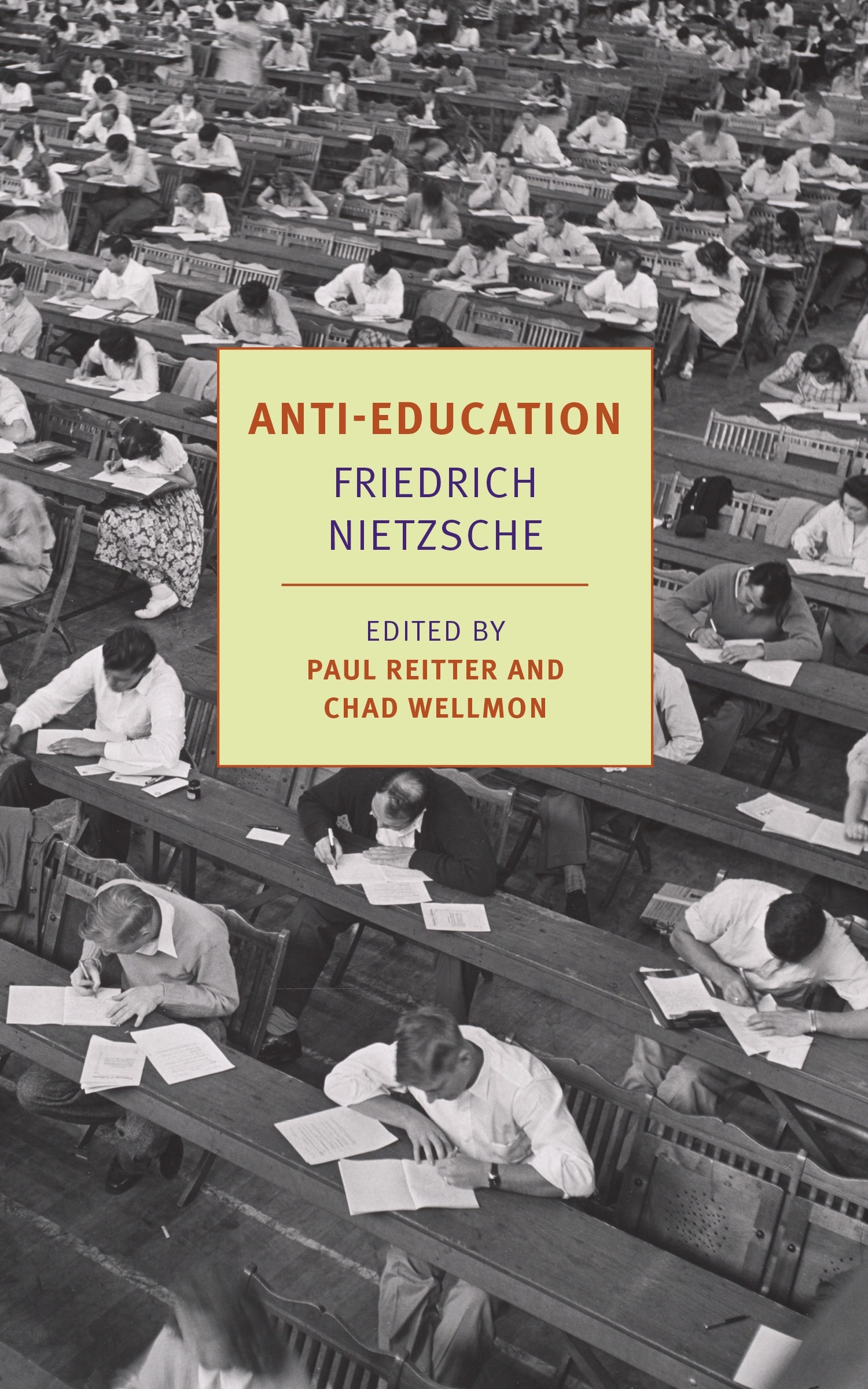
AN NYRB Classics Original
In 1869, at the age of twenty-four, the precociously brilliant Friedrich Nietzsche was appointed to a professorship of classical philology at the University of Basel. He seemed marked for a successful and conventional academic career. Then the philosophy of Schopenhauer and the music of Wagner transformed his ambitions. The genius of such thinkers and makers—the kind of genius that had emerged in ancient Greece—this alone was the touchstone for true understanding. But how was education to serve genius, especially in a modern society marked more and more by an unholy alliance between academic specialization, mass-market journalism, and the militarized state? Something more than sturdy scholarship was called for. A new way of teaching and questioning, a new philosophy . . .
What that new way might be was the question Nietzsche broached in five vivid, popular public lectures in Basel in 1872. Anti-Education presents a provocative and timely reckoning with what remains one of the central challenges of the modern world.