> Skip to content
[]
  • Published: 7 February 1995
  • ISBN: 9780099339212
  • Imprint: Arrow
  • Format: Paperback
  • Pages: 480
  • RRP: $29.99

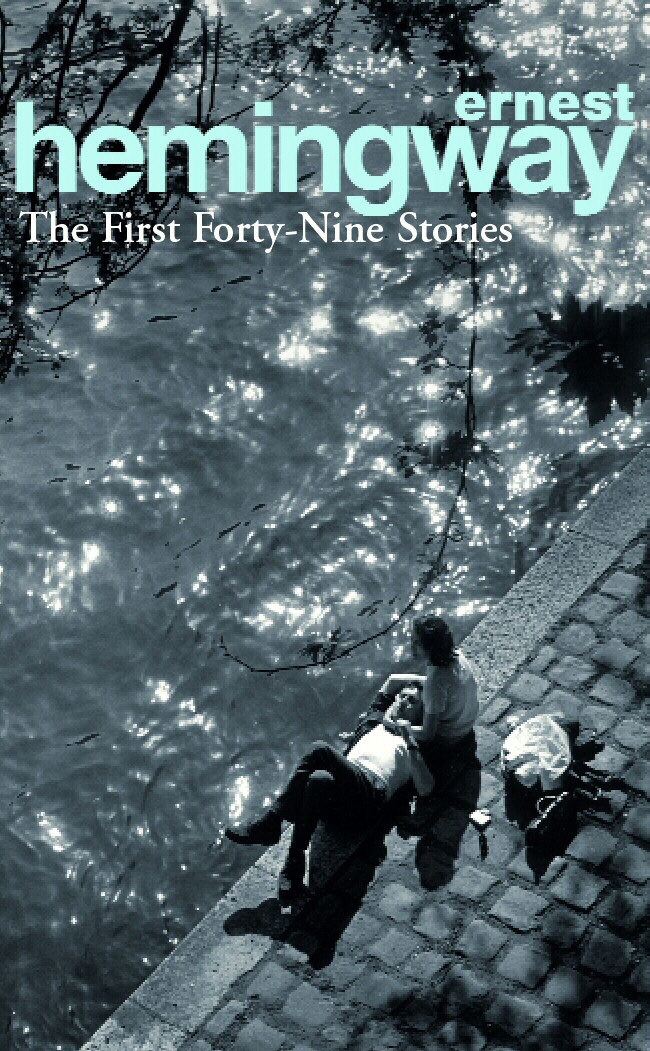
The First Forty-Nine Stories


A collection of Hemingway's first forty-nine short stories, featuring a brief introduction by the author and some lesser known as well as many familiar tales, from the Nobel Prize-winning author of For Whom the Bell Tolls.

From Ernest Hemingway's Preface: 'There are many kinds of stories in this book. I hope you will find some that you like- In going where you have to go, and doing what you have to do, and seeing what you have to see, you dull and blunt the instrument you write with. But I would rather have it bent and dulled and know I had to put it on the grindstone and hammer it into shape and put a whetstone to it, and know that I had something to write about, than to have it bright and shining, and nothing to say, or smooth and well-oiled in the closet, but unused.'

A collection of Hemingway's first forty-nine short stories, featuring a brief introduction by the author and lesser known as well as familiar tales, including 'Up in Michigan', 'Fifty Grand', and 'The Light of the World', and the Snows of Kilimanjaro, Winner Take Nothing' and Men Without Women collections.

  • Published: 7 February 1995
  • ISBN: 9780099339212
  • Imprint: Arrow
  • Format: Paperback
  • Pages: 480
  • RRP: $29.99

About the author

Ernest Hemingway

ERNEST HEMINGWAY was raised in Oak Park, Illinois, the child of a physician and a musician. After high school, he became a journalist with The Kansas City Star, before enlisting to be an ambulance driver in World War I. He returned home after a serious injury in 1918, but his military experience informed his fiction, especially A Farewell to Arms. He worked as a war correspondent for The Toronto Star during his first marriage, and over the next three marriages he would live in Paris, London, Key West, and Cuba. He published seven novels, six short story collections, and two nonfiction titles. On safari in Africa in 1952 he survived two plane crashes, though his obituaries ran prematurely. He lived on to win the Nobel Prize in Literature in 1954. Two trunks of his early work from Paris reappeared in 1957, and inspired him to write his memoir A Moveable Feast. He eventually committed suicide in Idaho in 1961.

Also by Ernest Hemingway

See all

Praise for The First Forty-Nine Stories

Mr Hemingway, applying that quick eye and wrist of his to the rings of the boxer and bull-fighter, achieves some unforgettable reporting of the world in which blood is argument... The author's exceptional gift of narrative quality gives the excitement of a well-told tale to what is, in fact, a simple description of a scene

Guardian