- Published: 8 September 2026
- ISBN: 9781804957943
- Imprint: Penguin
- Format: Paperback
- Pages: 448
- RRP: $26.99
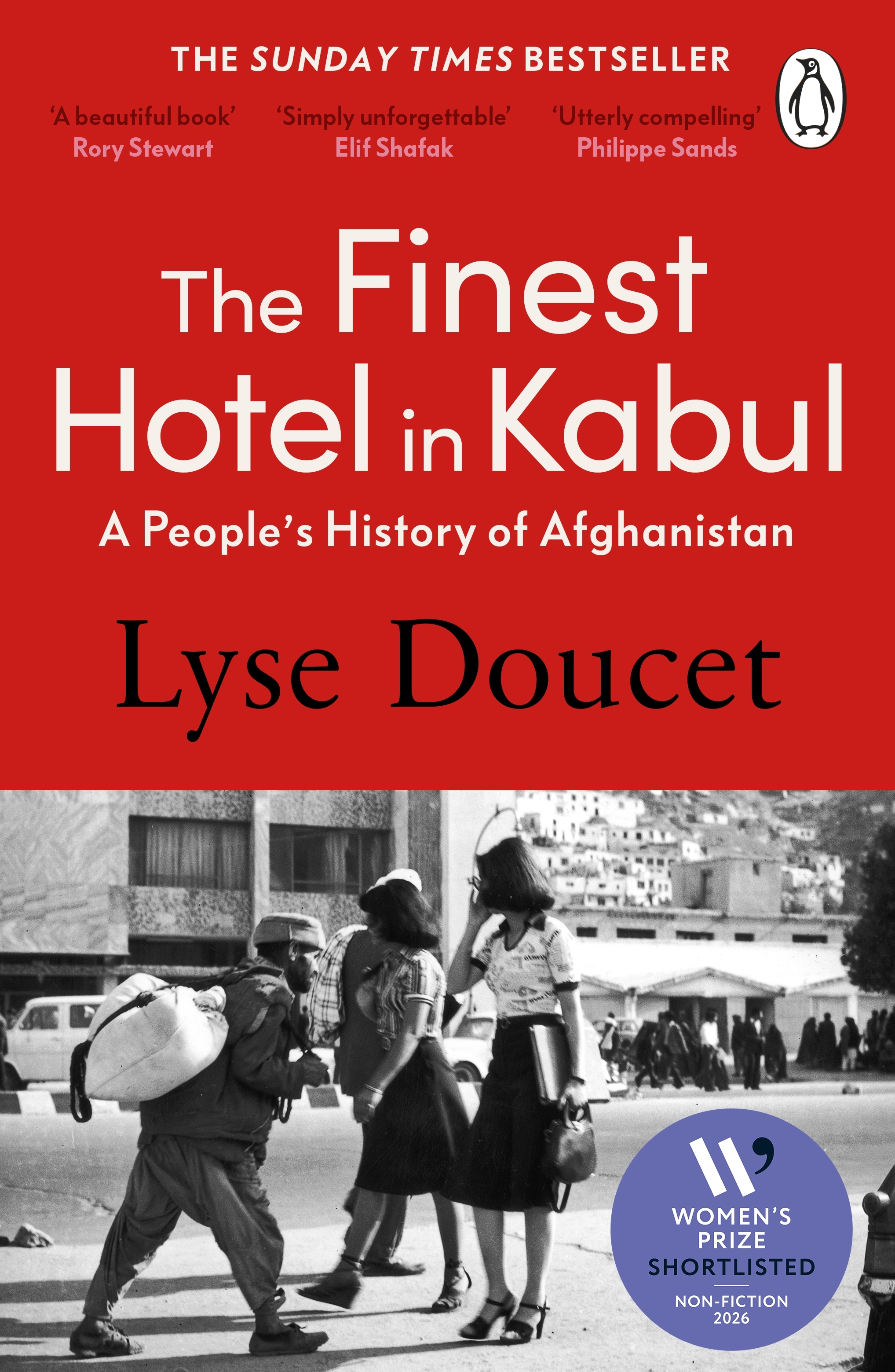
The Finest Hotel in Kabul
A People’s History of Afghanistan
Extract
‘How long will you be staying?’ asked the man behind the black marble counter. I didn’t know the answer. It was Christmas 1988, the day after my thirtieth birthday, and the gloam of the Inter-Continental Kabul was an unlikely place to be celebrating. The cavernous lobby, chilly and dark, stretched into forbidding corners, brightened solely by a shiny blue-and-white banner promoting the Soviet airline Aeroflot. Most of the chandeliers, their dangling crystals hushed by dust, were dark; only one glinted stoically above the reception desk. But the wooden grid of pigeonholes behind the front counter, packed with chunky metal keys, left little doubt. Almost no one else was staying here.
Would it be six days or six weeks? I wrestled with all the forces that might keep me in this ghostly place and all the ones that might not. An awkward pause pressed down upon me and the Afghan receptionist, his brown suit as gloomy as the lobby. He raised a quizzical eyebrow. And then he smiled, his welcome illuminating the room.
I had just landed in Kabul for the first time. The spiralling descent into one of the world’s highest capitals stuns its visitors into an awed silence. Sharp undulating ridges of rock puckered in folds of black, grey and a rusty red had given way to the sharp, snowy-white peaks of the Hindu Kush. Far below, the latticed landscape of miniature mud houses was dotted with flat-roofed factories and domed palaces and mosques that loomed ever larger. It was no ordinary arrival. The aircraft had banked sharply in a breathtaking corkscrew manoeuvre, flares bursting outwards with white- hot fire – a way to divert any heat-seeking missiles blasting from mountain bunkers, the foxholes of the Western-funded rebel fighters known as the mujahideen who were locked in battle with the Soviet-backed government in Kabul
That winter, the harshest in more than a decade, Kabul was in the crosshairs of a Cold War conflict that was decades old. Afghanistan’s unravelling had begun in 1973, four years after the Inter-Continental Kabul’s grand opening, when its mild-mannered King Zahir Shah had been toppled by his cousin. The putsch soon tipped Afghanistan into a blood-soaked spiral: another coup, three leaders assassinated one after the other, then the Soviet invasion over the Christmas of 1979, which sparked what would become the most grievous war in the world.
I had travelled to the Afghan capital to report on the Red Army’s pull-out, following a disastrous decade-long occupation. As I departed from neighbouring Pakistan, where I had spent the past few months, one mujahideen commander cheerily told me he would soon see me in Kabul, since their victory was now in sight. Another warned that I would certainly be killed there.
I had been nudged out of Pakistan by a competitive colleague who had made it clear that I should find a different patch. The kindness of strangers and friends had helped to secure me an escape route: a rare Afghan visa. The advice had been that there were really only two places to stay. The older, more conveniently located Kabul Hotel – smack in the centre, but with dubious communications and cuisine, and an even murkier history. And the Inter- Continental – high on a hill on the edge of the city, but with better telephone and telex links and food worth eating, as well as a certain faded splendour. As the clapped- out yellow taxi chugged out of the airport in a fug of diesel fuel, I made a split-second decision. We headed for the hill.
I soon discovered that hospitality is hard-wired in Afghans. At the front desk, Sharif, with his sunbeam smile, and Salem, his dour sidekick, were a delightful double act, offering assistance with a wink, as spooks of the Soviet- backed ruling party lurked. Amanullah, at room service, scribbled caricatures of journalists on food bills to bring some cheer to the bleak bedrooms – a very Afghan vision of ‘service with a smile’. Nasir, the telephone operator, offered Dari- language lessons during anxious waits for a telephone line in that once-upon-a-time before the ease of the internet and mobile phones. His impromptu class started with learning the phrase dostad daram. I soon found out it means ‘I love you’. As so often among Afghans, the gift was laughter.
I ended up staying nearly a year. The hotel became my Afghan home. The masking tape criss-crossing my windows offered scant protection from rocket fire, but looked the part. Carpets from merchants who always lent their wares before demanding a purchase – a tactic honed through history, to all but ensure a sale – provided a personal touch. As the Soviet troop withdrawal on 15 February 1989 approached, the Inter-Continental started bursting with journalists who came and went, until the hotel echoed with emptiness again.
The Finest Hotel in Kabul Lyse Doucet
'A book brimming with deep insight, courage and conscience. Astonishingly beautiful, subtle and simply unforgettable.' Elif Shafak
Buy now