[]
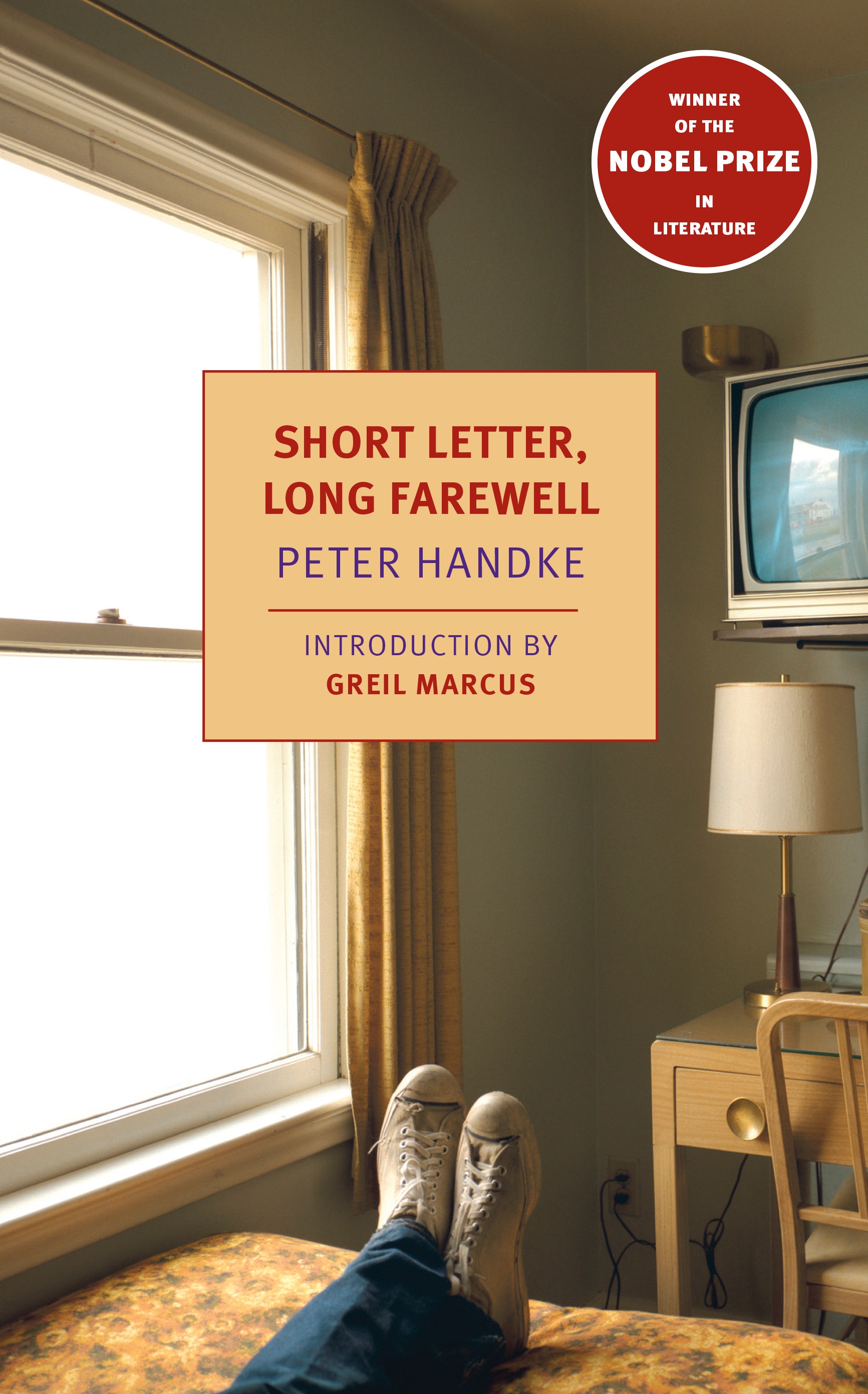
- Published: 31 March 2009
- ISBN: 9781590173060
- Imprint: NY Review Books
- Format: Paperback
- Pages: 192
- RRP: $32.99
Short Letter, Long Farewell


- Published: 31 March 2009
- ISBN: 9781590173060
- Imprint: NY Review Books
- Format: Paperback
- Pages: 192
- RRP: $32.99
"One of the most original and provocative of contemporary writers." --The NY Times "Perhaps the most interesting young writer in German today." --Frank Kermode "Willful intensity and knife-like clarity of emotion. [Handke] writes from an area beyond psychology, where feelings acquire the adamancy of randomly encountered, geologically analyzed pebbles...The best writer, altogether, in his language." --John Updike, The New Yorker "Imagine a cross between Holden Caulfield and Bertolt Brecht...Handke ended up writing social criticism with a vengeance...though to some degree time-bound tales of angst, have a pained, mysterious beauty. Their alluring tension lies in the little war they prosecute between eloquence of expression and rage at the loss of meaning." --The NY Times "The David Byrne of fiction: a writer with a resonant, powerfully direct voice who could invoke the particular Sartrean nausea of postmodern existence in the simplest events." --The NY Times "In power and vision and range, Peter Handke is the most important new writer on the international scene since Beckett." --Stanley Kaufmann "His prose is reminiscent of the writings of Henry James...a passion for understanding, for grasping the tortured complexities of contemporary life." --The Philadelphia Inquirer
"One of the most original and provocative of contemporary writers." --The NY Times "Perhaps the most interesting young writer in German today." --Frank Kermode "Willful intensity and knife-like clarity of emotion. [Handke] writes from an area beyond psychology, where feelings acquire the adamancy of randomly encountered, geologically analyzed pebbles...The best writer, altogether, in his language." --John Updike, The New Yorker "Imagine a cross between Holden Caulfield and Bertolt Brecht...Handke ended up writing social criticism with a vengeance...though to some degree time-bound tales of angst, have a pained, mysterious beauty. Their alluring tension lies in the little war they prosecute between eloquence of expression and rage at the loss of meaning." --The NY Times "The David Byrne of fiction: a writer with a resonant, powerfully direct voice who could invoke the particular Sartrean nausea of postmodern existence in the simplest events." --The NY Times "In power and vision and range, Peter Handke is the most important new writer on the international scene since Beckett." --Stanley Kaufmann "His prose is reminiscent of the writings of Henry James...a passion for understanding, for grasping the tortured complexities of contemporary life." --The Philadelphia Inquirer