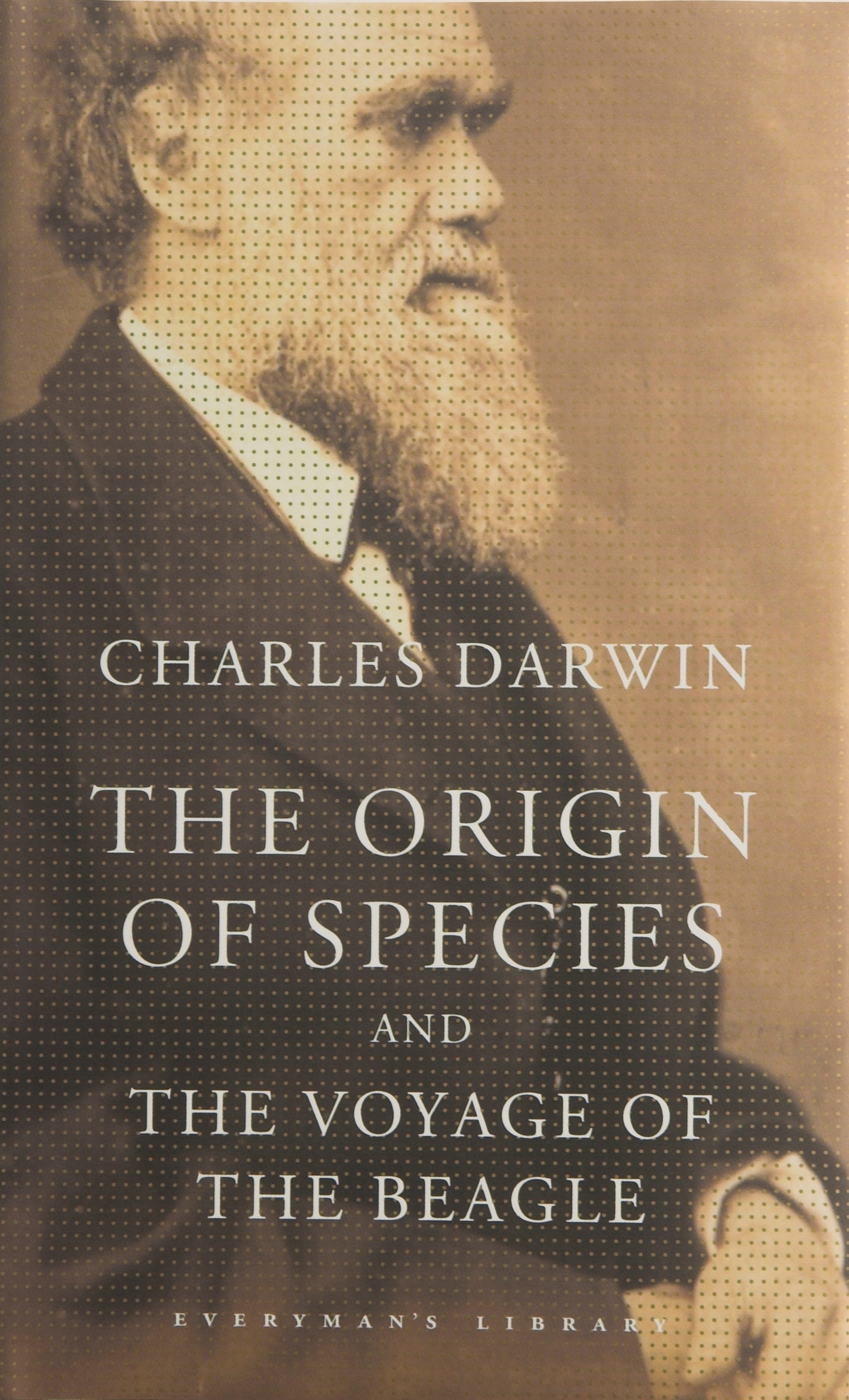
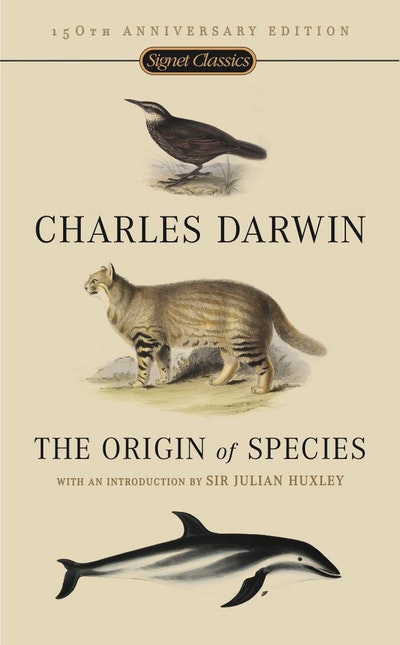
' I feel most deeply that this whole question of Creation is too profound for human intellect. A dog might as well speculate on the mind of Newton! Let each man hope and believe what he can' Charles Darwin, 1862.
Introduction is by Richard Dawkins
Perhaps the most readable and accessible of the great works of scientific imagination, THE ORIGIN OF SPECIES sold out on the day it was published in 1859. Theologians quickly labeled Charles Darwin the most dangerous man in England, and, as the Saturday Review noted, the uproar over the book quickly "passed beyond the bounds of the study and lecture-room into the drawing-room and the public street." Yet, after reading it, Darwin's friend and colleague T. H. Huxley had a different reaction: "How extremely stupid not to have thought of that." Based largely on Darwin's experience as a naturalist while on a five-year voyage aboard H.M.S. Beagle, THE ORIGIN OF SPECIES set forth a theory of evolution and natural selection that challenged contemporary beliefs about divine providence and the immutability of species. A landmark contribution to philosophical and scientific thought, this edition also includes an introductory historical sketch and a glossary Darwin later added to the original text.
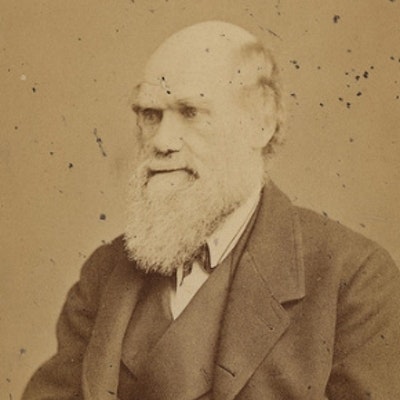
Charles Darwin was born on February 12, 1809 in Shropshire, England. He was educated at Edinburgh University and Christ's College, Cambridge. Between 1831 and 1836 he travelled in South America aboard the H.M.S Beagle to explore the geology and natural history of the area, and published his journal of findings in 1839. His most famous book On the Origin of the Species by Means of Natural Selection, appeared in 1859 and is arguably one of the most important scientific works ever published. The theories of evolution and natural selection proposed in this book and The Descent of Man (1871) are still the subject of intense debate and scrutiny today. Charles Darwin died on 19 April, 1882 and was buried in Westminster Abbey.
Karl Marx was born in 1818 in Trier, Prussia. While attending university in Berlin he was influenced by the ideas of the philosopher Hegel and his critics, the Young Hegelians, but Marx eventually rejected both schools of thought. He quickly earned the reputation of a revolutionary and left Germany for Paris, where he met his lifelong friend and collaborator, Friedrich Engels. Together they wrote and published The Communist Manifesto, which was published in 1848, just before the first wave of revolutions in France. Marx returned to Germany but his radical activities led to expulsion, whereupon he moved to London. There, Marx and Engels collaborated on further works on economics and contemporary politics. Marx also wrote his major treatise, Das Kapital, but only the first volume was published in his lifetime. Marx died in poverty on March 14, 1883, and was buried in Highgate Cemetery.
Friedrich Engels (1820-95) was the son of a Manchester factory owner. He wrote several groundbreaking essays on contemporary social and political conditions in Britain, including The Condition of the Working Class in England (1845), in which he criticised the working conditions and treatment of the urban poor. After Karl Marx' death, Engels completed and published the last two volumes of Das Kapital (1884, 1894) from his friend's surviving papers.
No other book has so transformed how we look at the natural world and mankind's origins
Sunday Telegraph
Why does Darwin's theory matter now? Because it is the basis of modern biology and much medical research; it provides a tool with which to understand the natural world; it offers a deeper, if imperfect, understanding of our behaviour, about where we came from and where we might be going
Observer
Our top books, exclusive content and competitions. Straight to your inbox.
Thank you! Please check your inbox and confirm your email address to finish signing up.