> Skip to content
[]
  • Published: 29 September 2026
  • ISBN: 9780262054621
  • Imprint: MIT Press
  • Format: Paperback
  • Pages: 300
  • RRP: $45.00

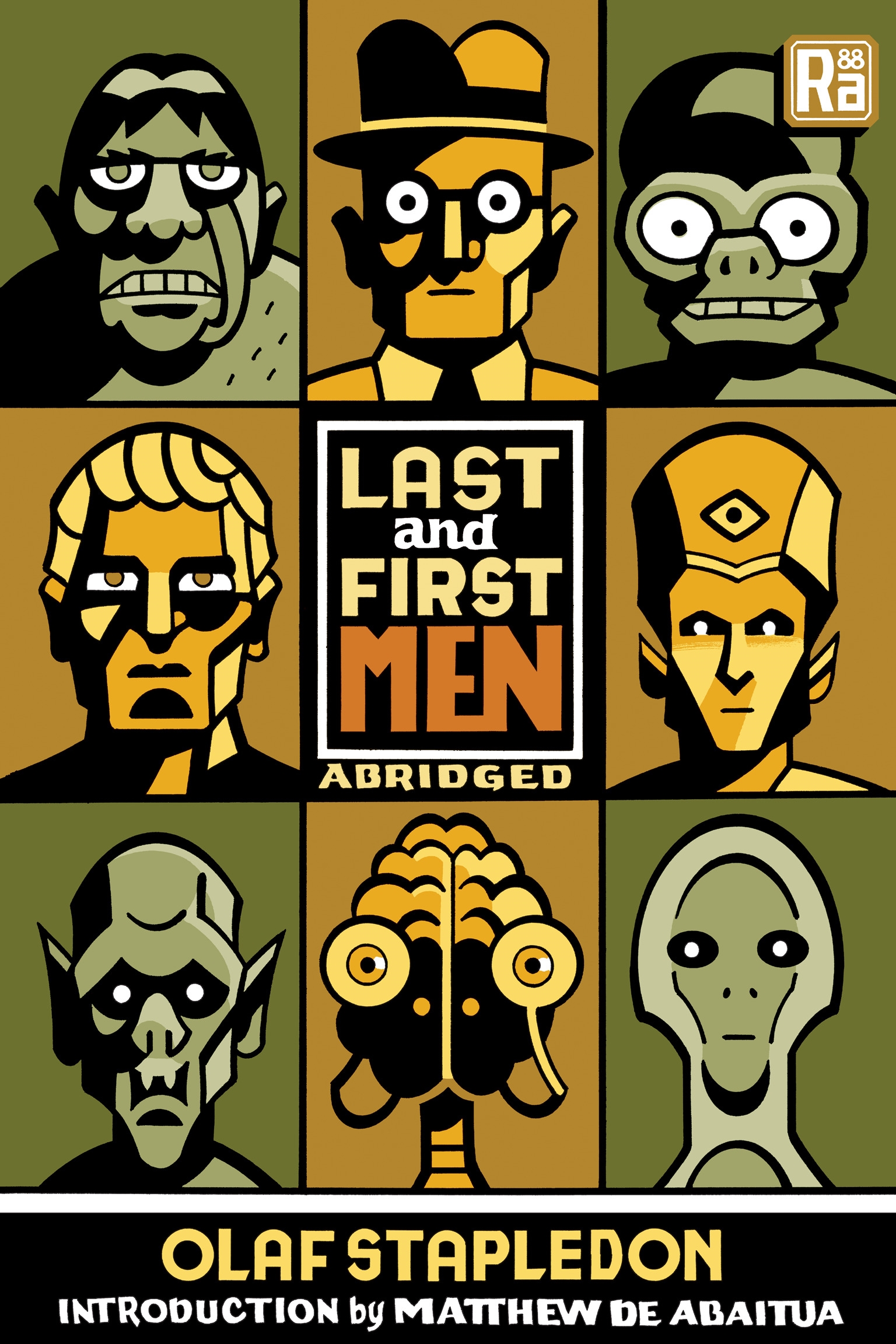
Last and First Men, abridged edition

A Story of the Near and Far Future


A dazzling work of science fiction to which Dune, the Foundation trilogy, and 2001: A Space Odyssey owe a major debt.

Narrated telepathically by one of the Last Men, Olaf Stapledon’s epic history of the future caused a literary sensation when it first appeared in 1930. Over the course of two billion years, it seems, ever more alien versions of humankind will rise and fall — developing every sort of utopian and dystopian civilization only to descend into savagery again and again, until eventually the Earth’s resources are depleted.

This abridged edition takes us from the fall of the First Men to the initial efforts of the Fifth Men, the “last Terrestrials,” to colonize other planets!

  • Published: 29 September 2026
  • ISBN: 9780262054621
  • Imprint: MIT Press
  • Format: Paperback
  • Pages: 300
  • RRP: $45.00

About the author

Olaf Stapledon

Olaf Stapleon (1886-1950) was born in Cheshire and educated at the University of Oxford. In his early career he worked as a teacher in Manchester and in shipping offices in Liverpool and Egypt. A pacifist and conscientious objector, he drove ambulances in the First World War and won a medal for bravery. He was later awarded a doctorate in philosophy and turned to fiction writing in the hope of making his ideas more widely available. His two masterpieces, Last and First Men (1930) and Star Maker (1937), contributed many ideas to science fiction and profoundly influenced numerous subsequent writers.

Also by Olaf Stapledon

See all

Praise for Last and First Men, abridged edition

"Without Olaf Stapledon (1886-1950), science fiction classics as diverse as Childhood’s End, Dune, the Foundation trilogy, Methusaleh’s Children, More Than Human, The Sirens of Titan, Solaris, and 2001: A Space Odyssey might never have existed. No one in the whole field of science fiction has worked on as broad a canvas...or delved into such mystical, arcane matters as the psychology and aesthetics of stars in their dancing orbits, or plant men who function as vegetables by day and as animals by night."
—Jonathan Rosenbaum

"After Jules Verne and H. G. Wells, Stapledon was the most influential early writer of science fiction, and he was more thoughtful than either of his predecessors, since he had a PhD in philosophy to boot."
—Dr. William B. Ashworth, Jr., Consultant for the History of Science, Linda Hall Library and Associate Professor emeritus, Department of History, University of Missouri-Kansas City