> Skip to content
[]
  • Published: 15 September 2015
  • ISBN: 9781841598024
  • Imprint: Everyman
  • Format: Hardback
  • Pages: 256
  • RRP: $29.99
Categories:

Horace

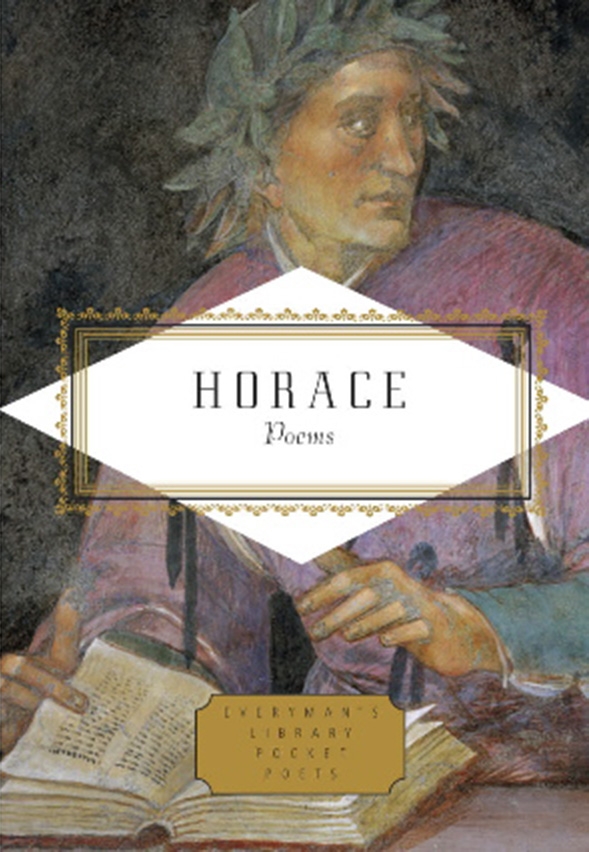
Poems


A wide-ranging selection of the work of one of ancient Rome's master poets--and originator of the phrase "carpe diem"--whose influence on poetry can be traced down through the centuries into our own time. EVERYMAN'S LIBRARY POCKET POETS.

Horace saw the death of the Republic and the beginning of the Roman Empire, and was personally acquainted with the emperor Augustus and the poet Virgil. He was famous during his lifetime, and continued to be posthumously, for his odes and epodes, his satires and epistles, and for Ars Poetica. His lyric poems have been translated into many languages, by an array of famous poets including Jonson, Milton, Dryden, Pope, Cowper, A. E. Houseman, Ezra Pound, Louis McNeice, Robert Lowell--and even Queen Elizabeth I and the Victorian prime minister Gladstone.
Also included are excerpts from Ars poetica (The Art of Poetry), an influential work of literary criticism, and the Carmen saeculare (Secular Hymn), a prayer to Apollo commissioned by Augustus for public performance.

Horace's injunction to "seize the day" has echoed through the ages. This anthology of superb English translations will show how Horace has permeated English literature for five centuries.
  • Published: 15 September 2015
  • ISBN: 9781841598024
  • Imprint: Everyman
  • Format: Hardback
  • Pages: 256
  • RRP: $29.99
Categories:

About the author

Horace

Quintus Horatius Flaccus was born in 6 B.C. at Venusia in Apulia. His father, though once a slave, had made enough money as an auctioneer to send his son to a well-known school in Rome and subsequently to university in Athens. There Horace joined Brutus’ army and served on his staff until the defeat at Philippi in 42 BC. On returning to Rome, he found that his father was dead and his property had been confiscated, but he succeeded in obtaining a secretarial post in the treasury, which gave him enough to live on. The poetry he wrote in the next few years impressed Virgil, who introduced him to the great patron Maecenas in 38 BC. This event marked the beginning of a life-long friendship. From now on Horace had no financial worries; he moved freely among the leading poets and statesmen of Rome; his work was admired by Augustus, and indeed after Virgil’s death in 19 BC he was virtually Poet Laureate. Horace died in 8 BC, only a few months after Maecenas.

Also by Horace

See all

Praise for Horace

The poet Tennyson hailed the lines of the Odes as Jewels five-words-long That on the stretch'd forefinger of Time Sparkle for ever.

Tennyson