> Skip to content
[]
  • Published: 23 February 2027
  • ISBN: 9781802068511
  • Imprint: Penguin eBooks
  • Format: EBook
  • Pages: 304

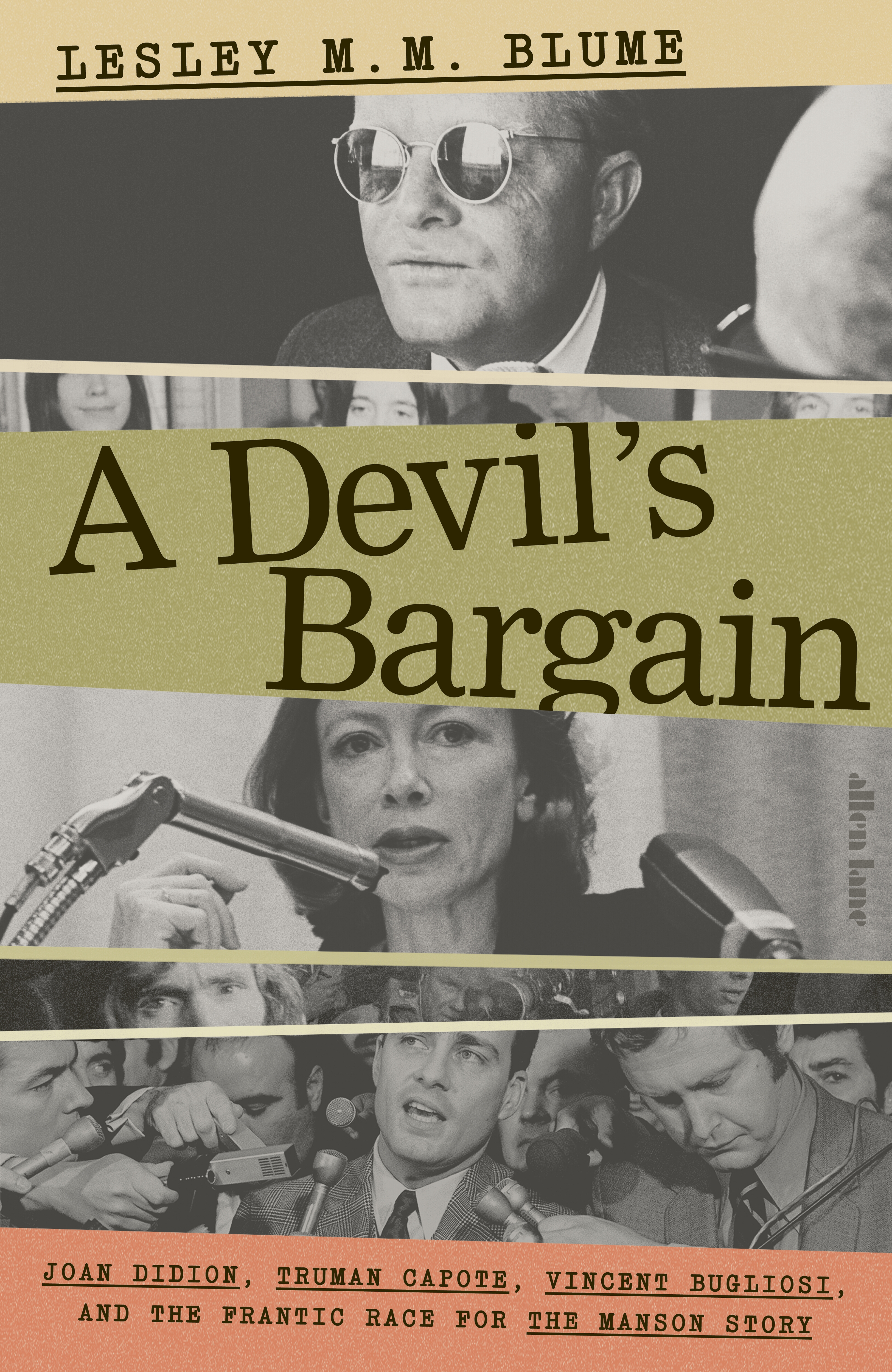
A Devil's Bargain

Joan Didion, Truman Capote, And The Frantic Race For The Manson Story


The untold story of the feverish, high-stakes race to write the definitive account of the Manson murders

On 9 August 1969, news trickled in that the pregnant movie star Sharon Tate and her friends had been brutally murdered in Los Angeles. Seen as a turning point in the cultural history of America, the Manson murders shocked the world and fanned the flames of a backlash against 1960s youth culture. But as the nation’s journalists circled Cielo Drive, all were wondering who would take home the ultimate blood prize – the chance to write the definitive book on the Manson trial.

In A Devil’s Bargain, Lesley Blume recounts the propulsive story of how beat reporters and literary icons battled to be the authoritative voice on this watershed moment. There was Truman Capote, looking to cement his legacy ten years on from In Cold Blood; there was Joan Didion, emerging as the premier chronicler of her generation; and there was Vincent Bugliosi, the swashbuckling prosecutor who would win the prize when he published Helter Skelter, the bestselling true crime book of all time.

Meticulously researched and page-turning, A Devil’s Bargain tells the origin story of true crime as we know it.

  • Published: 23 February 2027
  • ISBN: 9781802068511
  • Imprint: Penguin eBooks
  • Format: EBook
  • Pages: 304

About the author

Lesley M. M. Blume

Lesley M. M. Blume is a journalist, literary biographer and the author of Fallout and The New York Times bestselling Everybody Behaves Badly. Her work has appeared in The New York Times, the Wall Street Journal, Vanity Fair, National Geographic and Vogue.

Also by Lesley M. M. Blume

See all

Praise for A Devil's Bargain

Praise for Lesley Blume

-

Blume [is] a tireless researcher and beautiful writer, who moves through her narrative with seeming effortlessness — a trick that belies the skill and hard labour required to produce such prose

William Langewiesche, New York Times