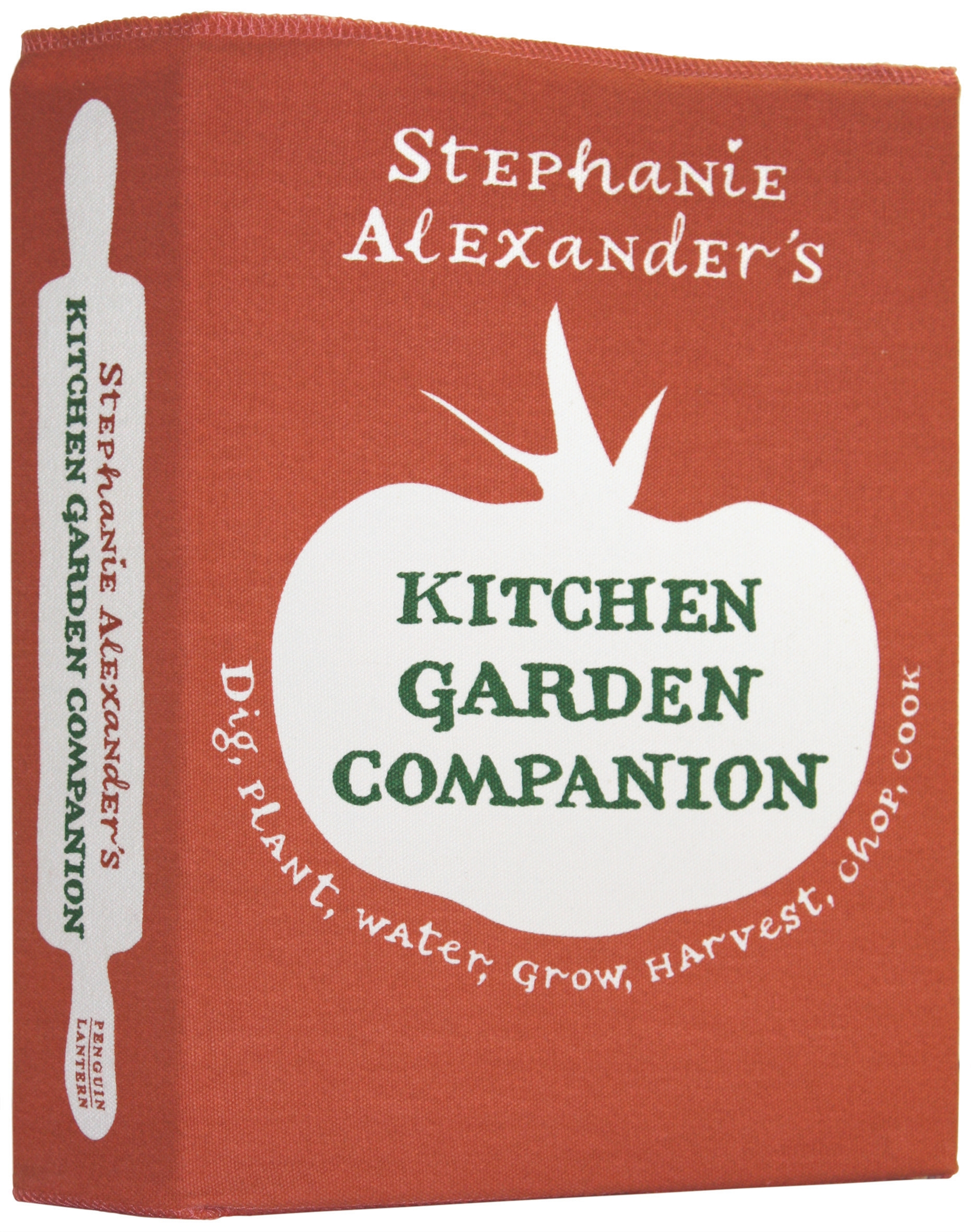
Stephanie Alexander's Kitchen Garden Companion

Author: Stephanie Alexander

Extract

Extract

Introduction

The initial inspiration for this book sprang from my work establishing kitchen gardens in Australian primary schools. At the time of writing, more than 4000 Victorian children are learning in gardens and kitchens each week. With a planned national rollout this will grow to more than 30 000 children around the country by the end of 2012. I know that children who cultivate and harvest food themselves and are then shown how to turn these crops into delicious dishes are well on the way to enjoying fresh, healthy food for the rest of their lives.

Developing your own productive kitchen garden is very satisfying, and nothing tastes as special as home-grown produce. Inevitably, creating your first food garden will involve much trial and error, and probably frustration, as you begin to understand your garden. However, you and your family can be confident that the food you are eating is not only fresh and seasonal, it is also free of any harmful chemicals, it has not been transported long distances, and that by returning all your scraps back to the soil you are contributing to the long-term health of the land.

I was raised in a food-loving household where what we ate (much of it home-grown) was often discussed, always appreciated and was inspired by the flavours and practices of many cultures. I know what it did for me. I believe it is only by educating young children about good food and gently showing by example how to put healthy, well-balanced dishes on the table at home every day that we will influence their food choices for the future and contribute to a healthier diet for the next generation.

'Just do it' has been the catch-cry from the beginning, in 2001, of my work with children and kitchen gardens in primary schools. This work has been the catalyst for my growing interest in encouraging people at home as well as school children to become enthusiastic kitchen gardeners. Although few of us can expect to be self-sufficient, 'Just do it' resonates with those at home who are keen to start growing at least some of their own food.

The French term potager refers to a home kitchen garden that grows a mixture of annual and perennial fruit, vegetables and culinary herbs. It exists to supply a household with food. This is what I mean by a kitchen garden. Modern-day organic gardeners tend to replace ordered rows (still seen in many European kitchen gardens) with more informal plantings. This practice stems from the belief that underplanting, interplanting and companion planting not only adds interest to the garden but that this mix improves growing conditions by offering plants shade and protection from hot sun or strong wind, discourages or confuses attacking insects while encouraging beneficial insects into the garden, and more truly reflects nature's diversity. In my own experience I have found that interplanting permits me to grow plants I had previously thought I had no room for. Rainbow chard, for example, grows happily among my rose bushes, and my broad beans climb against a wall in front of the espaliered apple tree (see page 723) at just the time when it is losing its leaves.

This book does not aim to be encyclopaedic or a complete reference book for Australian gardeners. Rather, it is a guide to growing, harvesting, preparing and sharing the vegetables, fruits and herbs used most widely in Australian kitchens, along with a few of my favourite less well-known ingredients, such as amaranth and Warrigal greens. There are many fruits and vegetables I have not included, sometimes because the necessary growing conditions are very specific, making them unsuitable for the majority of home gardens in Australia. Others I have excluded simply due to a lack of space. Learning about gardens and gardening is a lifetime journey. Just when I feel I have understood how to tackle a problem I meet another gardener who approaches the same problem in a different way. As with cooking, I am never comfortable claiming that there is only one way to do anything, so this book records my personal experiences of gardening at home and with the School Kitchen Garden Program.

New converts will want to start planting straight away. In the gardening notes, harvesting advice and recipes given for individual ingredients (see pages 63–717), I have aimed to keep enthusiasm high. At the same time I have included detailed and helpful cultivation notes for each of the plants covered, prepared by my colleague and Senior Project Officer at the Stephanie Alexander Kitchen Garden Foundation, Jacqui Lanarus, a successful and passionate food gardener and cook, as well as a mother of two keen young kitchen gardeners.

My underlying philosophy is that food gardens should be created and cared for without using damaging chemical sprays; that the soil should be fed with compost made simply by gathering food scraps (some of which will eventually come from ingredients you have grown and harvested yourself ), fallen leaves, poultry, sheep or cow manure, torn-up paper, lawn trimmings and the like; that water should be used as efficiently and sparingly as possible; and that garden beds should be mulched to keep them adequately moist.

Just as a good cook needs to be sure that he or she has the necessary ingredients for a dish before starting to chop and whisk, to achieve success gardeners must consider basics such as their garden's soil types and needs, differences in climate, when to sow seeds and how to care for the growing plants. The gardening notes for each ingredient include information on the type of soil best suited to each plant, as well as when to plant and harvest them.

I have assumed that most home gardeners are not dealing with virgin soil, but that you will already have some plantings, which may include trees, shrubs and flowers, and possibly herbs. This book also offers advice on container planting as a practical option for food lovers who live in apartments or who have paved courtyards or balconies instead of a piece of land to work with.

When deciding what to grow in your kitchen garden, make sure you choose crops that you love to eat! The Planting chart on pages 36–39 provides a snapshot of which fruits, vegetables and herbs to plant when.

Children can be part of this adventure. Gardening, cooking and eating engage all of a child's senses. Their sense of satisfaction and pride is guaranteed from the very fi rst harvest. Wherever possible I have indicated special activities or points of interest to be shared with young gardeners and cooks (see the Especially for kids section included for each ingredient). With suitable tools children can help in both the garden and the kitchen, and will be eager to do so. The more involved they are, the more interested they will be in the harvest or the finished dish.

My dream is that every Australian child will receive a broad and pleasurable food education as early as possible, at home and at school. By experiencing such magical moments in the garden and around the table, they will choose to include fresh, simply prepared seasonal food in their lives and will have the skills to do so forever.

When the time comes to gather and cook the fruit and vegetables from the garden, the recipes in this book are mostly simple. Almost all can be prepared in less than 45 minutes from start to finish (although there are a few that require stock or involve another lengthy preparation or some advance planning). I suggest gathering all equipment together before starting to cook. There is a list of the cooking equipment I use, including my Basic toolbox, on pages 48–51.

I hope that making these recipes will be a communal activity, with a parent or older sibling working alongside younger children. All recipes provide plenty of ways in which children can participate; however, adult supervision is needed whenever hot trays, boiling water or difficult slicing are involved. Inevitably, some recipes are more suitable for preparation by older children.

With sustainability and recycling in mind, I suggest keeping a small bucket with a lid near your kitchen bench top for collecting all appropriate kitchen scraps (such as vegetable and fruit peelings, seeds and any stems) that can be composted – this is second nature to me now and I empty these scraps into my compost bin outside each day. By returning composted kitchen scraps to your garden the link between your kitchen and garden is continued. For the same reason, I also save any water used for washing, blanching or cooking fruit or vegetables, and then use it to water a thirsty plant in my garden.

I hope by recounting my own kitchen garden experiences – particularly those gained over the last five years – I will encourage you to think of how you can start gardening. Remember, regardless of where you live and how much land you have around you, you can grow at least some of your own food. Just do it!


Also by Stephanie Alexander

{View all}
Book Cover:  Kitchen Garden Cooking with Kids, Second Edition
By Stephanie Alexander

Stephanie Alexander's philosophy is that there is no such thing as special food for children; if food is good, everyone will enjoy it regardless of age. Here are 120 recipes with simple instructions, a colourful layout and lots of fast, fun facts. And while these recipes can be made by a couple of eight-year-olds in aprons - with a bit of adult supervision - the dishes are anything but standard...

Stephanie Alexander's philosophy is that there is no such thing as special food for children; if food is good, everyone will enjoy it regardless of age. Here are 120 recipes with simple instructions...

Published: 22/08/2012
Format: Paperback
ISBN: 9781921383076
RRP: $39.99
Book Cover:  Lantern Cookery Classics: Stephanie Alexander

Lantern is proud to publish some of Australia's most celebrated cooks and chefs. Now, in a new series of indispensable books for your kitchen bookshelf, Lantern Cookery Classics brings you timeless recipes from these much-loved authors. Each book has more than sixty recipes – all photographed, and with clear instructions to help you achieve a great result every time.

Soon you'll be whipping...

Lantern is proud to publish some of Australia's most celebrated cooks and chefs. Now, in a new series of indispensable books for your kitchen bookshelf, Lantern Cookery Classics brings you timeless recipes...

Published: 22/08/2012
Format: Paperback
ISBN: 9781921383137
RRP: $19.99
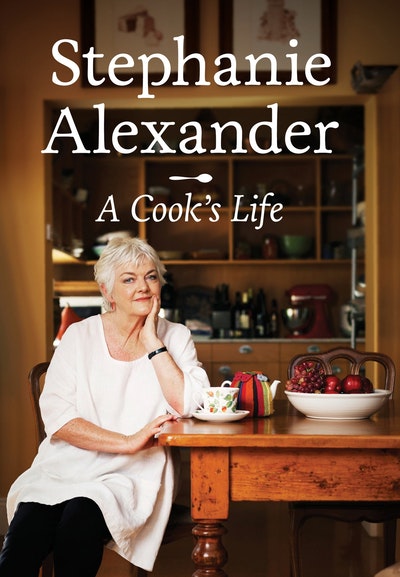
Book Cover: A Cook's Life
A surprising, intimate and revealing insight into the perseverance and drive it took Stephanie Alexander to become an Australian culinary legend.
Published: 21/03/2012
Format: Cloth Books
ISBN: 9781921382789
RRP: $39.95
Book Cover: A Cook's Life
A surprising, intimate and revealing insight into the perseverance and drive it took Stephanie Alexander to become an Australian culinary legend.
Published: 21/03/2012
Format: Digital
ISBN: 9781742534947
Book Cover: The Cook's Companion
The Cook's Companion has established itself as the kitchen 'bible' in over 300 000 homes since it was first published in 1996. Stephanie Alexander has added over 300 new recipes as well as 12 new chapters to this thoroughly revised and updated edition. Stephanie believes that good food is essential to living well: her book is for everyone, every day. She has invaluable information about ingredients...
The Cook's Companion has established itself as the kitchen 'bible' in over 300 000 homes since it was first published in 1996. Stephanie Alexander has added over 300 new recipes as well as 12 new chapters...
Published: 04/10/2004
Format: Hardback
ISBN: 9781920989002
RRP: $130.00
Book Cover:  Stephanie Alexander Gift Set

The Cook's Companion has established itself as the kitchen 'bible' in over 300 000 homes since it was first published in 1996. Stephanie Alexander has added over 300 new recipes as well as 12 new chapters to this thoroughly revised and updated edition. Stephanie believes that good food is essential to living well: her book is for everyone, every day. The book offers invaluable information about ingredients...

The Cook's Companion has established itself as the kitchen 'bible' in over 300 000 homes since it was first published in 1996. Stephanie Alexander has added over 300 new recipes as well as 12 new chapters...

Published: 21/03/2011
Format: Misc.
ISBN: 9781921382710
RRP: $250.00
Book Cover:  Stephanie Alexander & Maggie Beer's Tuscan Cookbook: Recipes and Reminiscences from their Italian Cooking School

Travel with Stephanie Alexander and Maggie Beer to the sunlit hills of Tuscany.  Join their cooking classes run from a villa amid the vineyards, and find out how to live in a place where the pleasures of the table are the key to daily life.  Learn how to cook and ear by the seasons in one of the world's great food regions and through the eyes of two of our most accomplished cooks and food...

Travel with Stephanie Alexander and Maggie Beer to the sunlit hills of Tuscany.  Join their cooking classes run from a villa amid the vineyards, and find out how to live in a place where the pleasures...

Published: 02/06/2003
Format: Paperback
ISBN: 9780143001577
RRP: $49.95
Book Cover:  Cooking & Travelling in South-West France
Travel with renowned food writer Stephanie Alexander to the gastronomic heart of France, the legendary south-west, and discover its food, wine, history and culture. Illustrated with magnificent photographs by Simon Griffiths, this book takes you deep into the Dordogne and the Lot (also known by the old regional names of Perigord and Quercy), exploring the food markets and discovering the land of farmhouse...
Travel with renowned food writer Stephanie Alexander to the gastronomic heart of France, the legendary south-west, and discover its food, wine, history and culture. Illustrated with magnificent photographs...
Published: 03/04/2006
Format: Paperback
ISBN: 9781920989248
RRP: $49.95

News

{ view all }
25 May 2012
Australian Society of Authors 2012 Barbara Jefferis Award - winner

All That I Am by Anna Funder has won the Barbara Jefferis Award.

The award is offered annually for “the best novel written by an Australian author that depicts women and girls in a positive way or otherwise empowers the status of women and girls in society”.

Anna beat fellow Miles Franklin contenders Foal's Bread and Cold Light.

Social Feed

{ }

Penguin TV

{ }

Pictures

{ }