- Published: 3 November 2010
- ISBN: 9780307769718
- Imprint: RH US eBook Adult
- Format: EBook
- Pages: 288
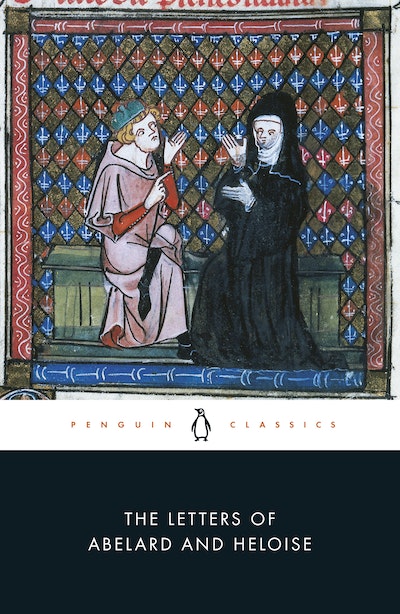
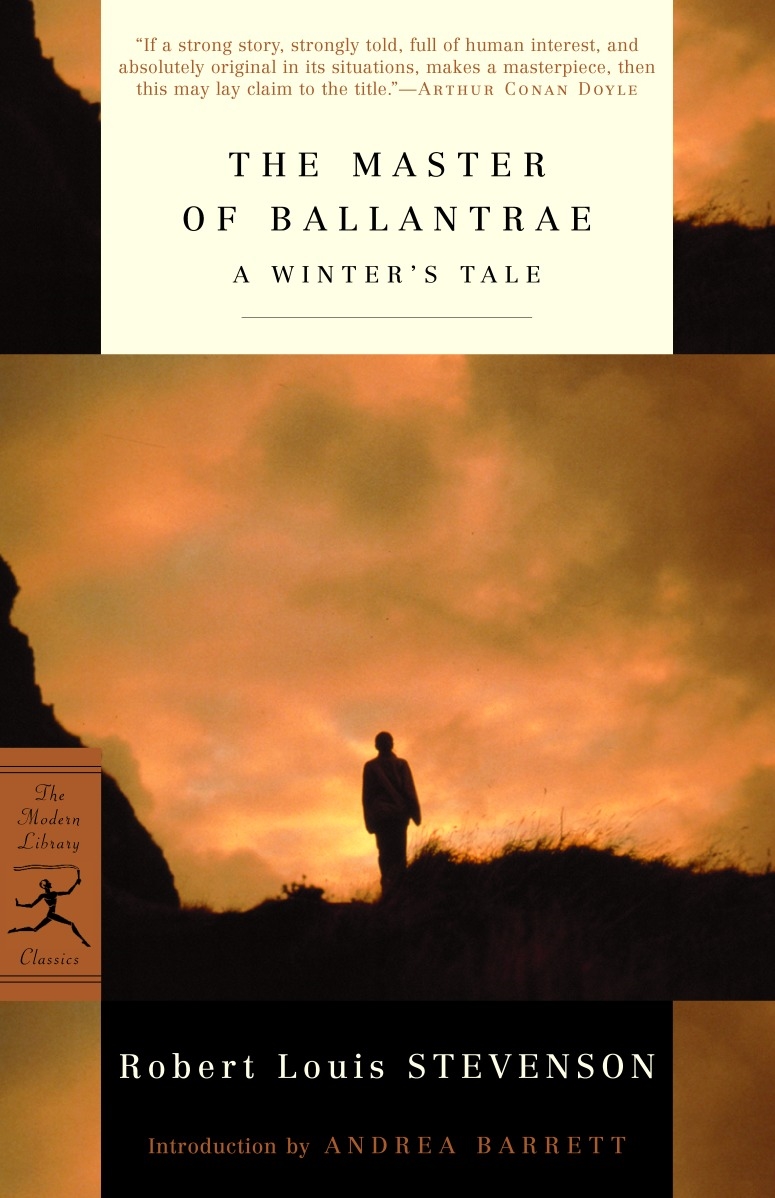
The Master of Ballantrae
A Winter's Tale
Stevenson’s brooding historical romance demonstrates his most abiding theme—the elemental struggle between good and evil—as it unfolds against a hauntingly beautiful Scottish landscape, amid the fierce loyalties and violent enmities that characterized Scottish history. When two brothers attempt to split their loyalties between the warring factions of the 1745 Jacobite rising, one family finds itself tragically divided. Stevenson’s remarkably vivid characterizations create an acutely moving, psychologically complex work; as Andrea Barrett points out in her Introduction, “The brothers’ characters, not the historical facts, shape the drama.”
This Modern Library Paperback Classic includes illustrations reproduced from the original edition.
- Published: 3 November 2010
- ISBN: 9780307769718
- Imprint: RH US eBook Adult
- Format: EBook
- Pages: 288
Other books in the series
About the author
Robert Louis Stevenson was born in Edinburgh in 1850. Chronically ill with bronchitis and possibly tuberculosis, Stevenson withdrew from Engineering at Edinburgh University in favour of Studying Law. Although he passed the bar and became an advocate in 1875, he knew that his true work was as a writer.
Between 1876 and his death in 1894, Stevenson wrote prolifically. His published essays, short stories, fiction, travel books, plays, letters and poetry number in dozens. The most famous of his works include Travels With A Donkey in the Cevennes (1879), New Arabian Nights (1882), Treasure Island (1883), The Strange Case of Doctor Jekyll and Mr Hyde (1887), Thrawn Janet (1887) and Kidnapped (1893).
After marrying Fanny Osbourne in 1880 Stevenson continued to travel and to write about his experiences. His poor health led him and his family to Valima in Samoa, where they settled. During his days there Stevenson was known as ‘Tusitala’ or ‘The Story Teller’. His love of telling romantic and adventure stories allowed him to connect easily with the universal child in all of us. ‘Fiction is to grown men what play is to the child,’ he said.
Robert Louis Stevenson died in Valima in 1894 of a brain haemorrhage.