'Since 1948'
Gene Wolfe once said that being an only child whose parents are dead is like being the sole survivor of drowned Atlantis. There was a whole civilization there, an entire continent, but it's gone. And you alone remember. That's my story too, my father having died when I was six, my mother when I was eighteen. Brian Aldiss believes that if you look at the life of any novelist, you'll find an early traumatic break, and mine seems no exception.
I was born on the coast of South Carolina, where my parents liked to vacation when there was almost nothing there at all. My father was in some sort of middle management position in a large and growing construction company. They'd built some of the Oak Ridge atomic facilities, and paranoiac legends of 'security' at Oak Ridge were part of our family culture. There was a cigar-box full of strange-looking ID badges he'd worn there. But he'd done well at Oak Ridge, evidently, and so had the company he worked for, and in the postwar South they were busy building entire red brick Levittown-style suburbs. We moved a lot, following these projects, and he was frequently away, scouting for new ones.
It was a world of early television, a new Oldsmobile with crazy rocket-ship styling, toys with science fiction themes. Then my father went off on one more business trip. He never came back. He choked on something in a restaurant, the Heimlich maneuver hadn't been discovered yet, and everything changed.
My mother took me back to the small town in southwestern Virginia where both she and my father were from, a place where modernity had arrived to some extent but was deeply distrusted. The trauma of my father's death aside, I'm convinced that it was this experience of feeling abruptly exiled, to what seemed like the past, that began my relationship with science fiction.
I eventually became exactly the sort of introverted, hyper-bookish boy you'll find in the biographies of most American science fiction writers, obsessively filling shelves with paperbacks and digest-sized magazines, dreaming of one day becoming a writer myself.
At age fifteen, my chronically anxious and depressive mother having demonstrated an uncharacteristic burst of common sense in what today we call parenting, I was shipped off to a private boys' school in Arizona. There, extracted grub-like and blinking from my bedroom and those bulging plywood shelves, I began the forced invention of a less Lovecraftian persona - based in large part on a chance literary discovery a year or so before.
I had stumbled, in my ceaseless quest for more and/or better science fiction, on a writer name Burroughs -- not Edgar Rice but William S., and with him had come his colleagues Kerouac and Ginsberg. I had read this stuff, or tried to, with no idea at all of what it might mean, and felt compelled - compelled to what, I didn't know. The effect, over the next few years, was to make me, at least in terms of my Virginia home, Patient Zero of what would later be called the counterculture. At the time, I had no way of knowing that millions of other Boomer babes, changelings all, were undergoing the same metamorphosis.
In Arizona, science fiction was put aside with other childish things, as I set about negotiating puberty and trying on alternate personae with all the urgency and clumsiness that come with that, and was actually getting somewhere, I think, when my mother died with stunning suddenness. Dropped literally dead: the descent of an Other Shoe I'd been anticipating since age six.
Thereafter, probably needless to say, things didn't seem to go very well for quite a while. I left my school without graduating, joined up with rest of the Children's Crusade of the day, and shortly found my self in Canada, a country I knew almost nothing about. I concentrated on evading the draft and staying alive, while trying to make sure I looked like I was at least enjoying the Summer of Love. I did literally evade the draft, as they never bothered drafting me, and have lived here in Canada, more or less, ever since.
Having ridden out the crest of the Sixties in Toronto, aside from a brief, riot-torn spell in the District of Columbia, I met a girl from Vancouver, went off to Europe with her (concentrating on countries with fascist regimes and highly favorable rates of exchange) got married, and moved to British Columbia, where I watched the hot fat of the Sixties congeal as I earned a desultory bachelor's degree in English at UBC.
In 1977, facing first-time parenthood and an absolute lack of enthusiasm for anything like 'career,' I found myself dusting off my twelve-year-old's interest in science fiction. Simultaneously, weird noises were being heard from New York and London. I took Punk to be the detonation of some slow-fused projectile buried deep in society's flank a decade earlier, and I took it to be, somehow, a sign. And I began, then, to write.
And have been, ever since.
Google me and you can learn that I do it all on a manual typewriter, something that hasn't been true since 1985, but which makes such an easy hook for a lazy journalist that I expect to be reading it for the rest of my life. I only used a typewriter because that was what everyone used in 1977, and it was manual because that was what I happened to have been able to get, for free. I did avoid the Internet, but only until the advent of the Web turned it into such a magnificent opportunity to waste time that I could no longer resist. Today I probably spend as much time there as I do anywhere, although the really peculiar thing about me, demographically, is that I probably watch less than twelve hours of television in a given year, and have watched that little since age fifteen. (An individual who watches no television is still a scarcer beast than one who doesn't have an email address.) I have no idea how that happened. It wasn't a decision.
I do have an email address, yes, but, no, I won't give it to you. I am one and you are many, and even if you are, say, twenty-seven in grand global total, that's still too many. Because I need to have a life and waste time and write.
I suspect I have spent just about exactly as much time actually writing as the average person my age has spent watching television, and that, as much as anything, may be the real secret here.
6 Nov 2002
-------------------------------------------------------------------------------------------------------
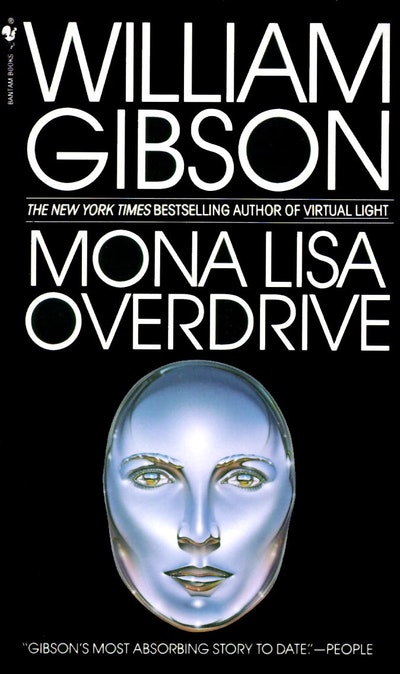
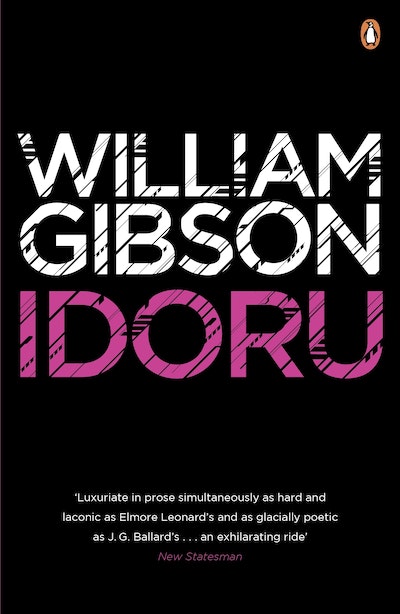
William Gibson is the award-winning author of Neuromancer, Mona Lisa Overdrive, The Difference Engine, with Bruce Sterling, Virtual Light, Idoru, All Tomorrow's Parties and Pattern Recognition. William Gibson lives in Vancouver, Canada. His latest novel, published by Penguin, is Spook Country (2007).
-------------------------------------------------------------------------------------------------------
William Gibson online:
williamgibsonbooks.com
twitter.com/GreatDismal
williamgibsonblog.blogspot.com.au