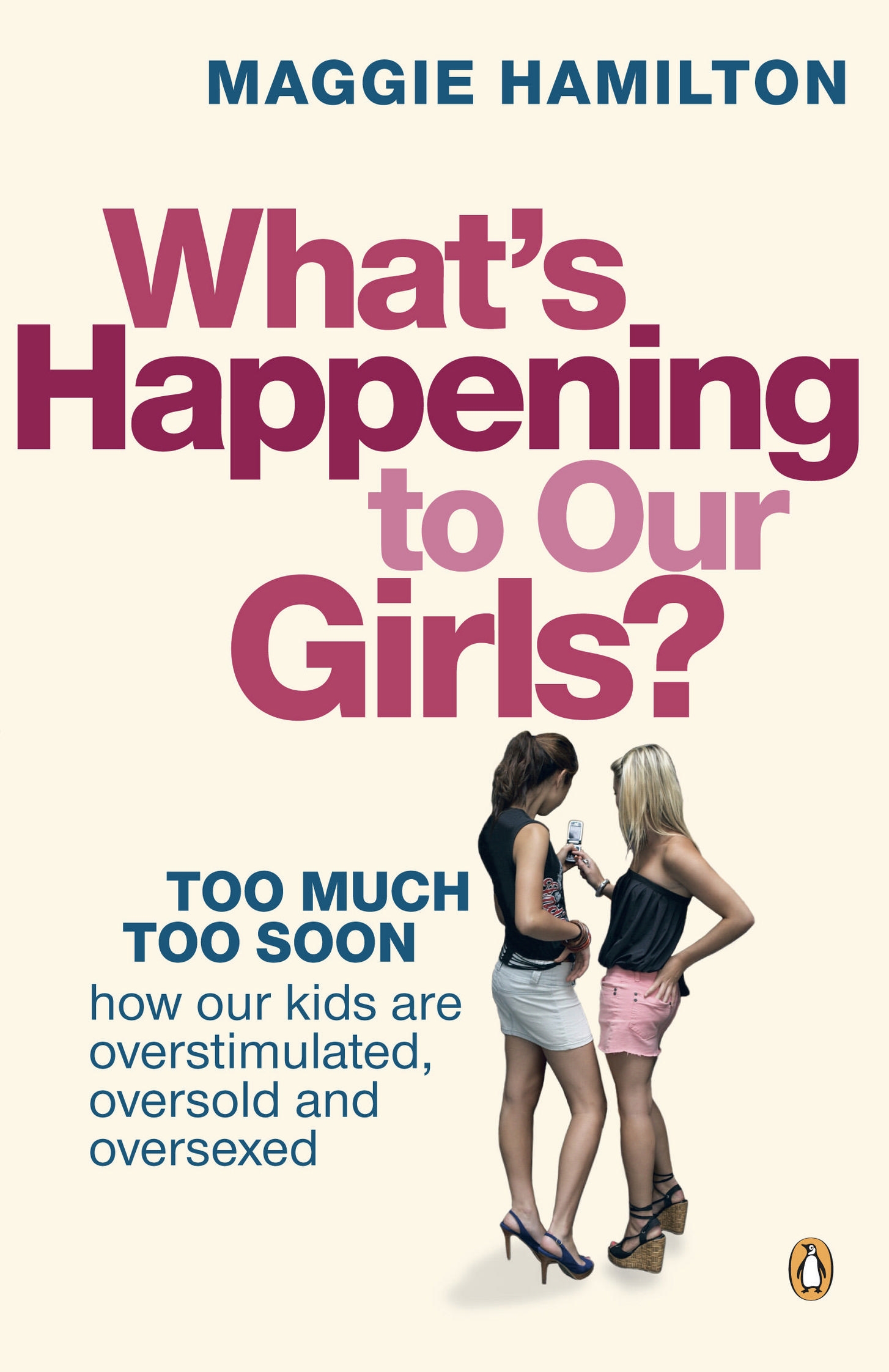
What's Happening to Our Girls?: Too Much Too Soon. How Our Kids Are Overstimulated, Oversold and Oversexed
Author: Maggie Hamilton
Extract
INTRODUCTION
In a few short decades almost every part of girls' lives has been transformed, bringing freedoms previous generations of girls could only dream of. Alongside these dazzling possibilities newer, subtler forces are emerging that threaten the many gains girls have made. Almost every aspect of life is changing and at lightning speed. Our girls are at the forefront of this change.
What a girl, now 12, experienced when she was 7 is not what a 7-year-old faces today. That is why it's hard for adults to get a fix on the lives of girls at present. No previous generation of girls has been where today's girls are heading. Some of the material in this book is shocking, and beyond anything most adults experienced when they were growing up.
When we talk about the issues girls currently face, we tend to think of teenage girls. This assumption leaves our younger girls vulnerable. The book starts with baby girls, because advertisers are now actively targeting babies. They know that at 6 months a baby is able to retain brand logos, and that the trademarked characters on babies' clothing and in their environment will translate into sales from the age of 2 upwards.
This early process of turning girls into consumers reduces them to little more than a target market, and has a dramatic and detrimental impact on their aspirations, body image and sense of self.
As our little girls grow, they are spending more time in front of DVDs and TV programs, whose storylines are often thinly disguised product placement. All this takes place at the expense of the warmth and stimulation that comes with human interaction – elements that are crucial for early brain development. This commercialisation of girls compromises their imaginations and their curiosity about the world around them. The opportunity to enjoy carefree childhoods is being lost in the rush to turn them into good little consumers. The sooner our little girls become addicted to shopping, the more money can be generated from them.
The sexualisation of women in the media and popular culture is now also having an impact on small girls. It is influencing the way preschoolers talk and behave. As these children grow, so too does their self- consciousness about how they come across. They become anxious about their bodies, clothes and accessories. This preoccupation with looks influences everything, from girls' choice of friends and time spent in shopping malls, to what they wear and play with. Advertisers have done a good job. Girls as young as 5 know their brands and identify with them. Increasingly their friendships are based on who has what.
Alongside the fragmentation of family and community due to relationship breakdowns, greater mobility, long working hours and time deprivation, we have seen a rise in the power of the media and new technologies. These forces are exposing girls to concepts way beyond their years. They make it easy for girls to lead lives that parents know nothing about. What was once the domain of adults has become part of the lives of our children. The need to appear 'out there' helps explain why girls are pushing the sexual boundaries so young, why pornography has such appeal to some girls, and why there has been an alarming increase in sexually transmitted diseases amongst our teenagers.
In the past children learned the way forward from adults. But there is no longer a clear link between one generation and the next, because popular culture and new technologies have left adults behind. As a result our girls feel isolated. They believe adults don't care. It is this isolation that prompts girls to cling to their peers, because they are always there for them.
Although we pride ourselves on living in an upfront world, there's a general nervousness about expressing our doubts and quiet despair at some of the things that are happening to girls. While we hesitate, our girls remain vulnerable. It was my desire to know more about them that prompted me to spend two years examining their lives.
To do so I immersed myself in teen popular culture, and in the latest trends in global marketing. My interviews with girls formed the qualitative part of my research. I have used as many of their quotes and thoughts as possible, so we can hear what girls are telling us and respond accordingly. There are over a hundred girls' voices in the book, alongside observations from numerous experts. I spent months surfing the net and observing teen chat rooms and forums. I have included some of the chat room content to show the kinds of discussions that are taking place. None of the online topics covered were initiated by me. I was purely an observer.
I also interviewed consumer and child psychologists, law enforcement and medical personnel, school counsellors, teachers from kindergarten to high school level, and experts in child and adolescent health. Wherever possible I sought to familiarise myself with the leading thinkers and practitioners in the topics covered. Where local case studies and/or statistics were hard to access, which was frequently the case, I have used the most relevant overseas data.
In my one-on-one interviews with girls, most began by giving me the answers they thought I wanted to hear. However, once they relaxed, they began to open up and share their takes on life. I decided not to talk to them about their possible involvement in sex, alcohol, drugs, eating disorders or cutting, asking instead what their girlfriends were up to. This approach worked well. The girls were happy to give me a detailed picture of their worlds. One thing that puzzled me during these interviews was how similar the girls' responses were, regardless of their background. It took me some time to realise this was due in part to the overwhelming infl uence of popular culture, which has become the 'super' parent.
In my quest to understand girls' lives, in no way do I wish to trivialise the many hurdles boys have faced, and continue to face. Although I canvassed their challenges in my book What Men Don't Talk About, we still need more resources and research on boys to help them through their childhood and teen years. Many of the issues that affect the lives of girls also threaten our boys.
In the book I have attempted to look not only at the detrimental influences tween and teen girls are dealing with, but also at what babies and toddlers are being exposed to, so parents can see how important their early intervention is. Many parents I have spoken with are feeling helpless right now. However, once they understand what girls are up against, they can see what needs to be done, and become motivated to reclaim the ground they have lost in recent years.
Today's girls are more empowered, but we mustn't allow com placency to blind us to the very real challenges they face. With a much more informed understanding of girls' lives, we can continue to provide them with the protection and resources they need to thrive.


News
{ view all }All That I Am by Anna Funder has won the Barbara Jefferis Award.
The award is offered annually for “the best novel written by an Australian author that depicts women and girls in a positive way or otherwise empowers the status of women and girls in society”.
Anna beat fellow Miles Franklin contenders Foal's Bread and Cold Light.
Social Feed
{ }Penguin TV
{ }Pictures
{ }