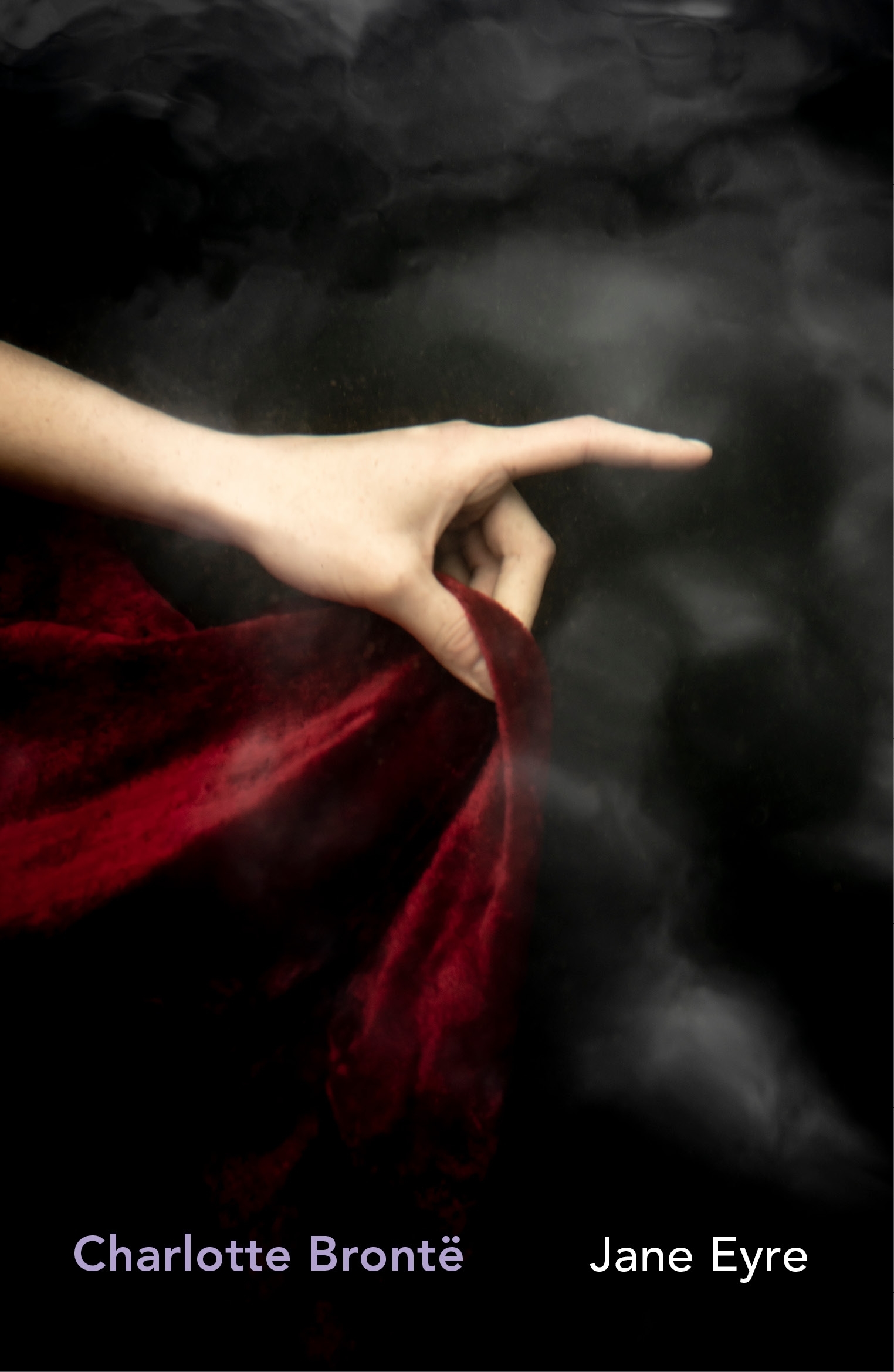
Jane Eyre

Author: Charlotte Bronte

Reading Notes

Reading Notes

Book Club Notes for Jane Eyre by Charlotte Brontë

Book Summary

Charlotte Brontë's book Jane Eyre is a Victorian novel that has passed into common consciousness and proved remarkably adaptable, generating several film and stage versions. That Jane Eyre shares this fate with the two greatest horror novels of the nineteenth century is instructive. Like them, it speaks to deep, timeless human urges and fears, using the conventions of Gothic literature to chart the mind's recesses.

The detailed exploration of a strong female character's consciousness has made readers in recent decades consider Jane Eyre as an influential feminist text. The novel works both as the absorbing story of an individual woman's quest and as a narrative of the dilemmas that confront so many women. Its mythic quality is enhanced by the fact that at the time of its writing its author was, like her heroine, unmarried and unremarked, and considered unattractive. In Jane Eyre, Charlotte Brontë created a fully imagined character defined by her strength of will. Though Jane is nothing more than an impoverished governess, she can retort to her haughty employer Rochester: 'Do you think, because I am poor, obscure, plain, and little, I am soulless and heartless?-You think wrong!' (p. 284). Jane's willfulness scandalized many contemporary critics, who called her (and the novel) 'coarse' and 'unfeminine.' Such criticisms were powerless against the novel's popularity, and Jane's indomitable voice continues to enthrall readers more than 150 years after the novel's original publication.

In its first-person narration and autobiographical structure, which follows the title character from childhood to adulthood, Jane Eyre has much in common with another durable Victorian novel, David Copperfield. As with Dickens' novel, some of the scenes readers are most likely to remember are those in which the child narrator is nearly overwhelmed by cruelty. Jane Eyre opens with orphaned, ten-year-old Jane's forcible eviction from her window-seat refuge by her vicious and pampered cousin, John Reed. When Mrs. Reed takes John's side and locks Jane in the red-room, the pattern of Jane's oppression by authority figures is set. At Lowood School Jane is singled out for abuse by the tyrannical and self-righteous headmaster, Mr. Brocklehurst. Though apparently powerless-being young, female, poor, and virtually without family-she defies the humiliations Brocklehurst imposes on her. Brontë presents the soft-spoken, forgiving Helen Burns as an example of moral perfection, but it is the outraged and rebellious Jane who is more appealing.

As an adult, Jane faces the romantic prospects of a young woman lacking the social advantages of family, money, and beauty, and therefore especially vulnerable to the allure of admiration and security. By creating two suitors who exemplify opposing threats to Jane's selfhood, Brontë dramatizes Jane's internal struggles against competing temptations, and Jane's efforts to resist both the ascetic St. John Rivers and the sybaritic Rochester provide the most powerful drama in the book. In Jane, Brontë gives us a character able to withstand St. John's missionary call to self-immolation in a marriage to serve humanity and Rochester's attempts to persuade her to indulge her sexual and romantic desires at the expense of her own moral code.

As central to the novel as Jane's conflicted relationship with Rochester is, her connection with his mad, despised first wife, Bertha Mason Rochester, is at least as intriguing, though the two women hardly meet and never converse. The revelation of Bertha's existence, which Rochester has concealed from Jane, saves her from the bigamous marriage that Rochester had planned. Though Brontë's characterization of Bertha, locked away on a top floor, plays into many nineteenth-century stereotypes of the 'native' or 'primitive' woman, it also suggests a close kinship between Bertha and Jane. Both women are attracted to Rochester; both live in his house; and both are mistreated by him. Critics and readers alike have puzzled over how to understand this connection. To what extent is Bertha a double for Jane, acting on her behalf? To what extent is she a figure for the fate-inarticulate, imprisoned, hopeless-that awaits Jane if she surrenders to the corrupt Rochester?

A similar ambiguity pervades the novel's ending. While Jane's 'Reader, I married him' carries a note of relief and triumph, the path to this ending is so convoluted and disturbing as to raise questions about how we are to understand it. If Jane and Rochester's marriage as equals requires not only Rochester's moral regeneration, blinding, and partial crippling, but also Jane's inheriting a small fortune, what is the novel saying about the real-life prospects of a woman like Jane enjoying such a union? Throughout the novel, Brontë asks how a woman in her society can have passion and integrity, love and independence. Jane Eyre does not so much suggest definitive answers as pose the questions with urgency and a depth of imagination that challenge readers.

About the author

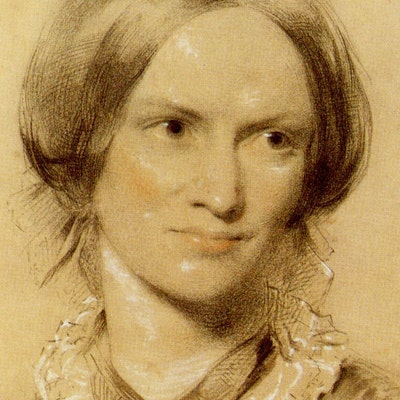
Marked by grief, obscurity, and determination, Charlotte Brontë's life closely resembles that of her most famous heroine. Left motherless at an early age, Charlotte, her brother, and her four sisters were raised in the Yorkshire village of Haworth, where their father was curate. Charlotte's two older sisters died of illnesses contracted at the Cowan Bridge boarding school, which Charlotte also attended and which she used as the basis for Lowood in Jane Eyre. At nine, she became the eldest of the four surviving siblings. Charlotte, Emily, and Anne, along with their brother, Branwell, read voraciously and created an elaborate fantasy world. The four wrote prolifically, in preparation for the later literary efforts of the three sisters. Charlotte attended school, worked for a time as a teacher, and had a brief career as a governess. In 1842, she and Emily went to Brussels to study languages. Charlotte's teacher there was the charismatic M. Heger, a married man with whom she fell in love. Her emotionally fraught, though celibate, relationship with him served as the basis for her first novel, The Professor. Written in 1846, it was not published until after her death.

In 1845, Charlotte, Emily, and Anne published Poems by Currer, Ellis, and Acton Bell. Though it sold virtually no copies, the sisters continued to write under these male pseudonyms, and, in 1847, Charlotte published Jane Eyre, which was a resounding popular success. Both Branwell and Emily died in 1848, with Anne following the next year. Charlotte went on to publish Shirley (1849) and Villette (1853). In 1854, she married Arthur Bell Nicholls, her father's curate, but soon died during pregnancy.

Book Club Discussion Questions

  1. Why does Brontë juxtapose Jane's musings about women's social restraints with the mysterious laugh that Jane attributes to Grace Poole?
  2. Rochester tells Jane, 'if you are cast in a different mould to the majority, it is no merit of yours; Nature did it'. Are we intended to agree or disagree with this statement?
  3. After Mason's visit to Thornfield, Jane asks herself, 'What crime was this that lived incarnate in this sequestered mansion, and could neither be expelled nor subdued by the owner?' . What crime does Bertha represent? Why does Rochester keep her at Thornfield?
  4. Does Rochester ever actually intend to marry Blanche Ingram? If so, when does he change his mind? If not, why does he go to such lengths to make Jane believe he does?
  5. Rochester's disastrous marriage to Bertha was based on passion, while St. John refuses to marry Rosamund because of his passion for her. What is Brontë saying about the role passion should play in marriage?
  6. What does St. John feel for Jane? Why does Jane end her story with his prayer?
  7. Jane asserts her equality to Rochester, and St. John. What does Jane mean by equality, and why is it so important to her?
  8. When Jane first appears at Moor House, Hannah assumes she is a prostitute, but St. John and his sisters do not. What distinguishes the characters who misjudge Jane from those who recognize her true nature?
  9. When Jane hears Rochester's voice calling while he is miles away, she says the phenomenon 'is the work of nature'. What does she mean by this? What are we intended to conclude about the meaning of this experience?
  10. Brontë populates the novel with many female characters roughly the same age as Jane-Georgiana and Eliza Reed, Helen Burns, Blanche Ingram, Mary and Diana Rivers, and Rosamund Oliver. How do comparisons with these characters shape the reader's understanding of Jane's character?
  11. What is the balance of power between Jane and Rochester when they marry? Does this balance change from the beginning of the marriage to the time ten years later that Jane describes at the end of the novel?

Also by Charlotte Bronte

{View all}
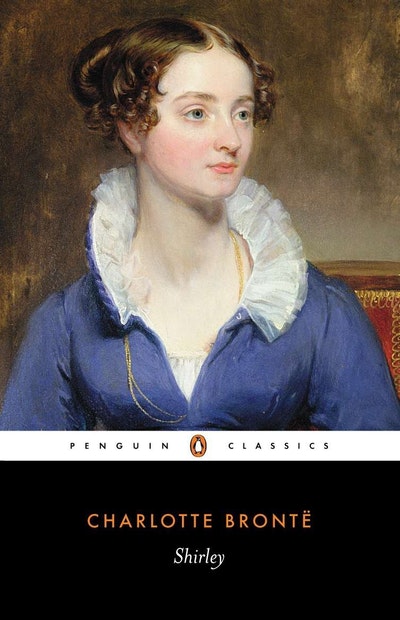
Book Cover:  Shirley: Penguin English Library
By Charlotte Bronte

A powerful, heartfelt depiction of conflict between classes, sexes and generations, Shirley is the story of struggling, debt-ridden Robert Moore, whose decision to try and save his Yorkshire mill by sacking workers sparks a riot. When Robert considers marriage to the wealthy Shirley Keeldar to solve his financial problems, he discovers instead that both their hearts ultimately lie elsewhere. ...

A powerful, heartfelt depiction of conflict between classes, sexes and generations, Shirley is the story of struggling, debt-ridden Robert Moore, whose decision to try and save his Yorkshire mill by sacking...

Published: 26/09/2012
Format: Paperback
ISBN: 9780141199535
RRP: $9.95
Book Cover:  Jane Eyre: Penguin English Library
By Charlotte Bronte

Passionate, poetic and revolutionary, Jane Eyre is a novel of naked emotional power. Its story of a defiant, fiercely intelligent woman who refuses to accept her appointed place in society - and instead finds love on her own terms - has become famous as one of the greatest romances ever written, but it is also a brooding Gothic mystery, a profound depiction of character and a transformative work of...

Passionate, poetic and revolutionary, Jane Eyre is a novel of naked emotional power. Its story of a defiant, fiercely intelligent woman who refuses to accept her appointed place in society - and instead...

Published: 23/05/2012
Format: Paperback
ISBN: 9780141198859
RRP: $9.95
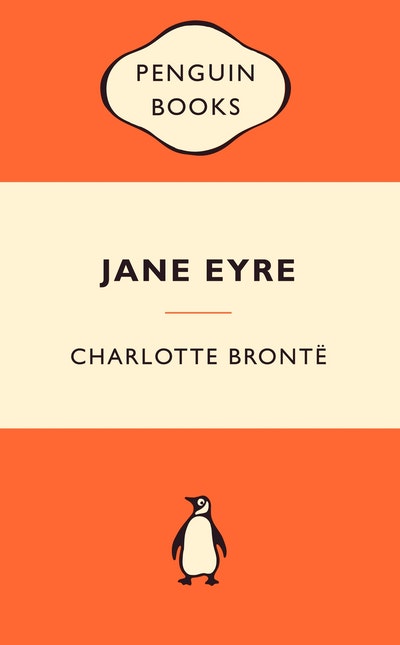
Book Cover:  Jane Eyre: Popular Penguins
Charlotte Brontë's Jane Eyre to this day entrances readers with its passionate portrayal of a woman struggling to make a life for herself in a cruel and indifferent world. As orphan Jane becomes governess at Thornfield Hall, she falls in love with her employer, Mr Rochester, only to discover that he has a terrible secret, one which may jeopardize their future happiness. Jane Eyre's struggle for...
Charlotte Brontë's Jane Eyre to this day entrances readers with its passionate portrayal of a woman struggling to make a life for herself in a cruel and indifferent world. As orphan Jane becomes governess...
Published: 01/09/2008
Format: Paperback
ISBN: 9780141037370
RRP: $9.95
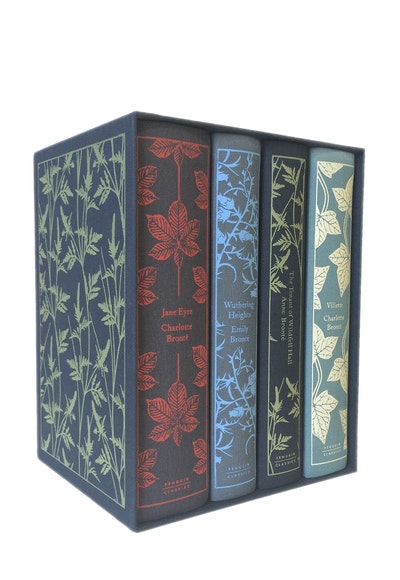
Book Cover:  Jane Eyre: Design by Coralie Bickford-Smith
By Charlotte Bronte

Part of Penguin's beautiful hardback Clothbound Classics series, designed by the award-winning Coralie Bickford-Smith, these delectable and collectible editions are bound in high-quality colourful, tactile cloth with foil stamped into the design.

Part of Penguin's beautiful hardback Clothbound Classics series, designed by the award-winning Coralie Bickford-Smith, these delectable and collectible editions are bound in high-quality colourful, tactile...

Published: 01/08/2011
Format: Hardback
ISBN: 9780141040387
RRP: $19.95
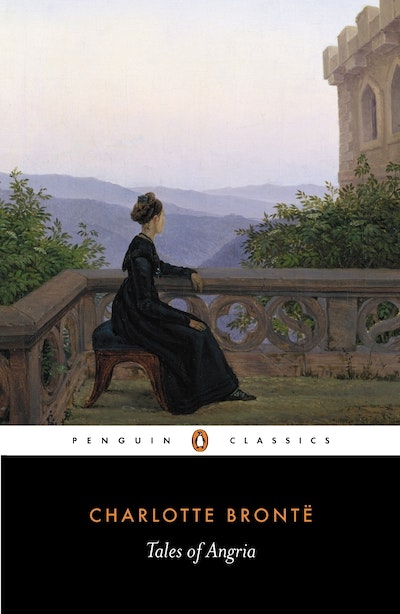
Book Cover:  Tales of Angria

In 1834, Charlotte Brontë and her brother Branwell created the imaginary kingdom of Angria in a series of tiny handmade books. Continuing their saga some years later, the five 'novelettes' in this volume were written by Charlotte when she was in her early twenties, and depict a aristocratic beau monde in witty, racy and ironic language.

In 1834, Charlotte Brontë and her brother Branwell created the imaginary kingdom of Angria in a series of tiny handmade books. Continuing their saga some years later, the five 'novelettes' in this...

Published: 02/08/2006
Format: Paperback
ISBN: 9780140435092
RRP: $9.95
Book Cover:  Shirley
Struggling manufacturer Robert Moore has introduced labour saving machinery to his Yorkshire mill, arousing a ferment of unemployment and discontent among his workers. Robert considers marriage to the wealthy and independent Shirley Keeldar to solve his financial woes, yet his heart lies with his cousin Caroline, who, bored and desperate, lives as a dependent in her uncle's home with no prospect of...
Struggling manufacturer Robert Moore has introduced labour saving machinery to his Yorkshire mill, arousing a ferment of unemployment and discontent among his workers. Robert considers marriage to the...
Published: 20/07/2006
Format: Paperback
ISBN: 9780141439860
RRP: $9.95
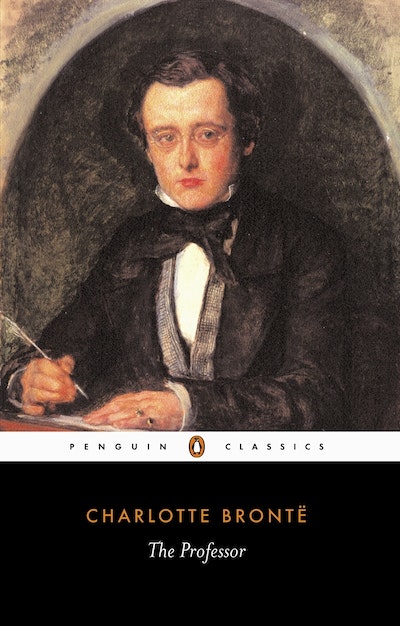
Book Cover: The Professor

'She was not handsome, she was not rich, she was not even accomplished, yet she was my life's treasure; I must then be a man of peculiar discernment.'

'She was not handsome, she was not rich, she was not even accomplished, yet she was my life's treasure; I must then be a man of peculiar discernment.'

Published: 23/03/1989
Format: Paperback
ISBN: 9780140433111
RRP: $9.95
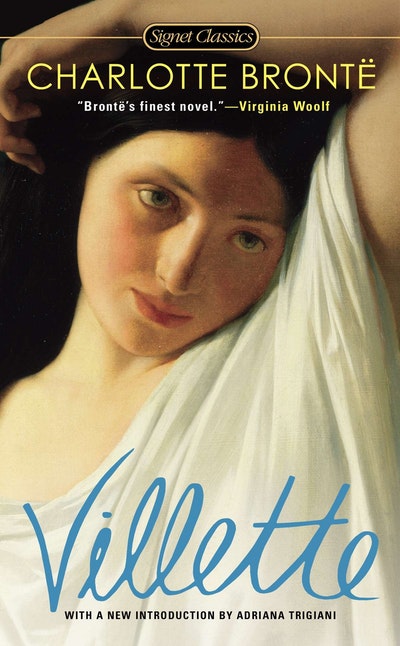
Book Cover:  Villette

With neither friends nor family, Lucy Snowe sets sail from England to find employment in a girls' boarding school in the small town of Villette.

With neither friends nor family, Lucy Snowe sets sail from England to find employment in a girls' boarding school in the small town of Villette.

Published: 13/07/2004
Format: Paperback
ISBN: 9780140434798
RRP: $9.95
Published:02/08/2006
Format:Paperback, 576 pages
RRP:$9.95
ISBN-13:9780141441146
ISBN-10:0141441143
Publisher:Penguin UK

News

{ view all }
25 May 2012
Australian Society of Authors 2012 Barbara Jefferis Award - winner

All That I Am by Anna Funder has won the Barbara Jefferis Award.

The award is offered annually for “the best novel written by an Australian author that depicts women and girls in a positive way or otherwise empowers the status of women and girls in society”.

Anna beat fellow Miles Franklin contenders Foal's Bread and Cold Light.

Social Feed

{ }

Penguin TV

{ }

Pictures

{ }